
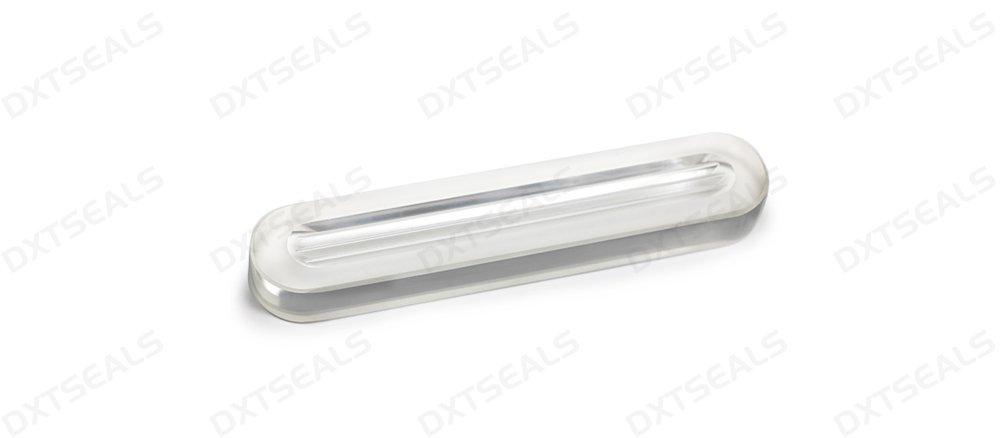
Aluminosilicate gauge glass and mica assemblies are specialized materials used in demanding industrial environments where conventional glass may not provide sufficient thermal or mechanical performance.
These products are commonly considered for high-temperature sight glass, level gauges, boiler equipment, industrial furnaces, pressure equipment, and process observation systems.
Aluminosilicate glass provides excellent resistance to thermal shock, high temperatures, and mechanical stress. Mica assemblies offer another solution for extreme-temperature applications where direct exposure to heat, flame, steam, or aggressive process conditions makes conventional glass unsuitable.
Depending on the equipment design, aluminosilicate gauge glass and mica components can be supplied individually or as complete assemblies with suitable gaskets, frames, washers, and other sealing components.
What Is Aluminosilicate Gauge Glass?
Aluminosilicate gauge glass is a specialized glass material containing a significant proportion of aluminum oxide and silica.
Compared with conventional glass, aluminosilicate glass is designed to provide improved performance in demanding temperature and mechanical environments.
Its key characteristics can include:
- High-temperature resistance
- Excellent thermal shock resistance
- Low thermal expansion
- High mechanical strength
- Good chemical resistance
- High transparency
- Good dimensional stability
These properties make aluminosilicate glass suitable for selected industrial sight glass and gauge glass applications.
The actual operating limits depend on the specific glass grade, dimensions, mounting structure, pressure, temperature, and application conditions.
Material Advantages of Aluminosilicate Glass
Excellent Thermal Shock Resistance
Industrial equipment can experience rapid temperature changes during startup, shutdown, cleaning, or process changes.
Sudden temperature differences can create thermal stress inside a glass component.
Aluminosilicate glass is designed to withstand these conditions more effectively than many conventional glass types.
This makes it useful for applications involving:
- Rapid heating
- Rapid cooling
- High operating temperatures
- Thermal cycling
- Hot process media
Low Thermal Expansion
Low thermal expansion helps reduce dimensional changes caused by temperature variation.
This is particularly important for gauge glass installed in metal assemblies because glass and metal components can expand at different rates.
Controlling thermal expansion can help reduce thermal stress during operation.
High Mechanical Strength
Aluminosilicate glass can provide higher mechanical strength than ordinary glass.
This property is important for industrial applications where the glass may be exposed to:
- Pressure
- Mechanical vibration
- Thermal stress
- Installation loads
However, the glass must always be selected according to the pressure and mechanical requirements of the complete assembly.
Good Chemical Resistance
Aluminosilicate glass generally provides good resistance to many industrial chemicals.
This makes it suitable for selected process applications where the observation window or gauge glass comes into contact with aggressive media.
Chemical compatibility should always be confirmed according to the actual working medium and glass composition.
What Is a Mica Assembly?
A mica assembly is a protective or observation component that uses mica as the primary heat-resistant material.
Mica is a naturally occurring mineral with excellent resistance to high temperatures and good electrical insulation properties.
In industrial equipment, mica can be processed into sheets or specialized components and combined with metal frames, gaskets, washers, or other components to form a complete assembly.
Mica assemblies are particularly useful when the operating temperature is beyond the practical range of conventional transparent glass.
Material Advantages of Mica
Excellent High-Temperature Performance
Mica can withstand extremely high temperatures, making it useful for applications involving:
- Furnaces
- Boilers
- Burners
- High-temperature process equipment
- Thermal equipment
The actual temperature capability depends on the specific type and grade of mica.
Good Thermal Stability
Mica maintains its physical properties under high-temperature conditions and provides good resistance to thermal degradation.
This makes it suitable for environments where conventional organic materials may deteriorate.
Electrical Insulation
Mica has excellent electrical insulation properties.
As a result, mica components are also widely used in electrical and thermal insulation applications in addition to industrial sight glass systems.
Good Chemical Resistance
Mica provides good resistance to many chemicals and process environments.
This makes it useful in certain high-temperature equipment where both thermal stability and chemical resistance are required.
Aluminosilicate Gauge Glass vs Mica Assemblies
Although both materials can be used in demanding industrial environments, they serve different purposes.
| Feature | Aluminosilicate Gauge Glass | Mica Assembly |
|---|---|---|
| Main Material | Aluminosilicate glass | Mica |
| Transparency | Excellent | Limited / application dependent |
| Thermal Resistance | High | Very High |
| Thermal Shock Resistance | Excellent | Excellent |
| Mechanical Strength | High | Depends on structure |
| Electrical Insulation | Good | Excellent |
| Typical Function | Visual observation | High-temperature protection/observation |
| Typical Applications | Gauge glass, sight glass | Boilers, furnaces, burners, high-temperature equipment |
The choice depends on whether the application prioritizes clear visual observation, extreme temperature resistance, or a combination of both.
Applications of Aluminosilicate Gauge Glass
Aluminosilicate gauge glass can be used in various industrial observation applications.
Level Gauge Systems
Specialized gauge glass can be installed in level gauge assemblies to provide visual indication of liquids.
Depending on the design, it can be used in:
- Industrial tanks
- Boilers
- Pressure vessels
- Process equipment
- Chemical equipment
The glass dimensions and pressure rating must match the gauge body.
High-Temperature Sight Glass
Aluminosilicate glass is suitable for selected sight glass applications where operators need to observe a process at elevated temperatures.
Typical applications include:
- Industrial heating equipment
- Thermal processing systems
- Furnaces
- Process vessels
- High-temperature machinery
Boiler Equipment
Specialized gauge glass may be used in boiler-related equipment for visual monitoring.
For high-temperature and pressure applications, the glass, gasket, metal frame, and fastening system must be considered as a complete assembly.
Applications of Mica Assemblies
Mica assemblies are commonly used in applications where extremely high temperature makes conventional transparent glass difficult to use.
Industrial Furnaces
Mica components can be used in furnace observation systems and thermal insulation applications.
Boilers and Burners
Mica can be used as a protective material in selected boiler and burner assemblies.
It can help protect observation components from:
- High temperatures
- Flame
- Thermal radiation
- Steam
- Process heat
High-Temperature Observation Windows
In specialized equipment, mica assemblies can provide a practical solution for observing high-temperature processes.
The design can include a mica sheet combined with a metal frame and suitable sealing components.
Mica Assembly Structure
A typical industrial mica assembly may contain several components:
- Mica sheet
- Metal frame
- Gasket
- Retaining ring
- Washer
- Fastening components
The exact structure depends on the equipment.
The gasket is particularly important when the assembly is installed in a pressure or process system.
Gaskets for Gauge Glass and Mica Assemblies
Gauge glass and mica components are often installed together with specialized gaskets.
A suitable gasket can help:
- Prevent leakage
- Maintain sealing pressure
- Protect the glass
- Compensate for minor surface irregularities
- Improve assembly reliability
Common gasket materials may include:
- Graphite
- PTFE
- High-temperature fiber materials
- Mica-based materials
- Other specialized sealing materials
The correct gasket should be selected according to temperature, pressure, working medium, and assembly design.
Why the Complete Assembly Matters
A gauge glass should not be considered separately from its mounting system.
The final performance depends on the interaction between:
Glass + Gasket + Metal Frame + Fastening System
Even high-performance glass can fail if it is incorrectly installed or subjected to excessive mechanical stress.
Important factors include:
- Gasket thickness
- Compression
- Bolt tightening force
- Glass dimensions
- Frame design
- Thermal expansion
- Operating pressure
- Operating temperature
For this reason, replacement products should ideally match the original assembly dimensions and installation requirements.
How to Choose the Right Gauge Glass Material
Material selection should begin with the operating environment.
1. Operating Temperature
Determine:
- Normal operating temperature
- Maximum temperature
- Temperature fluctuations
- Thermal shock conditions
For extremely high-temperature applications, mica may be preferred over conventional glass.
2. Operating Pressure
For pressure equipment, the gauge glass must have suitable mechanical strength and dimensions.
Pressure should be evaluated together with:
- Glass thickness
- Glass dimensions
- Mounting structure
- Gasket design
- Safety requirements
3. Working Medium
Identify whether the material will be exposed to:
- Water
- Steam
- Hydraulic fluids
- Chemicals
- Process gases
- High-temperature liquids
Chemical compatibility should be confirmed before selection.
4. Transparency Requirements
If continuous visual observation is essential, transparent aluminosilicate gauge glass may be more appropriate.
If extreme temperature resistance is the primary requirement, a mica assembly may be more suitable depending on the equipment design.
Standard and Custom Gauge Glass Components
Industrial gauge glass components are available in standard dimensions for commonly used equipment.
Standard products can offer:
- Faster replacement
- Lower manufacturing costs
- Established dimensions
- Easier procurement
However, many older boilers, pressure vessels, and industrial machines use special dimensions.
Custom manufacturing can accommodate:
- Non-standard length
- Special width
- Different thickness
- Custom holes
- Special edge profiles
- Custom gasket dimensions
- Special mica assembly configurations
Customers can provide drawings, samples, dimensions, or equipment specifications for production evaluation.
Precision Processing and Quality Control
Industrial gauge glass requires accurate dimensional control.
Important quality factors include:
- Glass thickness
- Length and width
- Hole position
- Edge quality
- Surface condition
- Transparency
- Dimensional tolerance
For mica assemblies, additional factors include:
- Mica thickness
- Cutting accuracy
- Frame dimensions
- Gasket position
- Assembly fit
Accurate processing helps ensure that the replacement component can be installed correctly in the existing equipment.
Gauge Glass and Mica Assemblies for Replacement Applications
Replacement is an important application for these specialized components.
Industrial equipment may remain in service for many years, while the original glass or mica component may eventually become damaged or difficult to source.
A replacement manufacturer can produce components according to:
- Original part dimensions
- Technical drawings
- Physical samples
- Equipment model
- Customer specifications
This is particularly useful for older or discontinued equipment.
Conclusion
Aluminosilicate gauge glass and mica assemblies are specialized industrial components designed for demanding temperature and process environments.
Aluminosilicate gauge glass provides a combination of high-temperature resistance, excellent thermal shock resistance, low thermal expansion, mechanical strength, transparency, and chemical stability. It is suitable for selected level gauges, sight glasses, boilers, pressure equipment, and industrial process systems.
Mica assemblies provide another solution for applications requiring very high-temperature resistance, thermal stability, and electrical insulation. They are commonly considered for furnaces, boilers, burners, and high-temperature observation or protection systems.
For reliable operation, the material should not be selected independently from the mounting system. Glass or mica, gasket, metal frame, and fastening components should be considered as a complete assembly.
We can provide aluminosilicate gauge glass, high-temperature mica assemblies, and matching gaskets for standard and replacement applications. Non-standard dimensions and special configurations can also be manufactured according to customer drawings, samples, equipment specifications, and application requirements.