
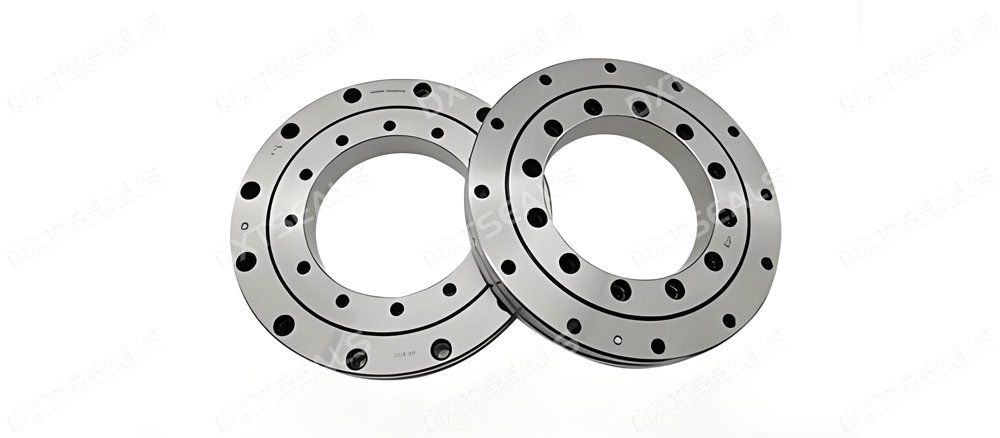
High-speed rotating equipment is widely used in industries such as manufacturing, energy, aerospace, automotive, and medical technology. In these applications, bearings play a critical role in supporting rotating shafts, reducing friction, controlling vibration, and ensuring operational stability. Selecting the right bearing is essential to achieve high efficiency, long service life, and reliable performance.
In this article, DXTSEALS explains how bearings are applied in high-speed rotating equipment and provides practical selection guidelines for different operating conditions.
1. Characteristics of High-Speed Rotating Equipment
High-speed rotating machinery typically operates under demanding conditions, including:
-
Extremely high rotational speeds
-
Continuous operation over long periods
-
Elevated temperatures caused by friction
-
Tight dimensional tolerances
-
Sensitivity to vibration and noise
Examples include electric motors, turbines, compressors, machine tool spindles, turbochargers, and medical devices.
Under these conditions, bearing performance directly affects system efficiency and equipment lifespan.
2. Common Bearing Types Used in High-Speed Applications
2.1 Deep Groove Ball Bearings
One of the most widely used bearing types in high-speed machinery.
Advantages:
-
Low friction and low heat generation
-
Suitable for very high rotational speeds
-
Simple structure and easy installation
Typical applications:
-
Electric motors
-
Small compressors
-
Pumps and fans
2.2 Angular Contact Ball Bearings
Designed to support combined radial and axial loads.
Advantages:
-
Excellent speed capability
-
High positioning accuracy
-
Suitable for paired or matched mounting
Typical applications:
-
Machine tool spindles
-
High-speed pumps
-
Precision rotating equipment
2.3 Cylindrical Roller Bearings
Used where high radial load capacity is required.
Advantages:
-
High stiffness
-
Good performance at moderately high speeds
-
Low friction under heavy loads
Limitations:
-
Limited axial load capacity
Typical applications:
-
Industrial gearboxes
-
Large motors
-
Compressors
2.4 Hybrid Ceramic Bearings
Combine steel rings with ceramic rolling elements.
Advantages:
-
Extremely high-speed capability
-
Lower centrifugal force
-
Reduced friction and heat generation
-
Excellent electrical insulation
Typical applications:
-
High-speed motors
-
Aerospace equipment
-
Precision machinery
3. Key Factors in Bearing Selection for High-Speed Equipment
3.1 Rotational Speed (DN Value)
The DN value (bearing bore diameter × rotational speed) is a critical parameter. Bearings with higher DN limits, such as angular contact or ceramic bearings, are preferred for high-speed use.
3.2 Load Type and Direction
-
Radial loads: Deep groove or cylindrical roller bearings
-
Combined radial and axial loads: Angular contact ball bearings
-
Light loads at high speed: Ceramic or precision ball bearings
3.3 Lubrication Method
Proper lubrication reduces friction and wear.
Common lubrication options include:
-
Grease lubrication for moderate speeds
-
Oil lubrication for high-speed and high-temperature conditions
-
Oil-air or oil-mist lubrication for ultra-high-speed applications
Incorrect lubrication can lead to overheating and premature bearing failure.
3.4 Temperature Control
High rotational speed increases heat generation. Bearing materials and lubricants must withstand operating temperatures without degradation.
Hybrid ceramic bearings and high-temperature greases are often selected for thermal stability.
3.5 Precision and Clearance
High-speed equipment requires:
-
Tight dimensional tolerances
-
Controlled internal clearance
-
High concentricity
Precision-grade bearings reduce vibration and improve rotational accuracy.
4. Common Bearing Failures in High-Speed Applications
Typical issues include:
-
Overheating due to excessive friction
-
Lubrication breakdown
-
Fatigue caused by vibration
-
Cage deformation at extreme speeds
Proper selection, installation, and maintenance significantly reduce these risks.
5. How Proper Bearing Selection Improves Equipment Performance
Choosing the right bearing helps to:
-
Reduce energy loss
-
Minimize noise and vibration
-
Extend maintenance intervals
-
Improve operational safety
-
Increase overall system efficiency
DXTSEALS supports industrial customers by providing not only sealing solutions but also technical insights into bearing–seal compatibility for high-speed rotating systems.
Conclusion
Bearings are fundamental components in high-speed rotating equipment, directly influencing reliability, efficiency, and service life. Understanding operating speed, load conditions, lubrication methods, and temperature requirements is essential for selecting the optimal bearing type.
With the right bearing selection and proper maintenance practices, high-speed equipment can achieve stable, long-term operation. DXTSEALS is committed to supporting industrial applications with professional expertise and high-quality solutions for demanding operating environments.