
Introduction
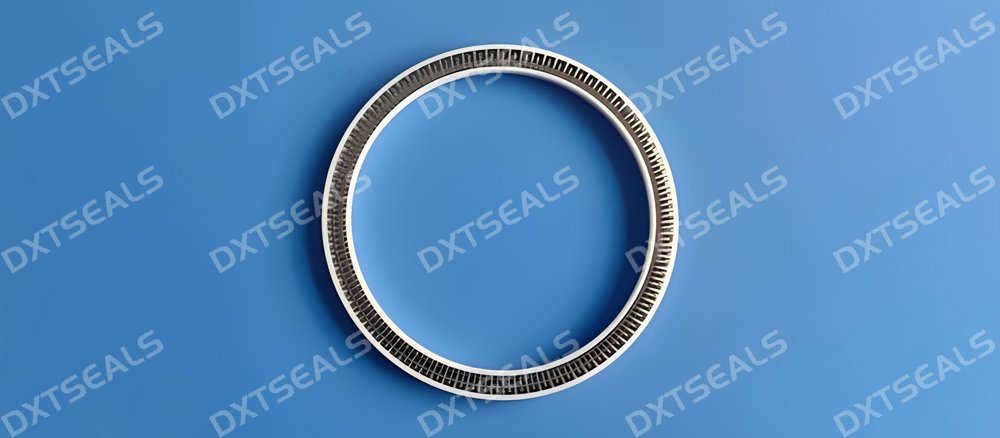
Spring-energized seals commonly use PTFE as the sealing jacket material due to its excellent chemical resistance and wide operating temperature range. However, virgin PTFE and filled PTFE exhibit significantly different performance characteristics, which directly affect their suitability for various applications.
This article compares the application differences between filled PTFE spring-energized seals and virgin PTFE spring-energized seals, helping engineers make informed material selections.
Overview of Virgin PTFE Spring-Energized Seals
Virgin PTFE is unmodified polytetrafluoroethylene with outstanding chemical inertness and extremely low friction. When used in spring-energized seals, it offers reliable sealing in applications where purity and chemical compatibility are critical.
Key characteristics:
-
Ultra-low friction coefficient
-
Excellent chemical resistance
-
Suitable for clean and non-abrasive environments
-
Limited wear resistance under high load or dynamic conditions
Overview of Filled PTFE Spring-Energized Seals
Filled PTFE contains additives such as glass fiber, carbon, graphite, or bronze to improve mechanical properties. These fillers enhance wear resistance, compressive strength, and thermal stability, making filled PTFE seals more suitable for demanding applications.
Key characteristics:
-
Improved wear and creep resistance
-
Higher load-carrying capability
-
Better dimensional stability
-
Slightly reduced chemical resistance depending on filler type
Key Application Differences
Wear Resistance and Load Capacity
Filled PTFE spring-energized seals perform better in high-load and high-wear conditions, while virgin PTFE seals are better suited for low-load applications with minimal friction requirements.
Friction and Motion Control
Virgin PTFE provides the lowest friction, making it ideal for low-speed, precision, or sensitive motion applications. Filled PTFE offers a balance between low friction and durability.
Chemical and Media Compatibility
Virgin PTFE is preferred in aggressive chemical environments. Filled PTFE selection must consider potential chemical interaction with fillers.
Service Life and Maintenance
Filled PTFE seals generally offer longer service life in dynamic or heavy-duty applications, while virgin PTFE seals are suitable for applications with limited wear demands.
Typical Application Scenarios
| Application Requirement | Recommended Material |
|---|---|
| High chemical purity | Virgin PTFE |
| High load or wear | Filled PTFE |
| Dynamic sealing | Filled PTFE |
| Low friction demand | Virgin PTFE |
| Long service life | Filled PTFE |
At DXTSEALS, we offer both virgin PTFE and filled PTFE spring-energized seals to meet diverse industrial application requirements.
Selection Guidelines
When choosing between filled PTFE and virgin PTFE spring-energized seals, consider:
-
Load and wear conditions
-
Motion type (static, reciprocating, or rotary)
-
Chemical exposure
-
Temperature range
-
Expected service life
Proper material selection ensures optimal sealing performance and cost efficiency.
Conclusion
Virgin PTFE and filled PTFE spring-energized seals each offer unique advantages. Virgin PTFE excels in low friction and chemical resistance, while filled PTFE provides enhanced wear resistance and durability.
Understanding these application differences is essential for selecting the right spring-energized seal and achieving reliable, long-term sealing performance.