
Introduction
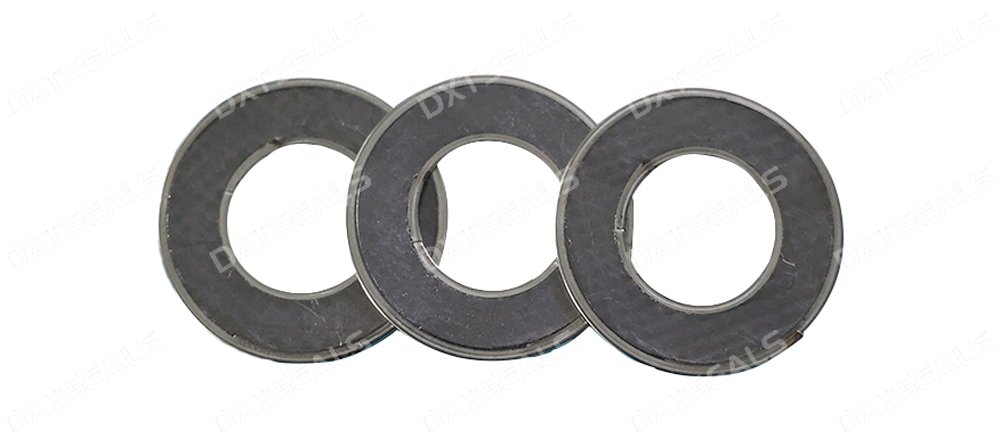
Flange gaskets are essential sealing components used between mating flanges to prevent fluid and gas leakage. However, there is no single gasket material that is suitable for every industrial application. The correct material depends on the working medium, temperature, pressure, flange design, chemical exposure, and installation conditions.
EPDM, PTFE, NBR, FKM, and graphite are among the commonly selected materials for industrial flange gaskets. Each material has different strengths and limitations.
EPDM is well suited to many water-based applications and offers excellent resistance to ozone and weathering. PTFE provides broad chemical resistance and is frequently considered for aggressive chemical media. NBR is known for its compatibility with many petroleum oils and hydraulic fluids. FKM offers excellent resistance to many oils, fuels, and elevated temperatures, although compatibility remains grade-specific. Graphite is widely used for high-temperature sealing applications, particularly where thermal stability is important.
This guide compares these five flange gasket materials and explains how to select the most appropriate option for different industrial operating conditions.
1. EPDM Flange Gaskets
EPDM, or ethylene propylene diene monomer, is a synthetic rubber widely used for sealing water and other compatible fluids.
Key Properties of EPDM
EPDM is particularly valued for:
-
Excellent resistance to ozone and weathering
-
Good resistance to water and moisture
-
Good flexibility and elastic recovery
-
Good resistance to many dilute acids and alkalis
-
Suitable performance in many HVAC and cooling water systems
-
Good outdoor aging resistance
EPDM can maintain flexibility in many service conditions, allowing it to conform to suitable flange surfaces under compression.
However, EPDM is generally unsuitable for petroleum-based oils and fuels. Its compatibility with steam, hot water, and specific chemicals depends on the compound and operating conditions.
Typical Applications
EPDM flange gaskets are commonly considered for:
-
Water supply systems
-
Wastewater treatment
-
HVAC systems
-
Cooling water pipelines
-
General water-based industrial piping
-
Outdoor piping applications
For applications involving petroleum oils, fuels, or hydrocarbon-based fluids, another gasket material should generally be considered.
2. PTFE Flange Gaskets
PTFE, or polytetrafluoroethylene, is a fluoropolymer known for its broad chemical resistance and low-friction surface.
PTFE flange gaskets are available in several forms, including virgin PTFE, modified PTFE, expanded PTFE, and filled PTFE.
Key Properties of PTFE
Important characteristics include:
-
Broad resistance to many chemicals
-
Excellent resistance to many acids and alkalis
-
Resistance to many solvents and industrial fluids
-
Low friction
-
Low moisture absorption
-
Good performance across a broad temperature range, depending on the grade and gasket design
PTFE is often selected when chemical compatibility is more important than rubber-like elasticity.
One important limitation is that conventional PTFE can experience creep or cold flow under sustained compression. This can affect gasket stress over time, particularly when flange loading and gasket design are not properly controlled.
Modified and expanded PTFE products can provide different mechanical and sealing characteristics.
Typical Applications
PTFE flange gaskets are commonly used in:
-
Chemical processing equipment
-
Chemical pipelines
-
Pharmaceutical and specialty chemical systems
-
Solvent-handling applications
-
Water treatment
-
Industrial valves and pumps
-
Aggressive chemical service
PTFE should still be checked against the exact chemical, concentration, temperature, and operating conditions rather than being treated as universally compatible.
3. NBR Flange Gaskets
NBR, or nitrile butadiene rubber, is a commonly used elastomer for applications involving oils, fuels, and hydraulic fluids.
Key Properties of NBR
NBR is valued for:
-
Good resistance to many petroleum-based oils
-
Good compatibility with many hydraulic fluids
-
Good mechanical strength
-
Good abrasion resistance
-
Good compression sealing performance
-
Generally economical material cost
The acrylonitrile content of an NBR compound affects its balance of oil resistance, flexibility, and low-temperature performance.
NBR is generally not the first choice for prolonged exposure to ozone, outdoor weathering, or applications requiring the highest temperature resistance. Specific NBR compounds can have different performance characteristics.
Typical Applications
NBR flange gaskets may be considered for:
-
Oil piping systems
-
Hydraulic equipment
-
Petroleum-related equipment
-
Machinery
-
Fuel-handling systems
-
Industrial fluid systems using compatible oils
For outdoor applications with significant ozone exposure, EPDM or FKM may be more appropriate depending on the working medium.
4. FKM Flange Gaskets
FKM is a family of fluoroelastomers known for excellent resistance to many oils, fuels, and elevated temperatures.
It is commonly used where a conventional rubber material may not provide sufficient chemical or thermal performance.
Key Properties of FKM
FKM is generally recognized for:
-
Excellent resistance to many mineral oils
-
Good resistance to many fuels
-
Good high-temperature performance
-
Good resistance to weathering and ozone
-
Good resistance to many chemicals
-
Good compression sealing performance in suitable applications
However, FKM should not be regarded as universally resistant to all chemicals. Certain ketones, amines, some acids, and other chemicals can be problematic depending on the specific FKM formulation.
Different FKM grades can have significantly different compatibility characteristics.
Typical Applications
FKM flange gaskets may be used in:
-
Oil and fuel systems
-
Automotive equipment
-
Chemical processing
-
Industrial machinery
-
High-temperature fluid systems
-
Petroleum-related equipment
When selecting FKM, the exact compound and chemical environment should be reviewed rather than relying only on the generic FKM designation.
5. Graphite Flange Gaskets
Graphite is an inorganic carbon-based material widely used in high-temperature sealing applications. Flexible graphite can be manufactured into sheets, rings, packing, and various gasket configurations.
Graphite is particularly useful where conventional elastomeric materials cannot withstand the required temperature.
Key Properties of Graphite
Graphite provides:
-
Excellent high-temperature capability in suitable environments
-
Good thermal stability
-
Good resistance to many chemicals
-
Good compressibility in flexible graphite forms
-
Good sealing performance under appropriate compression
-
Useful performance in steam and many industrial process applications
Graphite has an important limitation: it can oxidize at elevated temperatures in oxygen-containing environments. Its suitability must therefore be evaluated according to the actual atmosphere and operating conditions.
Graphite gaskets also require appropriate handling because flexible graphite can be more delicate than conventional rubber materials.
Typical Applications
Graphite flange gaskets are commonly considered for:
-
Steam piping
-
Boilers and thermal equipment
-
Power generation systems
-
High-temperature industrial pipelines
-
Chemical processing equipment
-
Heat transfer systems
-
High-temperature valves and flanges
For strongly oxidizing environments, another gasket material may be more appropriate.
6. EPDM vs PTFE vs NBR vs FKM vs Graphite
The following table provides a general comparison of the five materials.
| Property | EPDM | PTFE | NBR | FKM | Graphite |
|---|---|---|---|---|---|
| Material type | Elastomer | Fluoropolymer | Elastomer | Fluoroelastomer | Carbon-based material |
| Water resistance | Excellent | Excellent | Good | Good | Good, depending on construction |
| Oil resistance | Poor for petroleum oils | Generally good | Excellent for many petroleum oils | Excellent for many oils | Generally good in suitable applications |
| Fuel resistance | Poor | Generally good | Good to excellent, grade-dependent | Excellent for many fuels | Generally good in suitable applications |
| Chemical resistance | Good for many compatible media | Excellent for many chemicals | Moderate | Excellent for many chemicals | Good to excellent for many chemicals |
| Ozone/weather resistance | Excellent | Excellent | Limited to moderate | Excellent | Excellent inorganic material |
| High-temperature capability | Moderate, compound-dependent | High, grade-dependent | Moderate | High | Very high in suitable non-oxidizing environments |
| Elasticity | High | Low compared with rubber | High | High | Low |
| Creep resistance | Generally good elastomeric recovery | Conventional PTFE can creep | Generally good | Generally good | Depends on gasket construction |
| Typical applications | Water, HVAC, wastewater | Chemicals, solvents, aggressive media | Oils, hydraulics, fuels | Oils, fuels, high-temperature applications | Steam, thermal systems, high-temperature service |
This comparison is intended as a general material-selection guide. Actual gasket performance depends on the exact material grade, gasket construction, flange design, and operating conditions.
7. How to Choose the Right Flange Gasket Material
Selecting a gasket should begin with the operating conditions rather than the material name.
Step 1: Identify the Working Medium
Determine exactly what fluid or gas will contact the gasket.
For example:
-
Water and wastewater → EPDM may be a strong candidate
-
Petroleum oils → NBR or FKM may be considered
-
Aggressive chemicals → PTFE may be preferred
-
High-temperature steam → Graphite may be considered
-
High-temperature oils and fuels → FKM may be appropriate
These are starting points rather than universal recommendations.
Step 2: Check Chemical Compatibility
Chemical compatibility is one of the most important selection criteria.
Consider:
-
Fluid composition
-
Chemical concentration
-
Operating temperature
-
Exposure duration
-
Cleaning chemicals
-
Process additives
-
Pressure and flow conditions
A material that performs well with one chemical may perform poorly with another. Generic material charts should therefore be supplemented with manufacturer-specific compatibility data whenever the application is critical.
Step 3: Evaluate Temperature
Temperature affects both the gasket material and its sealing performance.
Elastomers can harden, soften, or lose mechanical properties outside their suitable temperature range. PTFE can creep under sustained compression, while graphite can oxidize in certain high-temperature oxygen-containing environments.
The continuous operating temperature, temperature peaks, thermal cycling, and startup/shutdown conditions should all be considered.
Step 4: Evaluate Pressure
Pressure capability is not determined by material alone.
The following factors also matter:
-
Flange design
-
Bolt load
-
Gasket thickness
-
Gasket geometry
-
Surface finish
-
Flange alignment
-
Pressure fluctuations
-
Temperature
A metal-reinforced or spiral-wound gasket may be more appropriate than a simple elastomer sheet gasket for certain high-pressure applications.
Step 5: Check Flange Standard and Dimensions
The gasket must match the flange connection.
Important specifications include:
-
Nominal pipe size
-
Flange standard
-
Pressure class
-
Bolt-hole pattern
-
Inside and outside diameter
-
Flange face type
-
Gasket thickness
Common flange systems include ASME standards in many American piping applications and EN standards in European systems. NPS/Class and DN/PN designations should be matched to the actual flange specification rather than assumed to be directly interchangeable.
8. Material Selection by Application
The following examples provide a practical starting point for industrial gasket selection.
| Application | Materials to Consider | Main Selection Factor |
|---|---|---|
| Water supply | EPDM | Water compatibility |
| HVAC water systems | EPDM | Water and temperature performance |
| Wastewater | EPDM, PTFE | Fluid composition and chemicals |
| Petroleum oils | NBR, FKM | Oil compatibility |
| Hydraulic systems | NBR, FKM | Hydraulic fluid compatibility |
| Fuel systems | NBR, FKM, PTFE | Fuel compatibility and temperature |
| Aggressive chemicals | PTFE | Chemical resistance |
| Solvent service | PTFE, selected FKM | Exact chemical compatibility |
| High-temperature steam | Graphite | Temperature and oxidation environment |
| High-temperature process equipment | Graphite, FKM, PTFE | Temperature and medium |
| Outdoor water piping | EPDM | Weather and ozone resistance |
The best material should always be selected according to the actual operating conditions and relevant technical specifications.
9. EPDM, PTFE, NBR, FKM, and Graphite: Cost vs. Performance
Material price is an important purchasing consideration, but gasket selection should not be based solely on initial cost.
EPDM and NBR are often economical choices for applications where their material properties meet the service requirements.
PTFE and FKM generally have higher material costs but may provide advantages in applications involving aggressive chemicals, oils, fuels, or higher temperatures.
Graphite can be highly effective for high-temperature applications where elastomeric gaskets would not be suitable.
The correct material can reduce leakage, maintenance, replacement frequency, and unplanned downtime. Therefore, total service cost is often more meaningful than purchase price alone.
10. Custom Flange Gasket Manufacturing
Standard flange gasket sizes cover many common applications, but industrial equipment may require non-standard dimensions or specialized materials.
Custom flange gaskets can be manufactured according to:
-
Customer drawings
-
Flange dimensions
-
Equipment specifications
-
Existing gasket samples
-
Required material grades
-
Special thickness requirements
-
Non-standard bolt-hole patterns
-
Special operating conditions
Manufacturers may provide custom EPDM, PTFE, NBR, FKM, and graphite gaskets depending on the required material and manufacturing process.
For demanding applications, the gasket design should consider the complete sealing system rather than simply copying the dimensions of an existing gasket.
11. Why Material Selection Matters for Sealing Reliability
A flange gasket operates as part of a complete mechanical assembly. Even a high-quality gasket can fail if the material is incompatible with the medium or if the flange system is incorrectly assembled.
Common causes of gasket problems include:
-
Incorrect material selection
-
Excessive or insufficient compression
-
Incorrect gasket dimensions
-
Damaged flange surfaces
-
Flange misalignment
-
Incorrect bolt tightening
-
Chemical incompatibility
-
Excessive temperature
-
Pressure cycling
-
Improper storage or installation
Material selection is therefore only one part of achieving reliable flange sealing. The gasket, flange, bolts, and installation procedure must work together.
Conclusion
EPDM, PTFE, NBR, FKM, and graphite each offer distinct advantages for flange gasket applications.
EPDM is a strong choice for many water-based systems and outdoor applications because of its water, ozone, and weather resistance.
PTFE is widely considered for chemically aggressive environments because of its broad chemical resistance, although creep and cold flow must be considered.
NBR is commonly selected for applications involving many petroleum oils and hydraulic fluids.
FKM provides excellent resistance to many oils, fuels, and elevated temperatures, but its chemical compatibility remains grade-specific.
Graphite is particularly useful for high-temperature sealing, including many steam and thermal applications, provided the oxidation environment is suitable.
The right flange gasket material depends on the complete operating environment. By evaluating the working medium, temperature, pressure, flange design, chemical compatibility, and installation conditions together, engineers can select a gasket that provides reliable sealing performance and appropriate service life.
For standard and non-standard industrial requirements, custom EPDM, PTFE, NBR, FKM, and graphite flange gasket solutions can be manufactured according to application-specific dimensions and material specifications.