
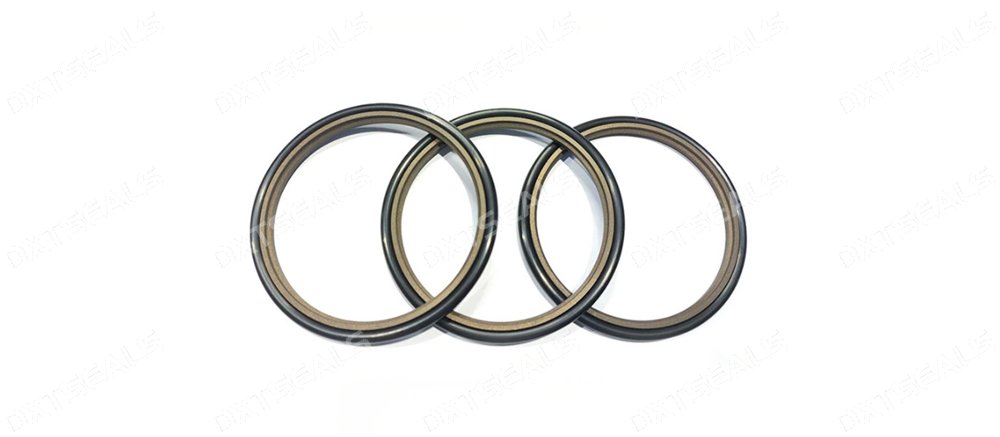
Sealing products are essential components in hydraulic systems, pneumatic equipment, pumps, valves, compressors, and industrial machinery. Their primary functions are to prevent fluid or gas leakage, maintain system pressure, reduce contamination, and protect moving components.
Different operating conditions require different seal designs. A seal used for a hydraulic cylinder piston may have very different requirements from a seal used on a reciprocating rod, rotating shaft, or high-temperature chemical application.
Among commonly available standard sealing products, spring energized seals, Glyd rings, Step Seals, PTFE seals, rod seals, piston seals, and wiper seals are widely used in industrial applications.
Understanding their structural differences and typical applications can help engineers select a suitable sealing solution.
What Are Standard Seals?
Standard seals are manufactured according to commonly used dimensions, profiles, and specifications.
Compared with fully customized sealing components, standard products generally provide:
- Easy replacement
- Lower manufacturing costs
- Established installation dimensions
- Faster procurement
- Broad equipment compatibility
- Multiple material choices
Standard sealing products are widely used in hydraulic and pneumatic cylinders, industrial machinery, pumps, valves, automation equipment, and other applications.
When standard dimensions cannot meet specific equipment requirements, customized seals can be manufactured according to drawings, samples, or OEM specifications.
Spring Energized Seals
Spring energized seals are specialized polymer seals that use a metal spring to provide continuous sealing force.
A typical spring energized seal consists of:
- PTFE or engineered polymer sealing jacket
- Metal spring energizer
- Sealing lip or contact surface
The spring keeps the sealing lip in contact with the mating surface, even when system pressure is low.
Features of Spring Energized Seals
Low Friction
PTFE-based sealing jackets provide very low friction, making these seals suitable for dynamic applications.
Excellent Chemical Resistance
PTFE has excellent resistance to many chemicals, solvents, oils, and aggressive media.
Wide Temperature Capability
Depending on the polymer and spring materials, spring energized seals can operate across a broad temperature range.
Low-Pressure Sealing
The spring provides initial sealing force independently of system pressure, making this design useful for applications where pressure fluctuates or starts at a low level.
Multiple Spring Designs
Different spring configurations can be used according to the application, including:
- Helical springs
- V-shaped springs
- C-shaped springs
- Other specialized spring designs
Typical Applications
Spring energized seals are commonly considered for:
- Pumps
- Valves
- Hydraulic equipment
- Chemical processing equipment
- Industrial machinery
- High-temperature applications
- Specialized rotary or reciprocating equipment
Glyd Rings
Glyd rings are dynamic sealing products commonly used for piston sealing in hydraulic and pneumatic cylinders.
A typical Glyd ring consists of:
- PTFE or polymer sealing ring
- Elastomer O-ring energizer
The O-ring provides radial force, while the PTFE ring forms the main sliding sealing surface.
This combination provides the elasticity of an elastomer with the low-friction properties of PTFE.
Features of Glyd Rings
Glyd rings are widely used because of their:
- Low friction
- Good wear resistance
- Good chemical resistance
- Smooth reciprocating movement
- Compact design
- Wide material options
They are particularly suitable for piston sealing applications.
Typical Applications
Glyd rings are commonly used in:
- Hydraulic cylinders
- Pneumatic cylinders
- Industrial actuators
- Mobile hydraulic equipment
- Machine tools
- Automation systems
- Injection molding machinery
Step Seals
Step Seals are dynamic sealing elements commonly used for rod sealing.
Their basic structure generally consists of a polymer sealing ring combined with an elastomer energizer.
The polymer element provides the main sealing function, while the elastomer maintains contact with the rod.
Features of Step Seals
Step Seals provide:
- Low friction
- Good wear resistance
- Good dynamic sealing
- Compact installation
- Good pressure performance when correctly designed
- Multiple material options
They are widely used in reciprocating hydraulic and pneumatic rod applications.
PTFE Seals
PTFE seals are sealing components manufactured from PTFE or PTFE-based compounds.
Unlike a specific profile such as a Glyd ring or Step Seal, "PTFE seal" is a broader category covering many sealing designs.
PTFE can be used to manufacture:
- Piston seals
- Rod seals
- Rotary seals
- Static seals
- Spring energized seals
- Special custom sealing rings
Why Is PTFE Widely Used?
PTFE provides several important properties:
- Very low friction
- Excellent chemical resistance
- Good temperature resistance
- Low moisture absorption
- Good dimensional stability
Different fillers can be added to improve mechanical and wear properties.
Common PTFE compounds include:
- Virgin PTFE
- Glass-filled PTFE
- Carbon-filled PTFE
- Graphite-filled PTFE
- Bronze-filled PTFE
The appropriate compound depends on the operating conditions.
Rod Seals
Rod seals are designed to prevent hydraulic fluid or other media from leaking along the moving cylinder rod.
A rod seal must provide effective sealing while allowing the rod to move repeatedly.
Important performance requirements include:
- Low friction
- Wear resistance
- Pressure resistance
- Good dynamic sealing
- Compatibility with the working medium
Step Seals are one common design for dynamic rod sealing.
Piston Seals
Piston seals are installed on the piston and seal against the internal cylinder bore.
Their primary function is to prevent fluid or compressed air from bypassing the piston.
Common piston seal designs include:
- Glyd rings
- PTFE piston seals
- Polyurethane piston seals
- Elastomer piston seals
The selection depends on pressure, speed, temperature, fluid, and cylinder design.
Wiper Seals
Wiper seals have a different function from pressure seals.
Instead of primarily preventing internal fluid leakage, wipers protect the cylinder from external contamination.
They remove contaminants from the rod surface as the rod retracts.
Wiper seals help prevent:
- Dust
- Dirt
- Mud
- Water
- Metal particles
- Other contaminants
A properly designed wiper seal can help protect the rod seal, guide components, and cylinder bore.
Common Wiper Materials
Wiper seals may be manufactured from:
- Polyurethane
- NBR
- PTFE-based materials
- Other engineered polymers
Polyurethane is widely used where abrasion resistance and durability are important.
Comparison of Common Standard Seal Designs
| Seal Type | Typical Position | Main Function | Common Material | Typical Movement |
|---|---|---|---|---|
| Spring Energized Seal | Rod, piston, shaft, housing | Dynamic/static sealing | PTFE + metal spring | Rotary/reciprocating/static |
| Glyd Ring | Piston | Dynamic piston sealing | PTFE + O-ring | Reciprocating |
| Step Seal | Rod | Dynamic rod sealing | PTFE + elastomer | Reciprocating |
| PTFE Seal | Various | General sealing | PTFE/filled PTFE | Depends on profile |
| Rod Seal | Rod | Prevent fluid leakage | PU/PTFE/NBR/FKM | Reciprocating |
| Piston Seal | Piston | Prevent pressure bypass | PTFE/PU/NBR | Reciprocating |
| Wiper Seal | Rod | Prevent contamination | PU/NBR/PTFE | Reciprocating |
The exact specifications and applications depend on the individual seal profile and manufacturer design.
Material Options for Standard Seals
Material selection is just as important as seal design.
PTFE
PTFE is commonly selected for:
- Low friction
- Chemical resistance
- Temperature resistance
- Low moisture absorption
It is particularly useful in demanding industrial environments.
Polyurethane
Polyurethane provides:
- Excellent abrasion resistance
- High mechanical strength
- Good tear resistance
- Good dynamic performance
It is widely used in hydraulic rod seals, piston seals, and wipers.
NBR
NBR offers good:
- Oil resistance
- Elasticity
- Mechanical properties
It is commonly used in general hydraulic and pneumatic sealing applications.
FKM
FKM provides good resistance to:
- High temperatures
- Oils
- Fuels
- Many chemicals
It can be selected for more demanding temperature and fluid conditions.
EPDM
EPDM is commonly considered for applications involving:
- Water
- Steam
- Weathering
- Ozone
- Compatible chemicals
Its compatibility with petroleum-based fluids must be checked carefully.
How to Choose the Right Standard Seal
Choosing a seal based only on its name or size is not sufficient. The complete operating environment should be evaluated.
1. Sealing Position
Determine whether the seal is installed on:
- A piston
- A rod
- A rotating shaft
- A housing
- A static joint
This immediately narrows down the suitable seal designs.
2. Pressure
Consider both normal and maximum pressure.
Also evaluate:
- Pressure spikes
- Pressure cycling
- Extrusion clearance
High-pressure applications may require specialized profiles or backup solutions.
3. Temperature
Check:
- Minimum temperature
- Normal operating temperature
- Maximum continuous temperature
- Short-term temperature peaks
Both the sealing material and energizer must be suitable for the temperature range.
4. Working Medium
Determine whether the seal will contact:
- Hydraulic oil
- Water
- Air
- Steam
- Fuels
- Solvents
- Chemicals
Material compatibility is essential for long-term performance.
5. Movement and Speed
Identify whether the seal will experience:
- Static conditions
- Reciprocating movement
- Rotary movement
For dynamic applications, speed and cycle frequency should also be considered.
6. Groove Dimensions
Important dimensions include:
- Shaft or rod diameter
- Bore diameter
- Groove width
- Groove depth
- Installation clearance
Even a high-quality seal can fail prematurely if the installation dimensions are incorrect.
Standard Seals vs Custom Seals
Standard seals are often the first choice for conventional equipment because they are readily available and cost-effective.
They offer:
- Standardized dimensions
- Proven profiles
- Easy replacement
- Lower production costs
- Multiple material options
However, customized sealing products may be necessary when equipment has non-standard grooves, unusual dimensions, or demanding operating conditions.
Custom seals can be manufactured according to:
- Technical drawings
- CAD files
- Physical samples
- OEM specifications
- Application requirements
This is particularly useful for specialized machinery and replacement parts where an original seal is difficult to source.
Precision Machining of Custom PTFE Seals
For non-standard PTFE sealing components, precision CNC machining provides flexibility in manufacturing different dimensions and profiles.
It can be used for:
- Custom PTFE piston seals
- Custom rod seals
- Special Glyd ring sizes
- Step Seal variations
- Spring energized seal jackets
- Large-diameter PTFE sealing rings
Important manufacturing factors include:
- Dimensional accuracy
- Profile geometry
- Surface finish
- Groove compatibility
- Material consistency
For small production batches and customized sealing profiles, machining can be an efficient manufacturing method.
Applications of Standard Seal Designs
These sealing products are used in many industries.
Hydraulic Equipment
Hydraulic cylinders commonly use combinations of piston seals, rod seals, wipers, guide rings, and buffer seals.
Pneumatic Equipment
Pneumatic cylinders require low-friction seals capable of handling frequent reciprocating movement.
Pumps and Valves
PTFE and spring energized seals are commonly considered where chemical compatibility, low friction, or temperature resistance is important.
Industrial Automation
Glyd rings, Step Seals, and other polymer seals are used in actuators and automated machinery.
Mobile Machinery
Construction and agricultural equipment require durable sealing systems capable of handling pressure, vibration, contamination, and environmental exposure.
Conclusion
From spring energized seals to Glyd rings, Step Seals, PTFE seals, rod seals, piston seals, and wiper seals, standard sealing products are available in a wide range of designs to meet different industrial requirements.
Spring energized seals use a metal spring to maintain sealing force and are particularly useful for demanding applications involving low friction, chemical resistance, temperature variation, or low-pressure sealing.
Glyd rings are commonly used for piston sealing, while Step Seals are widely used for rod sealing. Wiper seals provide external contamination protection, while PTFE seals represent a broader category of polymer-based sealing products available in many different profiles.
The correct choice depends on pressure, temperature, working medium, movement, speed, installation dimensions, surface finish, and material compatibility.
For conventional equipment, standard market sizes provide a practical and economical solution. For specialized applications, manufacturers with precision polymer machining capabilities can provide custom PTFE seals, Glyd rings, Step Seals, spring energized seals, and other non-standard sealing components according to drawings, samples, and OEM requirements.