
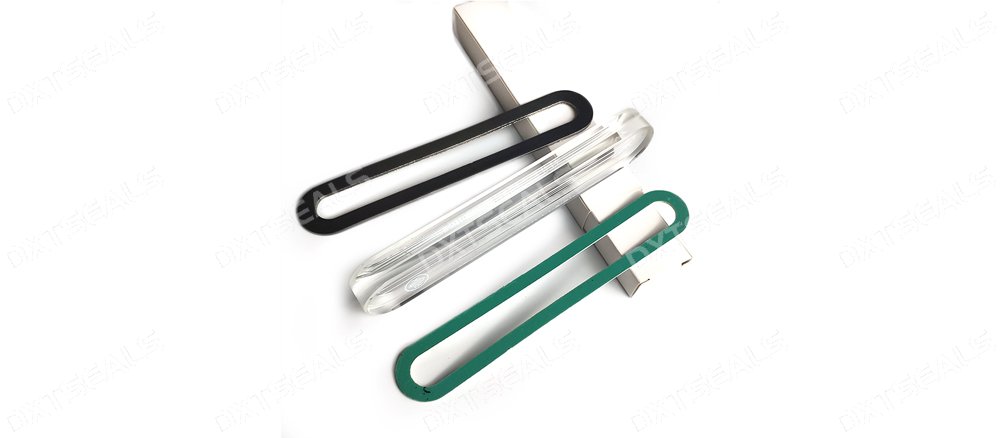
Boiler level gauge glass is a specialized industrial glass component used to provide direct visual indication of liquid level inside boilers, pressure vessels, tanks, and other industrial equipment.
Unlike ordinary glass products, boiler level gauge glass must be manufactured from materials capable of withstanding demanding conditions such as elevated temperature, pressure, thermal cycling, and contact with water or process media.
Borosilicate glass is widely used for this type of application because of its excellent thermal resistance, low thermal expansion, and good chemical stability.
For customers requiring German-standard dimensions, we can provide special boiler level gauge glass made from high-quality borosilicate glass, together with matching sealing gaskets for convenient installation and replacement.
What Is Boiler Level Gauge Glass?
Boiler level gauge glass is a transparent glass component installed in a level gauge assembly.
Its primary function is to allow operators to visually observe the liquid level inside a boiler or pressure vessel.
A typical level gauge assembly may include:
- Level gauge glass
- Metal gauge body
- Sealing gaskets
- Washers or compression components
- Bolts and fastening components
- Connection fittings
The glass forms the visual observation section, while the gasket provides sealing between the glass and metal components.
Because the glass is directly exposed to the operating environment, material quality and dimensional accuracy are important.
High Borosilicate Glass for Boiler Applications
The main material for this product is high borosilicate glass.
Borosilicate glass is particularly suitable for industrial sight glass and level gauge applications because of its low coefficient of thermal expansion.
This helps reduce the risk of thermal stress when the glass experiences temperature changes.
Key Material Characteristics
High borosilicate glass generally provides:
- Excellent thermal shock resistance
- Low thermal expansion
- Good high-temperature performance
- Good chemical resistance
- High transparency
- Good dimensional stability
- Long service life under suitable operating conditions
These properties make it suitable for industrial liquid-level observation.
Why Borosilicate Glass Is Suitable for Boilers
Boiler equipment can experience significant temperature differences during startup, shutdown, and normal operation.
Ordinary glass may be more susceptible to thermal stress under these conditions.
Borosilicate glass has a lower thermal expansion coefficient than conventional soda-lime glass, helping it withstand rapid temperature changes more effectively.
This makes it a preferred material for many industrial sight glass and boiler level gauge applications.
However, the maximum allowable operating temperature and pressure should always be determined according to the specific glass grade, dimensions, installation structure, and manufacturer's technical specifications.
German Standard Boiler Level Gauge Glass
For European industrial equipment, German standard dimensions and specifications may be required when replacing original level gauge components.
German-standard boiler level gauge glass can be manufactured according to the required:
- Length
- Width
- Thickness
- Hole configuration
- Edge profile
- Dimensional tolerances
- Gasket dimensions
This is particularly useful for replacement and maintenance applications where the existing equipment uses a German-standard level gauge assembly.
Standard and Replacement Supply
Standard-size products can be supplied for commonly used equipment.
Replacement products can also be manufactured according to:
- Existing glass samples
- Technical drawings
- Equipment specifications
- Original dimensions
- Customer requirements
This provides greater flexibility when the original manufacturer's component is unavailable or when a replacement is required.
Boiler Level Gauge Glass with Matching Gaskets
A level gauge glass does not work as an independent component.
The glass normally needs to be installed together with suitable sealing gaskets.
A complete replacement set can therefore include:
Borosilicate Level Gauge Glass + Matching Gaskets
This combination can simplify purchasing and installation.
Why the Gasket Is Important
The gasket forms the sealing interface between the glass and the metal level gauge body.
A suitable gasket helps:
- Prevent leakage
- Maintain sealing pressure
- Compensate for minor surface irregularities
- Protect the glass during installation
- Maintain reliable sealing during operation
The gasket material should be selected according to the temperature, pressure, medium, and installation conditions.
Gasket Material Selection
Different gasket materials may be suitable for different boiler and industrial applications.
Possible materials include:
- Graphite
- PTFE
- Expanded graphite
- Fiber-based gasket materials
- Other high-temperature sealing materials
The appropriate material depends on the actual operating conditions.
For high-temperature boiler applications, the gasket should have suitable temperature resistance and compression characteristics.
The gasket dimensions are also important. An incorrect gasket thickness or inner diameter can affect both sealing performance and glass installation.
Importance of Correct Glass Dimensions
Level gauge glass is a precision component.
Even when the material is correct, incorrect dimensions can prevent proper installation.
Important dimensions include:
- Overall length
- Overall width
- Thickness
- Hole diameter
- Hole spacing
- Edge dimensions
- Chamfer or edge profile
For replacement products, it is recommended to confirm the original dimensions or provide a drawing or physical sample.
Typical Applications
Borosilicate boiler level gauge glass is commonly used for direct liquid-level observation in industrial equipment.
Typical applications include:
Industrial Boilers
Used to visually monitor boiler water levels and help operators observe changes during operation.
Steam Systems
Suitable for level indication equipment associated with steam-generating systems.
Pressure Vessels
Borosilicate sight glass can be used in certain pressure vessel level indication systems when the glass specifications are appropriate for the operating conditions.
Industrial Tanks
Specialized sight glass assemblies can be used for visual observation of liquid levels in tanks and process equipment.
Chemical and Process Equipment
The chemical resistance of borosilicate glass makes it useful in selected process applications where transparent observation is required.
Boiler Level Gauge Glass vs Ordinary Glass
The differences between industrial boiler gauge glass and ordinary glass are significant.
| Feature | Boiler Level Gauge Glass | Ordinary Glass |
|---|---|---|
| Material | High borosilicate or specified industrial glass | Common glass |
| Thermal Shock Resistance | High | Generally lower |
| Thermal Expansion | Low | Higher |
| High-Temperature Applications | Suitable for specified conditions | Limited |
| Industrial Pressure Equipment | Designed for specified applications | Generally unsuitable |
| Dimensional Requirements | Precise | General |
| Typical Use | Boilers, gauges, pressure equipment | Windows, general products |
Boiler level gauge glass should not be replaced with ordinary glass simply because the dimensions appear similar.
The glass material, thickness, pressure rating, temperature rating, and installation method all need to be considered.
How to Choose the Right Boiler Level Gauge Glass
Before purchasing a replacement glass, several technical parameters should be confirmed.
1. Glass Material
Confirm that the glass is suitable for the intended operating temperature and pressure.
For many boiler applications, high borosilicate glass is a suitable option.
2. Dimensions
Measure or confirm:
- Length
- Width
- Thickness
- Hole dimensions
- Hole spacing
- Edge configuration
3. Operating Temperature
The glass must be suitable for the maximum operating temperature as well as thermal cycling.
4. Operating Pressure
The pressure inside the equipment should be considered when selecting the glass thickness and specification.
5. Working Medium
Determine whether the glass will be exposed to:
- Boiler water
- Steam
- Condensate
- Process liquids
- Chemicals
Chemical compatibility should be considered for specialized applications.
6. Gasket Requirements
The gasket should match:
- Glass dimensions
- Gauge body
- Temperature
- Pressure
- Working medium
Supplying the glass together with the matching gasket can make replacement more convenient.
Manufacturing and Quality Control
Industrial level gauge glass requires controlled manufacturing to achieve reliable dimensional accuracy and surface quality.
Important quality factors include:
- Glass composition
- Thickness consistency
- Dimensional accuracy
- Edge quality
- Surface condition
- Transparency
- Internal defects
- Thermal performance
The edges of the glass should be appropriately processed to reduce installation risks.
For custom replacement products, dimensional inspection is especially important.
Standard and Custom Boiler Gauge Glass
In addition to standard German dimensions, customized boiler level gauge glass can be manufactured according to customer requirements.
Custom production may involve:
- Non-standard lengths
- Special widths
- Different thicknesses
- Custom hole positions
- Special edge profiles
- Matching gasket dimensions
Customers can provide a technical drawing, sample, equipment information, or dimensional requirements for evaluation.
This makes the product suitable for both standard replacement applications and special industrial equipment.
Complete Replacement Solution
For maintenance projects, purchasing only the glass may not always be the most convenient solution.
A complete replacement package can include:
- High borosilicate boiler level gauge glass
- Matching sealing gaskets
- Required washers
- Other installation components when applicable
Providing compatible components together can help reduce the risk of mismatched dimensions and simplify maintenance procurement.
Conclusion
German standard borosilicate boiler level gauge glass is a specialized industrial glass product designed for visual liquid-level monitoring in boilers, pressure vessels, and other process equipment.
High borosilicate glass provides low thermal expansion, good thermal shock resistance, high transparency, and good chemical stability, making it suitable for demanding industrial sight glass applications when the specific grade and design are correctly selected.
For replacement applications, dimensional accuracy is particularly important. Length, width, thickness, hole configuration, edge profile, operating temperature, and pressure should all be confirmed before production.
We can provide high borosilicate boiler level gauge glass according to German-standard dimensions, as well as matching high-temperature gaskets to provide a more complete replacement solution. Standard products and non-standard custom sizes can be manufactured according to drawings, samples, and customer requirements.