
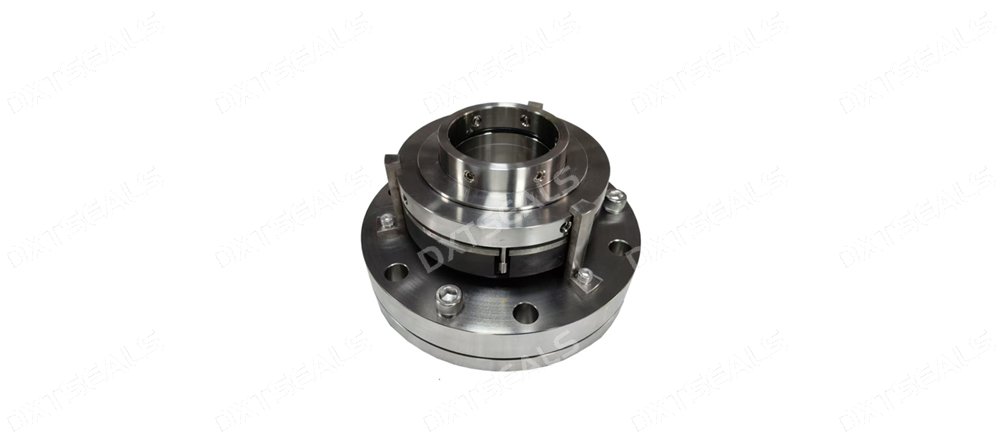
Mechanical seals are essential components in pumps, compressors, mixers, agitators, and other rotating equipment. Their performance directly impacts equipment reliability, operational efficiency, maintenance costs, and environmental safety.
However, selecting the right mechanical seal is not simply a matter of choosing a standard model. Every application presents unique operating conditions, including pressure, temperature, media characteristics, shaft speed, and installation constraints. A seal that performs perfectly in one application may fail prematurely in another.
To achieve long-term sealing performance, engineers must carefully evaluate both material selection and structural design. This article explains how to choose the most appropriate mechanical seal configuration based on actual operating conditions and highlights the key factors that influence sealing success.
Why Proper Mechanical Seal Selection Matters
Mechanical seal failures are often caused not by manufacturing defects but by incorrect seal selection.
Common consequences of improper selection include:
- Excessive leakage
- Premature wear
- Thermal damage
- Increased maintenance costs
- Equipment downtime
- Reduced service life
Choosing the correct seal materials and design structure helps ensure:
- Reliable sealing performance
- Longer operating life
- Improved equipment efficiency
- Lower total operating costs
The selection process should always begin with a thorough analysis of operating conditions.
Step 1: Evaluate the Process Media
The characteristics of the process fluid are among the most important factors in seal selection.
Questions to consider include:
- Is the media corrosive?
- Does it contain abrasive particles?
- Is it toxic or hazardous?
- Is it clean or contaminated?
- Does it have lubricating properties?
Different media require different material combinations and seal designs.
Corrosive Chemical Media
Applications involving acids, alkalis, solvents, or aggressive chemicals require materials with exceptional corrosion resistance.
Recommended seal face materials include:
- Silicon Carbide (SiC)
- Silicon Carbide vs Silicon Carbide
- Carbon Graphite vs Silicon Carbide
Recommended elastomers:
- FKM
- FFKM
- PTFE-based components
Typical industries:
- Chemical processing
- Pharmaceutical manufacturing
- Semiconductor production
Abrasive Media
Slurries, wastewater, pulp, and mining fluids contain particles that accelerate wear.
Recommended materials:
- Tungsten Carbide (TC)
- Tungsten Carbide vs Tungsten Carbide
- Carbon Graphite vs Tungsten Carbide
Recommended seal designs:
- Heavy-duty seals
- Double mechanical seals
- External flush systems
Typical industries:
- Mining
- Pulp and paper
- Wastewater treatment
Step 2: Analyze Operating Temperature
Temperature significantly affects material performance, thermal expansion, and seal stability.
Low-Temperature Applications
Cryogenic systems require materials capable of maintaining stability at extremely low temperatures.
Recommended materials:
- Silicon Carbide
- Carbon Graphite
- Stainless steel alloys
Typical applications:
- LNG systems
- Industrial gases
- Cryogenic pumps
High-Temperature Applications
Elevated temperatures increase thermal stress and accelerate material aging.
Recommended materials:
- Silicon Carbide
- Tungsten Carbide
- High-temperature carbon grades
Recommended elastomers:
- FKM
- FFKM
- Metal bellows designs
Typical industries:
- Petrochemical plants
- Power generation
- Refinery operations
Step 3: Determine Operating Pressure
Pressure has a major impact on seal face loading and leakage control.
Low-Pressure Applications
Often suitable for:
- Component seals
- Single mechanical seals
- Standard balanced designs
Common applications:
- Water pumps
- Utility systems
- HVAC equipment
High-Pressure Applications
Require enhanced face stability and pressure compensation.
Recommended designs:
- Balanced mechanical seals
- Double mechanical seals
- Cartridge seals
Benefits include:
- Reduced face loading
- Lower heat generation
- Improved reliability
Typical industries:
- Oil and gas
- Chemical processing
- High-pressure pumping systems
Step 4: Evaluate Shaft Speed
Rotational speed directly affects friction, heat generation, and wear.
Moderate-Speed Applications
Suitable materials:
- Carbon Graphite + Silicon Carbide
- Carbon Graphite + Ceramic
These combinations provide excellent friction control and cost efficiency.
High-Speed Applications
Require:
- Superior balance
- Excellent thermal conductivity
- Stable face geometry
Recommended materials:
- Silicon Carbide + Silicon Carbide
- Carbon Graphite + Silicon Carbide
Recommended designs:
- Balanced seals
- Cartridge seals
These configurations minimize heat buildup and improve long-term reliability.
Step 5: Consider Seal Structure Design
Beyond material selection, the mechanical seal structure must match operating requirements.
Single Mechanical Seals
Single seals are the most common and economical solution.
Advantages
- Lower cost
- Easy installation
- Suitable for clean fluids
Typical Applications
- Water pumps
- Utility equipment
- General industrial systems
Double Mechanical Seals
Double seals use two sealing interfaces and a barrier fluid system.
Advantages
- Enhanced leakage control
- Improved safety
- Protection against dry running
Typical Applications
- Hazardous chemicals
- Toxic fluids
- Flammable media
Industries include:
- Chemical processing
- Petrochemical plants
- Pharmaceutical manufacturing
Cartridge Mechanical Seals
Cartridge seals are pre-assembled units that simplify installation.
Advantages
- Reduced installation errors
- Improved alignment
- Faster maintenance
Applications
- Industrial pumps
- Process equipment
- OEM systems
Cartridge seals are increasingly preferred in modern industrial facilities.
Balanced vs Unbalanced Seal Designs
Seal balance affects face loading and operating stability.
Balanced Mechanical Seals
Benefits:
- Reduced face pressure
- Lower friction
- Better high-pressure performance
- Longer service life
Recommended for:
- High-pressure systems
- High-speed equipment
- Challenging process conditions
Unbalanced Mechanical Seals
Benefits:
- Simpler design
- Lower manufacturing cost
Suitable for:
- Low-pressure applications
- Clean process fluids
Step 6: Select Appropriate Secondary Sealing Materials
Secondary seals such as O-rings and gaskets must also be compatible with operating conditions.
NBR
Suitable for:
- Water
- Oils
- General industrial fluids
EPDM
Suitable for:
- Hot water
- Steam
- Food processing
FKM
Suitable for:
- Chemicals
- High temperatures
- Hydrocarbon fluids
FFKM
Suitable for:
- Semiconductor applications
- Aggressive chemicals
- Extreme environments
Selecting the correct elastomer is just as important as selecting the seal face materials.
Typical Material and Design Recommendations by Industry
Chemical Industry
Recommended:
- Silicon Carbide + Silicon Carbide
- Double mechanical seals
- FFKM elastomers
Focus:
- Corrosion resistance
- Safety
Food and Beverage Industry
Recommended:
- Carbon Graphite + Silicon Carbide
- Hygienic seal designs
- FDA-compliant materials
Focus:
- Cleanability
- Product safety
Mining Industry
Recommended:
- Tungsten Carbide + Tungsten Carbide
- Heavy-duty seal structures
Focus:
- Abrasion resistance
- Durability
Water Treatment Industry
Recommended:
- Carbon Graphite + Ceramic
- Standard single seals
Focus:
- Cost efficiency
- Reliability
Oil and Gas Industry
Recommended:
- Silicon Carbide + Silicon Carbide
- Balanced cartridge seals
Focus:
- High pressure
- Extreme temperatures
Why Customized Seal Selection Delivers Better Results
While standard seals can satisfy many applications, complex operating conditions often require customized solutions.
Customized seal engineering allows optimization of:
- Face material combinations
- Seal geometry
- Balance ratio
- Spring configuration
- Elastomer selection
- Cooling and flushing systems
At DXTSEALS, our engineering team evaluates operating parameters to recommend the most effective seal materials and structural designs for each application.
This approach improves equipment reliability, reduces maintenance costs, and maximizes seal service life.
Conclusion
Selecting the right mechanical seal requires more than choosing a standard part number. Successful sealing performance depends on matching materials and structural designs to actual operating conditions.
Factors such as media characteristics, temperature, pressure, shaft speed, and installation requirements all influence the optimal seal configuration.
By carefully evaluating these parameters and selecting the appropriate materials and seal structures, companies can significantly improve equipment performance, reduce downtime, and lower total operating costs.
DXTSEALS provides both standard and customized mechanical seal solutions, helping customers achieve reliable sealing performance in the most demanding industrial environments.