
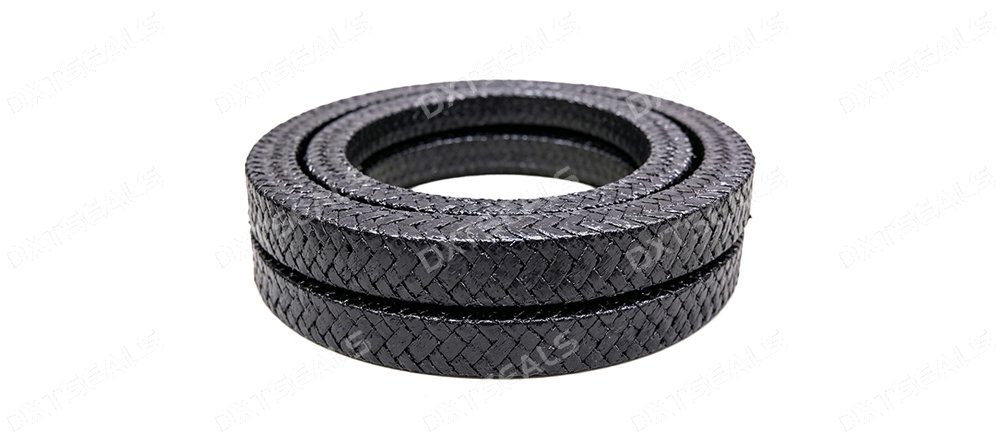
Gland packing is one of the oldest and most widely used sealing solutions in industrial equipment. Although modern mechanical seals, oil seals, and other advanced sealing technologies have become increasingly common, packing remains an important choice for pumps, valves, rotating shafts, and other industrial applications.
One of the biggest advantages of gland packing is its versatility. Packing can be manufactured from different materials and configured for different operating conditions, including water, steam, chemicals, oils, and abrasive media.
But how versatile is gland packing in practical applications? Where does it perform well, and when should another sealing solution be considered?
What Is Gland Packing?
Gland packing, also called packing seal or compression packing, is a sealing material installed around a shaft, stem, or other moving component.
Unlike a molded oil seal or mechanical seal, packing is usually supplied as braided rope, rings, or pre-formed packing sets. During installation, the packing is compressed inside a stuffing box or packing chamber.
The compression creates sealing pressure between the packing, housing, and moving shaft or stem.
Typical applications include:
-
Centrifugal pumps
-
Rotary pumps
-
Valve stems
-
Agitators
-
Mixers
-
Industrial rotating equipment
-
Water pumps
-
Slurry pumps
-
Chemical equipment
-
Marine equipment
-
Pulp and paper machinery
Because packing can be cut, adjusted, and replaced relatively easily, it remains attractive for many industrial maintenance applications.
Why Is Gland Packing So Versatile?
The versatility of gland packing comes mainly from its material options, construction methods, and ability to accommodate different equipment designs.
Packing can be manufactured using materials such as:
-
PTFE
-
Graphite
-
Aramid fiber
-
Carbon fiber
-
Synthetic fibers
-
Expanded graphite
-
PTFE-impregnated fibers
-
Graphite-impregnated fibers
-
Fiber combinations
Different materials provide different properties.
For example, PTFE packing offers excellent chemical resistance and low friction, while graphite packing is often selected for high-temperature applications.
Aramid fiber packing provides high mechanical strength and abrasion resistance, making it useful in applications involving abrasive media.
This material diversity allows packing to cover a wide range of industrial operating conditions.
1. Packing for Water Pumps
Water pumps are one of the most common applications for gland packing.
Packing can be used in:
-
Industrial water pumps
-
Cooling-water pumps
-
Circulation pumps
-
Drainage pumps
-
Large process pumps
-
Agricultural irrigation pumps
For general water service, relatively simple packing materials may be sufficient.
However, the appropriate packing depends on factors such as water temperature, shaft speed, pressure, and whether the water contains abrasive particles.
For large industrial pumps, packing can also be advantageous because it can be adjusted during operation to maintain an appropriate leakage rate.
2. Packing for Valve Stems
Gland packing is also widely used for valves.
Valve stem packing is different from packing used around continuously rotating pump shafts. The sealing material must accommodate reciprocating or rotating stem movement while maintaining sealing pressure.
Common applications include:
-
Gate valves
-
Globe valves
-
Control valves
-
Butterfly valves
-
Industrial process valves
Graphite and PTFE-based packing are frequently considered for valve applications depending on temperature, pressure, and chemical compatibility.
For high-temperature steam valves, graphite-based packing is often preferred because of its temperature resistance.
3. High-Temperature Applications
Packing can be designed for relatively high-temperature environments.
Graphite is particularly important in high-temperature sealing applications because it maintains useful sealing properties at temperatures where many conventional polymer-based materials would become unsuitable.
Graphite packing may be used in:
-
Steam systems
-
High-temperature valves
-
Thermal equipment
-
Power-generation equipment
-
Hot process media
-
Industrial furnaces and related equipment
However, high-temperature applications require careful consideration of the packing material, equipment design, shaft or stem condition, and installation method.
The maximum operating temperature should always be determined from the specific packing construction rather than assuming that all graphite packing has identical performance.
4. Chemical Processing Applications
Chemical resistance is another major reason why gland packing remains widely used.
PTFE-based packing is particularly useful in applications involving many aggressive chemicals because PTFE has excellent chemical resistance.
Potential applications include:
-
Chemical pumps
-
Chemical processing equipment
-
Acid and alkali service
-
Solvent-handling equipment
-
Chemical valves
-
Process machinery
However, chemical compatibility should always be evaluated against the actual medium, temperature, concentration, and pressure.
A material that is chemically resistant under one condition may not be suitable under another.
5. Abrasive Media and Slurry Applications
Not every sealing application involves clean fluids.
Mining, mineral processing, wastewater treatment, and other industrial processes may involve abrasive particles.
In these applications, packing with high mechanical strength and abrasion resistance can be useful.
Aramid-reinforced packing is one example.
Its high tensile strength and abrasion resistance make it suitable for applications where the sealing environment is mechanically demanding.
Typical applications may include:
-
Slurry pumps
-
Mining equipment
-
Mineral processing pumps
-
Wastewater systems
-
Pulp handling equipment
-
Abrasive fluid systems
The exact packing construction should be selected according to the concentration and type of abrasive particles.
6. Packing in Pulp and Paper Equipment
The pulp and paper industry is another important application area.
Industrial pumps and rotating equipment may handle water, pulp, fibers, chemicals, and abrasive contaminants.
Packing can be used in:
-
Pulp pumps
-
Stock pumps
-
Process pumps
-
Agitators
-
Valves
-
Rotating shafts
Packing constructions incorporating aramid, PTFE, graphite, or other fibers can be selected according to the operating conditions.
7. Marine and Shipboard Applications
Gland packing has also been used extensively in marine equipment.
It can be found in applications involving:
-
Marine pumps
-
Propeller shafts
-
Valves
-
Seawater systems
-
Cooling systems
-
Drainage equipment
Marine applications can expose sealing materials to water, salt, corrosion, vibration, and continuous operation.
The packing material therefore needs to be selected according to the specific equipment and medium.
8. Why Packing Is Still Used Instead of Mechanical Seals
Mechanical seals offer excellent sealing performance and are widely used in modern industrial equipment.
However, packing has several practical advantages.
Simple Construction
A packing system generally has fewer specialized components than a mechanical seal.
Easy Maintenance
Packing can often be adjusted or replaced without replacing an entire mechanical seal assembly.
Flexible Installation
Packing can be cut and installed according to the stuffing-box dimensions.
Cost Effectiveness
For many industrial applications, packing can be a relatively economical sealing solution.
Adjustable Leakage
Unlike many mechanical seals, packing systems may intentionally allow a small amount of leakage for lubrication and cooling.
This characteristic can be particularly useful in certain pump applications.
9. Packing Is Not Always the Best Choice
Despite its versatility, gland packing is not suitable for every application.
Mechanical seals may be preferred when extremely low leakage is required.
For example, applications involving:
-
Hazardous chemicals
-
Toxic fluids
-
Volatile media
-
Strict emissions requirements
-
High-performance process pumps
-
Applications requiring near-zero visible leakage
may require a mechanical seal or another specialized sealing technology.
Similarly, a conventional oil seal may be more appropriate for applications where the equipment design specifically requires a compact lip seal.
The correct sealing solution depends on the operating conditions rather than simply the price of the seal.
10. Packing vs. Mechanical Seal vs. Oil Seal
Different sealing technologies serve different purposes.
| Sealing Solution | Typical Applications | Main Advantages |
|---|---|---|
| Gland Packing | Pumps, valves, shafts | Flexible, adjustable, easy to maintain |
| Mechanical Seal | Pumps, rotating equipment | Low leakage, high-performance sealing |
| Oil Seal | Rotating shafts | Compact, economical, easy installation |
| PTFE Spring-Energized Seal | Dynamic/static applications | Chemical resistance, low friction, wide material options |
| O-Ring | Static and some dynamic applications | Simple design, economical |
This comparison shows why packing remains relevant.
It does not need to replace every other sealing technology. Instead, it provides a practical solution for applications where its characteristics match the equipment requirements.
11. What Factors Should Be Considered When Selecting Packing?
Choosing packing based only on the equipment name is not sufficient.
Important operating parameters include:
Medium
Determine whether the equipment handles water, oil, steam, chemicals, slurry, solvents, or another medium.
Temperature
High-temperature applications may require graphite or other specialized materials.
Pressure
Packing must be capable of maintaining sealing performance at the system's operating pressure.
Shaft Speed
Rotating equipment requires packing that can withstand the shaft speed without excessive heat generation or wear.
Shaft or Stem Material
The surface condition and material of the shaft or stem can affect packing performance.
Equipment Type
Pump packing, valve packing, and agitator packing may require different constructions.
Lubrication or Flush Water
Some packing systems require lubrication or cooling water to control friction and temperature.
Installation Dimensions
Packing cross-section and stuffing-box dimensions must match the equipment.
12. Correct Installation Is Critical
Even high-quality packing can perform poorly if it is installed incorrectly.
Common installation considerations include:
-
Correct packing size
-
Proper cutting angle
-
Correct ring arrangement
-
Staggered joints
-
Appropriate compression
-
Proper gland adjustment
-
Adequate lubrication where required
-
Correct shaft condition
Over-compressing packing can increase friction, heat generation, and shaft wear.
Under-compressing it can result in excessive leakage.
Therefore, packing performance depends on both material selection and installation quality.
13. Packing Maintenance and Adjustment
One of the most practical advantages of gland packing is that it can often be adjusted during operation.
For pump applications, a small controlled leakage rate may be desirable because it helps lubricate and cool the packing.
As the packing wears, the gland can sometimes be adjusted to restore appropriate compression.
Eventually, however, the packing will need to be replaced.
This maintenance approach can be particularly useful for large industrial equipment where quick and practical maintenance is important.
Conclusion
So, how versatile is gland packing?
The answer is: very versatile, provided that the packing material and construction are correctly matched to the application.
From water pumps and industrial valves to chemical equipment, slurry pumps, pulp and paper machinery, steam systems, and marine equipment, packing can serve a wide variety of sealing requirements.
Its biggest advantages are its material flexibility, relatively simple construction, adjustability, maintainability, and cost-effectiveness.
However, packing is not a universal replacement for mechanical seals, oil seals, or other advanced sealing technologies. Applications requiring extremely low leakage, hazardous-media containment, or specialized dynamic sealing performance may require alternative solutions.
The best approach is to select the sealing technology based on the actual operating conditions—including medium, pressure, temperature, shaft speed, equipment design, and maintenance requirements.
When properly selected and installed, gland packing remains a practical and highly versatile sealing solution for many industrial applications.