
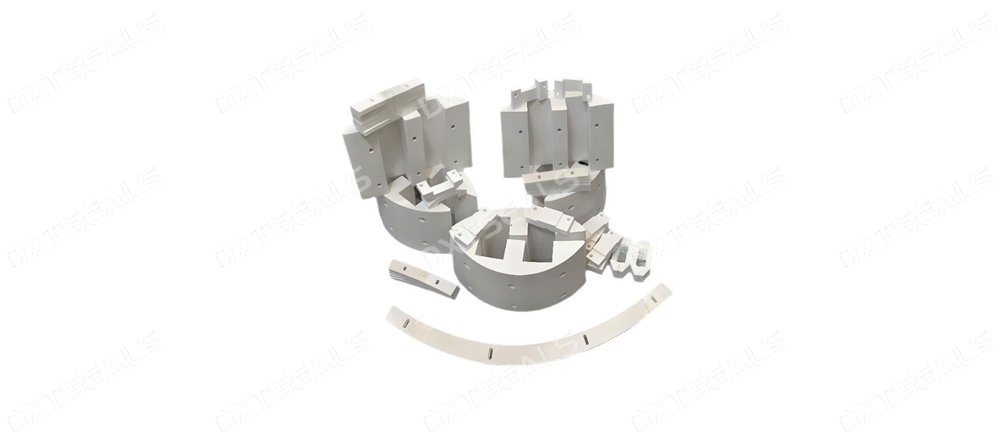
PTFE is widely used in industrial applications because of its excellent chemical resistance, low friction, electrical insulation, non-stick properties, and broad temperature resistance. These characteristics make it an important material for chemical equipment, industrial machinery, fluid handling systems, semiconductor equipment, and custom sealing components.
While standard PTFE components can be manufactured using conventional machining equipment, large-scale PTFE machining presents significantly greater challenges. When a component becomes very large, machine capacity, workholding, flatness, dimensional stability, and deformation control become critical.
For oversized PTFE plates, covers, grid plates, liners, and other custom components, gantry milling machines can provide the large working area and stable machining platform required for precision manufacturing.
What Is Large-Scale PTFE Machining?
Large-scale PTFE machining refers to the manufacturing of oversized PTFE components using CNC turning, milling, drilling, and other precision machining processes.
Typical large PTFE components include:
- Large PTFE plates
- PTFE covers
- PTFE grid plates
- Large PTFE liners
- PTFE support plates
- PTFE insulation components
- Large custom PTFE structures
- Oversized industrial PTFE parts
These components are often manufactured according to customer drawings, CAD models, physical samples, or OEM specifications.
Why Is Oversized PTFE Machining Difficult?
PTFE has unique characteristics that require careful machining control.
High Thermal Expansion
PTFE has a relatively high coefficient of thermal expansion. Temperature changes during machining can therefore influence component dimensions.
For a small component, the dimensional change may be relatively insignificant. For an oversized PTFE plate, however, even a small dimensional variation can become noticeable across the entire part.
Low Material Rigidity
PTFE is relatively soft and flexible compared with metals.
Large PTFE components can deform due to:
- Cutting forces
- Clamping pressure
- Uneven support
- Component weight
- Internal stress
- Temperature changes
Therefore, large PTFE machining requires appropriate workholding and machining strategies.
Flatness Challenges
Large PTFE plates and covers may require controlled flatness for installation or sealing purposes.
Improper machining methods can result in:
- Warping
- Bending
- Uneven thickness
- Edge deformation
- Post-machining dimensional changes
The larger the component, the more important flatness control becomes.
Why Are Gantry Milling Machines Important?
A gantry milling machine uses a large structural frame that spans the machining area. This configuration provides a significantly larger working envelope than many conventional vertical machining centers.
For oversized PTFE components, this capability provides several important advantages.
Large Working Area
The most obvious advantage is the ability to accommodate very large workpieces.
Large gantry milling equipment can be used to machine:
- Oversized PTFE plates
- Large covers
- Extra-large grid panels
- Large equipment liners
- Custom PTFE structures
This allows manufacturers to machine components that cannot fit on conventional CNC machines.
Improved One-Piece Machining Capability
When a PTFE component is too large for conventional equipment, one option is to divide it into multiple smaller sections.
However, this can create additional challenges:
- Assembly errors
- Alignment problems
- Additional joints
- Increased installation time
- Accumulated dimensional errors
A sufficiently large gantry milling machine can allow the component to be machined as a single piece, when the design and machine capacity permit.
Better Control of Large Geometries
Large PTFE components often contain complex features across a wide surface.
A large CNC machining platform can maintain consistent tool movement across:
- Long edges
- Large flat surfaces
- Multiple holes
- Grid patterns
- Mounting interfaces
- Large contours
This is particularly important when multiple features must maintain accurate relative positions.
Large PTFE Plates and Covers
Large PTFE plates and covers are among the most common oversized components requiring gantry machining.
Typical machining operations include:
- Face milling
- Surface finishing
- Hole drilling
- Slot machining
- Groove machining
- Counterboring
- Contour milling
- Chamfering
The machining sequence must be carefully planned to minimize material deformation.
PTFE Grid Plates
PTFE grid plates can contain dozens or hundreds of holes, slots, or other openings.
For large grid plates, CNC programming must control:
- Hole diameter
- Hole position
- Hole spacing
- Grid pattern
- Plate thickness
- Overall dimensions
- Flatness
A large gantry CNC machine can provide the working area required to process the complete plate while maintaining consistent positioning across the entire component.
Deformation Control During Large PTFE Machining
Deformation is one of the biggest concerns when machining oversized PTFE parts.
Workholding
Clamping pressure must be sufficient to prevent movement but not excessive enough to deform the material.
Large workpieces may require carefully distributed support points to maintain stability.
Machining Sequence
A controlled machining sequence can help reduce internal stress and deformation.
A typical process may include:
- Initial positioning
- Rough machining
- Stress stabilization
- Semi-finishing
- Precision finishing
- Final inspection
The actual process should be adjusted according to the material, thickness, geometry, and tolerance requirements.
Cutting Conditions
Machining parameters should be selected to control:
- Cutting force
- Heat generation
- Tool engagement
- Material deformation
Aggressive cutting conditions can increase the risk of distortion, particularly for large and thin PTFE components.
Precision Requirements for Oversized PTFE Parts
Large components do not necessarily require extremely tight tolerances on every dimension. However, critical functional dimensions may require precise control.
Typical requirements include:
- Overall dimensions
- Thickness
- Flatness
- Parallelism
- Hole positioning
- Groove dimensions
- Surface finish
- Mounting interface dimensions
The manufacturer's process should focus on the dimensions that directly affect installation and performance.
Material Selection for Large PTFE Components
The selected PTFE grade can affect both machining behavior and final performance.
Virgin PTFE
Virgin PTFE provides excellent:
- Chemical resistance
- Electrical insulation
- Low friction
- Non-stick performance
It is suitable for many chemical and industrial applications.
Glass-Filled PTFE
Glass-filled PTFE can provide improved:
- Dimensional stability
- Mechanical strength
- Wear resistance
- Compressive performance
Carbon-Filled PTFE
Carbon-filled PTFE can provide improved:
- Wear resistance
- Mechanical properties
- Thermal conductivity
Bronze-Filled PTFE
Bronze-filled PTFE is often selected when improved:
- Load-bearing capacity
- Wear resistance
- Thermal conductivity
- Dimensional stability
are required.
Material selection should be based on the operating environment and performance requirements of the finished component.
Typical Applications of Large PTFE Machined Parts
Large custom PTFE components are used across many industries.
Chemical Processing
PTFE's chemical resistance makes it suitable for:
- Chemical equipment
- Corrosion-resistant systems
- Process components
- Fluid handling equipment
Semiconductor Equipment
Large PTFE components can be used where chemical resistance and electrical insulation are important.
Industrial Machinery
Typical applications include:
- Protective covers
- Liners
- Support plates
- Insulation components
- Custom machine parts
Fluid Handling Equipment
PTFE is suitable for components exposed to aggressive chemicals, fluids, and corrosive environments.
Quality Inspection for Large PTFE Components
Large-scale machining requires careful inspection because dimensional variations can occur across large surfaces.
Typical inspection items include:
- Overall length and width
- Thickness
- Flatness
- Parallelism
- Hole diameter
- Hole position
- Groove dimensions
- Surface finish
Measurements should be performed at multiple locations where appropriate.
For large PTFE plates, checking only one point may not provide an accurate representation of the entire component.
OEM and Non-Standard PTFE Machining
Many oversized PTFE components are custom-designed for specific equipment.
Professional manufacturers can produce parts according to:
- 2D engineering drawings
- 3D CAD files
- Physical samples
- OEM specifications
- Custom technical requirements
Custom manufacturing can include:
- Large PTFE plates
- Oversized covers
- Grid plates
- Liners
- Special structural components
- Non-standard PTFE parts
How to Choose a Large PTFE Machining Manufacturer
When selecting a supplier for oversized PTFE components, consider more than standard CNC machining capability.
Important factors include:
- Maximum machining dimensions
- Gantry milling machine capacity
- Experience with large PTFE parts
- Workholding capabilities
- Deformation control methods
- Precision inspection equipment
- Material selection experience
- OEM customization capabilities
A manufacturer may have advanced CNC equipment but still be unable to manufacture an oversized component if the available machining envelope is insufficient.
Why Large Gantry Milling Capability Matters
For oversized PTFE custom parts, having a large gantry milling machine can significantly expand manufacturing possibilities.
It allows manufacturers to handle larger workpieces while providing:
- Large machining capacity
- Better one-piece processing capability
- Consistent CNC positioning
- Efficient processing of large surfaces
- Flexible custom machining
- Reduced need for multi-piece assembly
For customers requiring extra-large PTFE components, this capability can be an important factor when evaluating a machining supplier.
Conclusion
Large-scale PTFE machining requires specialized equipment, careful process planning, and effective control of deformation and dimensional stability. PTFE's thermal expansion, flexibility, and sensitivity to machining stress make oversized components particularly challenging to manufacture.
Gantry milling machines are essential for many large PTFE custom parts because they provide the large working envelope required to process oversized plates, covers, grid plates, liners, and other industrial components.
With large-format CNC machining capability, appropriate workholding, controlled machining sequences, suitable PTFE materials, and comprehensive dimensional inspection, manufacturers can produce customized large PTFE components for chemical processing, semiconductor equipment, industrial machinery, fluid handling, and other demanding applications.