
Introduction
In sealing applications, material compatibility with the working media is just as critical as pressure, temperature, and motion. An incompatible sealing material may swell, degrade, or lose mechanical strength, leading to premature leakage or system failure.
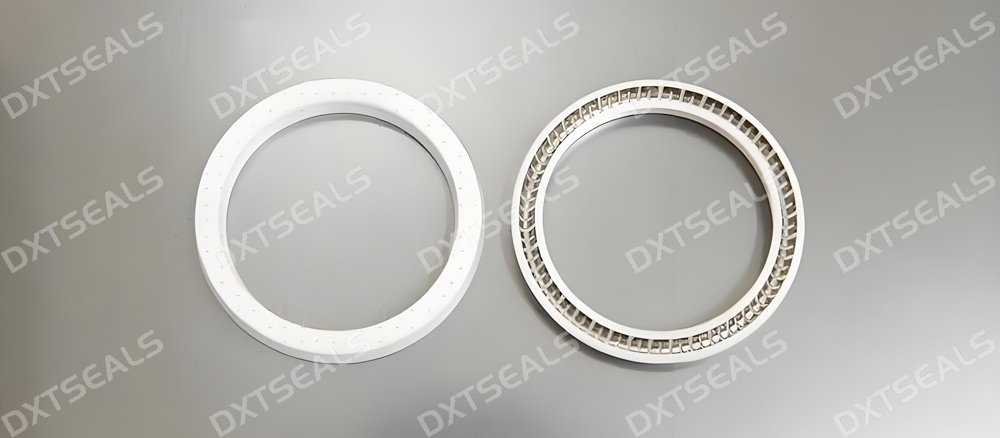
Spring-energized seals are widely used in demanding environments because of their excellent material flexibility. This article provides practical guidance on how to select suitable spring-energized seal materials based on different media types.
Why Media Compatibility Matters
Different media can affect sealing materials in various ways, including:
-
Chemical attack or oxidation
-
Swelling or embrittlement
-
Loss of wear resistance
-
Reduced service life
Proper material selection ensures stable sealing performance and reduces maintenance costs.
PTFE Jacket Material Selection by Media Type
Oils and Lubricants
For mineral oils, synthetic oils, and hydraulic fluids, filled PTFE compounds are commonly recommended.
Recommended options:
-
Carbon-filled PTFE
-
Graphite-filled PTFE
These materials provide low friction and good wear resistance under lubricated conditions.
Aggressive Chemicals and Solvents
In chemical processing equipment, seals may be exposed to acids, alkalis, or organic solvents.
Recommended options:
-
Virgin PTFE
-
High-purity modified PTFE
These materials offer outstanding chemical inertness and resist corrosion from aggressive media.
Gases and Vacuum Media
Gas sealing and vacuum applications require materials with low permeability and stable sealing force.
Recommended options:
-
Glass-filled PTFE
-
Specialized low-permeation PTFE compounds
These materials help minimize leakage and maintain sealing performance at low pressure.
Steam and High-Temperature Fluids
Steam and high-temperature fluids accelerate material aging and deformation.
Recommended options:
-
High-temperature PTFE blends
-
Wear-resistant filled PTFE
Spring materials should also be carefully selected to maintain elasticity at elevated temperatures.
Metal Spring Material Considerations
The energizing spring must also be compatible with the media:
-
Stainless steel springs for most industrial fluids
-
High-performance alloy springs for corrosive or high-temperature environments
Matching spring material to the media ensures long-term sealing force stability.
Practical Selection Tips
-
Always verify chemical compatibility between seal material and media
-
Consider pressure and temperature in addition to media type
-
Balance wear resistance and friction based on motion conditions
-
Consult experienced seal manufacturers for complex media environments
At DXTSEALS, spring-energized seals are designed with carefully selected material combinations to meet a wide range of media compatibility requirements.
Conclusion
Selecting the right spring-energized seal material based on working media is essential for reliable and durable sealing performance. By understanding how different media interact with PTFE jackets and metal springs, engineers can make informed decisions that extend service life and improve system reliability.
A systematic, media-based selection approach ensures optimal performance even in the most challenging applications.