
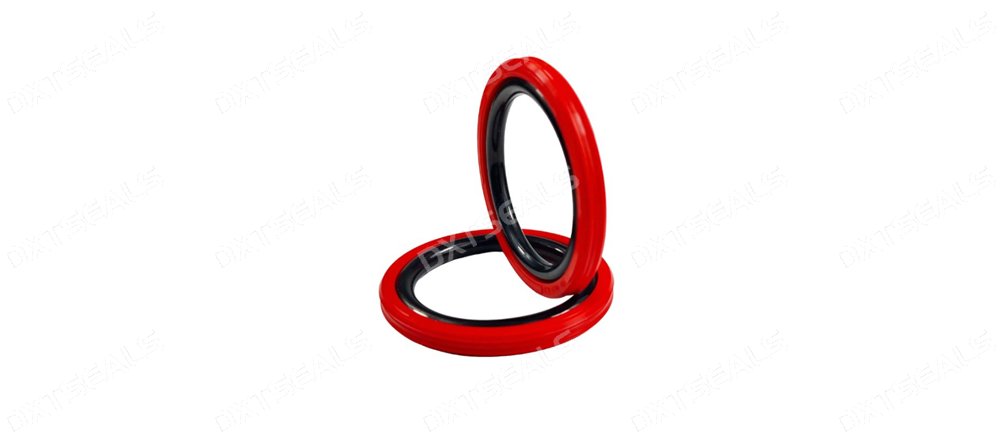
Hydraulic equipment depends on reliable sealing components to maintain pressure, prevent fluid leakage, protect internal components, and ensure stable operation. Hydraulic cylinders, pumps, valves, industrial actuators, and mobile machinery all require sealing solutions that can withstand pressure, movement, temperature, and contact with hydraulic fluids.
Among the most commonly used polymer sealing products are spring energized seals, Glyd rings, and Step Seals. These products are available in a wide range of standard sizes and material combinations, while customized versions can also be manufactured for special equipment.
Although these seals share some material characteristics, their structures and typical applications are different. Selecting the right seal requires an understanding of the sealing position, operating conditions, and equipment design.
Why Seals Are Important in Hydraulic Equipment
A hydraulic system converts fluid pressure into mechanical movement. Any uncontrolled leakage can reduce system efficiency and affect equipment performance.
Hydraulic seals perform several important functions:
- Prevent hydraulic fluid leakage
- Maintain system pressure
- Reduce contamination
- Protect moving components
- Reduce friction
- Improve equipment reliability
- Extend service intervals
A complete hydraulic cylinder may use several sealing components together, including piston seals, rod seals, wiper seals, guide rings, and buffer seals.
The correct combination depends on the cylinder design and operating conditions.
Spring Energized Seals
Spring energized seals are polymer sealing products that use a metal spring to maintain continuous sealing force.
A typical design consists of:
- PTFE or another engineered polymer sealing jacket
- Metal spring energizer
- Sealing lip or contact surface
The spring provides an initial sealing force and helps maintain contact between the sealing element and mating surface.
Features of Spring Energized Seals
Low Friction
PTFE-based sealing jackets offer very low friction.
This is useful in hydraulic equipment where excessive friction can increase:
- Energy consumption
- Heat generation
- Wear
- Starting resistance
Excellent Chemical Resistance
PTFE provides excellent resistance to many hydraulic fluids, chemicals, solvents, and aggressive media.
The exact compatibility depends on the PTFE formulation and working fluid.
Wide Temperature Capability
PTFE-based seals can operate over a broad temperature range when the polymer and spring materials are correctly selected.
Effective Low-Pressure Sealing
Unlike pressure-energized seals that depend primarily on system pressure, spring energized seals receive sealing force from the spring itself.
This can be beneficial during startup, shutdown, or low-pressure operation.
Spring Materials
Common spring materials may include corrosion-resistant stainless steels and other alloys.
The spring material should be selected according to:
- Temperature
- Chemical exposure
- Corrosion conditions
- Required spring force
- Service environment
Glyd Rings
Glyd rings are widely used as dynamic piston seals in hydraulic cylinders.
A typical Glyd ring consists of:
- PTFE or polymer sealing ring
- Elastomer O-ring energizer
The O-ring provides radial force, while the PTFE ring forms the main sliding sealing surface.
This design combines the elasticity of rubber with the low-friction characteristics of PTFE.
Features of Glyd Rings
Glyd rings provide several advantages for hydraulic applications.
Low Friction
The PTFE sealing ring provides low sliding friction, helping the piston move smoothly.
Good Wear Resistance
Filled PTFE compounds can provide improved wear resistance under repeated reciprocating movement.
Good Chemical Resistance
PTFE provides good resistance to many hydraulic fluids and industrial media.
Smooth Reciprocating Movement
Low friction can help reduce stick-slip and improve cylinder movement.
Compact Design
Glyd rings can provide effective piston sealing within relatively compact grooves.
Typical Hydraulic Applications
Glyd rings are commonly used in:
- Hydraulic cylinders
- Industrial actuators
- Mobile hydraulic equipment
- Machine tools
- Injection molding machinery
- Pressing equipment
- Automation systems
Step Seals
Step Seals are dynamic sealing products commonly used for hydraulic rod sealing.
A typical Step Seal consists of:
- Polymer sealing ring
- Elastomer energizer
The polymer element provides the primary sealing function, while the elastomer maintains contact with the moving rod.
Features of Step Seals
Step Seals are commonly selected for:
- Low friction
- Good wear resistance
- Dynamic rod sealing
- Compact installation
- Good pressure performance
- Long-term reciprocating movement
Their actual performance depends on the profile, material, pressure, temperature, surface finish, and installation dimensions.
Glyd Rings vs Step Seals
The most obvious difference between Glyd rings and Step Seals is their typical installation position.
| Feature | Glyd Rings | Step Seals |
|---|---|---|
| Typical Position | Piston | Rod |
| Main Function | Piston sealing | Rod sealing |
| Movement | Reciprocating | Reciprocating |
| Primary Material | PTFE/Polymer | PTFE/Polymer |
| Energizer | O-ring | Elastomer |
| Friction | Low | Low |
| Wear Resistance | Good to Excellent | Good to Excellent |
| Hydraulic Applications | Yes | Yes |
| Pneumatic Applications | Yes | Yes |
The seal profile and manufacturer's technical specifications should always be checked before selecting a product.
Spring Energized Seals vs Glyd Rings and Step Seals
The main structural difference is the energizing mechanism.
Spring energized seals use a metal spring, while Glyd rings and Step Seals commonly use an elastomer energizer.
| Feature | Spring Energized Seal | Glyd Ring | Step Seal |
|---|---|---|---|
| Energizer | Metal spring | O-ring | Elastomer |
| Typical Application | Specialized dynamic/static sealing | Piston | Rod |
| Main Polymer | PTFE/Engineered polymer | PTFE/Polymer | PTFE/Polymer |
| Low-Pressure Sealing | Excellent | Good | Good |
| Chemical Resistance | Excellent | Good to Excellent | Good to Excellent |
| Friction | Very Low | Low | Low |
| Typical Equipment | Hydraulic/industrial equipment | Hydraulic cylinders | Hydraulic cylinders |
Spring energized seals are particularly useful where low pressure, temperature, chemical compatibility, or specialized sealing requirements are important.
Glyd rings and Step Seals are more commonly used as standard piston and rod sealing products in hydraulic cylinders.
Common Materials for Hydraulic Seals
Material selection has a major effect on seal performance.
PTFE
PTFE is widely used for hydraulic seals because of:
- Very low friction
- Excellent chemical resistance
- Good temperature resistance
- Good dimensional stability
Different fillers can improve mechanical and wear properties.
Common PTFE compounds include:
- Virgin PTFE
- Glass-filled PTFE
- Carbon-filled PTFE
- Graphite-filled PTFE
- Bronze-filled PTFE
NBR
NBR is widely used as an elastomer material because it provides:
- Good oil resistance
- Good elasticity
- Good mechanical properties
- Cost-effective performance
It is suitable for many general hydraulic applications.
FKM
FKM is commonly selected for more demanding applications requiring good resistance to:
- High temperatures
- Oils
- Fuels
- Many chemicals
Polyurethane
Polyurethane is widely used for hydraulic rod seals, piston seals, and wiper seals.
Its key advantages include:
- Excellent abrasion resistance
- Good tensile strength
- Good tear resistance
- Good dynamic performance
It is particularly suitable for demanding reciprocating applications.
Other Seals Used in Hydraulic Equipment
Spring energized seals, Glyd rings, and Step Seals are only part of a complete hydraulic sealing system.
Wiper Seals
Wiper seals prevent external contaminants from entering the cylinder.
They help protect internal components from:
- Dust
- Dirt
- Mud
- Water
- Metal particles
Polyurethane wipers are commonly used in heavy-duty hydraulic equipment because of their abrasion resistance.
Guide Rings
Guide rings support the piston or rod and reduce metal-to-metal contact.
They can help:
- Carry radial loads
- Protect the cylinder bore
- Improve alignment
- Reduce wear
PTFE bronze guide strips are one common solution where low friction and wear resistance are required.
Buffer Seals
Buffer seals can help manage pressure fluctuations and protect the primary rod seal.
They are often used in high-pressure hydraulic cylinders.
How to Select the Right Hydraulic Seal
Selecting a standard seal requires more than simply matching the nominal diameter.
1. Determine the Sealing Position
Identify whether the seal is used for:
- Piston sealing
- Rod sealing
- Rotary sealing
- Static sealing
This determines which profiles should be considered.
2. Check Pressure
Consider:
- Normal pressure
- Maximum pressure
- Pressure spikes
- Pressure cycles
The seal profile and extrusion clearance must be suitable for the application.
3. Check Temperature
Evaluate the complete operating temperature range.
Both the primary sealing material and energizer must remain suitable at the required temperatures.
4. Identify the Hydraulic Fluid
Common hydraulic media include:
- Mineral oil
- Water-based fluids
- Synthetic fluids
- Special hydraulic fluids
Material compatibility must be verified for the actual fluid.
5. Check Reciprocating Speed
Cylinder speed affects:
- Friction
- Heat generation
- Wear
- Service life
High-speed applications may require specialized PTFE compounds or seal profiles.
6. Check Groove Dimensions
Important dimensions include:
- Rod diameter
- Bore diameter
- Groove diameter
- Groove width
- Groove depth
- Extrusion clearance
Correct installation geometry is essential for reliable sealing.
7. Check Surface Finish
The rod and cylinder bore should have an appropriate surface finish.
A rough surface can accelerate seal wear, while an unsuitable surface condition can affect leakage and friction.
Standard Hydraulic Seals vs Custom Seals
Standard hydraulic seals are available in many common dimensions.
They provide several benefits:
- Easy replacement
- Lower cost
- Established profiles
- Shorter procurement cycles
- Wide availability
Standard products are particularly suitable for conventional hydraulic cylinders.
However, specialized equipment may require custom sealing components due to:
- Non-standard grooves
- Unusual dimensions
- High pressure
- High temperature
- Aggressive fluids
- Limited installation space
Custom seals can be manufactured according to:
- Technical drawings
- CAD files
- Physical samples
- OEM specifications
- Specific operating requirements
Precision Manufacturing of PTFE Hydraulic Seals
Precision machining is particularly useful for custom PTFE sealing components.
CNC machining can produce:
- Custom Glyd rings
- Custom Step Seals
- Spring energized seal jackets
- PTFE piston seals
- PTFE rod seals
- Special sealing rings
Important manufacturing factors include:
- Dimensional accuracy
- Profile geometry
- Surface finish
- Material consistency
- Groove compatibility
For small and medium production quantities or non-standard designs, CNC machining can provide flexibility without requiring dedicated tooling for every variation.
Typical Hydraulic Applications
Standard hydraulic sealing products are used in a wide range of equipment.
Construction Equipment
Excavators, loaders, cranes, and other heavy machinery require hydraulic cylinders capable of operating under high pressure and heavy loads.
Agricultural Equipment
Hydraulic cylinders used in agricultural machinery operate in environments with dust, mud, moisture, and temperature changes.
Industrial Machinery
Hydraulic presses, machine tools, injection molding machines, and industrial actuators use multiple sealing components.
Mobile Hydraulic Systems
Mobile equipment requires sealing systems capable of handling vibration, contamination, pressure fluctuations, and frequent movement.
Conclusion
Spring energized seals, Glyd rings, and Step Seals are important standard sealing solutions for hydraulic equipment, but each design serves a different purpose.
Spring energized seals use a metal spring to provide continuous sealing force and are particularly suitable for specialized applications requiring low friction, chemical resistance, broad temperature capability, or reliable low-pressure sealing.
Glyd rings are commonly used as piston seals, combining a polymer sealing ring with an elastomer O-ring energizer. Step Seals are commonly used as rod seals, providing low-friction dynamic sealing during reciprocating movement.
A reliable hydraulic sealing solution should also consider wiper seals, guide rings, buffer seals, and other components as part of the complete cylinder sealing system.
The right seal should be selected according to pressure, temperature, hydraulic fluid, movement speed, surface finish, groove dimensions, and material compatibility.
For conventional hydraulic equipment, standard-size seals provide an economical and convenient solution. For specialized equipment, manufacturers with precision PTFE machining capabilities can provide custom spring energized seals, Glyd rings, Step Seals, piston seals, rod seals, and other non-standard hydraulic sealing components according to drawings, samples, and OEM requirements.