
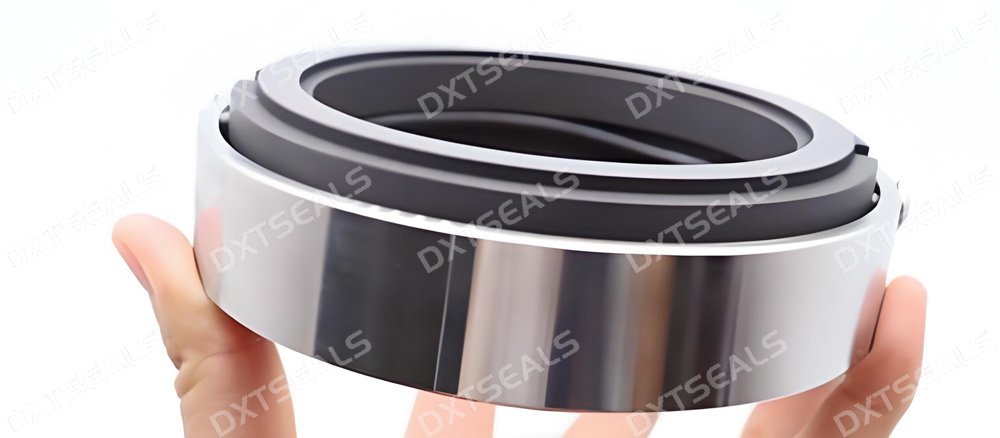
Air compressors rely on a wide range of sealing components to prevent oil leakage, ensure pressure stability, and maintain long-term operational efficiency. Among these components, shaft seals are some of the most critical because they operate under rotational motion, constant friction, temperature variations, and exposure to lubricating oil.
Choosing the right shaft seal — and designing it correctly — has a direct impact on compressor efficiency, energy consumption, and service life.
This article explains the main types of air compressor shaft seals, their performance characteristics, and practical strategies to enhance sealing reliability.
As a professional sealing manufacturer, DXTSEALS provides shaft seal customization for all major compressor brands and working conditions.
1. What Is a Shaft Seal in an Air Compressor?
A shaft seal (also known as a rotary seal or shaft oil seal) is used to seal the rotating shaft where it exits the compressor housing. Its purpose is to:
-
Prevent lubricating oil from leaking out
-
Stop dust or contaminants from entering the system
-
Maintain pressure balance
-
Reduce friction and wear
Because the sealing lip directly contacts the rotating shaft, material selection and structural precision are crucial for achieving long-term durability.
2. Common Types of Air Compressor Shaft Seals
1. Rubber Oil Seals (NBR/FKM)
Rubber oil seals are the most common shaft seals used in small to medium-sized air compressors.
Features:
-
Simple structure
-
Low cost
-
Good oil resistance (especially FKM)
-
Suitable for moderate speeds and temperatures
Typical Materials:
-
NBR: economical, suitable for 80–120°C
-
FKM: high temperature and oil resistance, suitable for 200°C
Best For:
General industrial compressors, automotive compressors, and standard-duty applications.
2. PTFE Shaft Seals
PTFE (Polytetrafluoroethylene) shaft seals are designed for high temperature, high speed, or chemically aggressive environments.
Features:
-
Extremely low friction
-
Excellent wear resistance
-
High temperature tolerance (up to 260°C)
-
Suitable for dry-running or boundary lubrication
-
Can handle high shaft speeds
Best For:
Oil-free compressors, high-speed rotary compressors, screw compressors, and heavy-duty industrial systems.
3. Mechanical Shaft Seals
Mechanical seals rely on a rotating and stationary face, typically made of ceramic, graphite, silicon carbide, or tungsten carbide.
Features:
-
Highest sealing performance
-
Suitable for very high pressure
-
Designed for long service life
-
Complex structure and higher cost
Best For:
Large industrial compressors, high-pressure systems, and demanding environments.
4. Labyrinth Seals
Labyrinth seals use a non-contact structure that limits gas/oil leakage through a series of chambers and grooves.
Features:
-
No friction (zero contact)
-
Long service life
-
Not suitable for high differential pressure
-
Often used together with other seals
Best For:
Turbomachinery, high-speed rotating compressors, and hybrid sealing systems.
5. Magnetic Seals
Magnetic fluid or magnetic-drive seals provide non-contact sealing with extremely low leakage.
Features:
-
Ultra-low friction
-
Excellent sealing performance
-
Suitable for clean or vacuum systems
-
High cost
Best For:
Precision air compressors, laboratory equipment, and oil-free applications.
3. Factors That Affect Shaft Seal Reliability
1. Material Selection
Different materials provide different temperature, oil resistance, and wear properties:
-
NBR: cost-effective, moderate temperature
-
FKM: high temperature & oil resistance
-
PTFE: low friction, best for high-speed shafts
-
Filled PTFE: improved wear resistance
-
Silicone/EPDM: specific environments
Choosing the wrong material can lead to swelling, cracking, or accelerated wear.
2. Shaft Surface Finish
A shaft seal lip must run on a properly finished surface:
-
Roughness too high → seal wear increases
-
Roughness too low → oil retention is insufficient
Ideal roughness: Ra 0.2–0.8 μm
3. Shaft Runout and Alignment
Excessive shaft runout can cause:
-
Uneven wear
-
Leakage
-
Shortened seal life
Proper shaft alignment directly increases sealing stability.
4. Temperature and Lubrication
High temperature or poor lubrication often leads to:
-
Seal hardening
-
Material degradation
-
Lip carbonization
-
Increased leakage
Stable lubrication significantly improves seal life.
5. Installation Quality
Improper installation is one of the most common causes of shaft seal failure.
Key points include:
-
Avoiding lip deformation
-
Ensuring correct orientation
-
Using a clean, lubricated installation tool
-
Avoiding scratching of the sealing surface
4. How to Improve the Reliability of Air Compressor Shaft Seals?
1. Use Better Materials for Demanding Conditions
-
High speed → PTFE or filled PTFE
-
High temperature → FKM or PTFE
-
Harsh chemicals → PTFE
-
Budget-sensitive → NBR
2. Upgrade to Low-Friction PTFE Lip Designs
Compared to rubber seals, PTFE provides:
-
Reduced friction
-
Lower operating temperature
-
Extended service life
Perfect for screw and oil-free compressors.
3. Apply Surface Treatments on the Shaft
Treatments like chrome plating, nitriding, and laser coating help reduce wear and extend seal durability.
4. Regular Inspection and Replacement
Check for:
-
Oil leakage marks
-
Hardening or cracking
-
Shaft scratches
-
Abnormal noise
5. Use High-Precision Seals from Reliable Manufacturers
DXTSEALS offers:
-
Custom shaft seal designs
-
PTFE and FKM materials
-
Filled PTFE formulations
-
Engineering support for special working conditions
Conclusion
Air compressor shaft seals play a crucial role in maintaining system reliability and preventing leakage. Understanding the different types—rubber oil seals, PTFE seals, mechanical seals, labyrinth seals, and magnetic seals—helps engineers choose the right sealing solution for each application.
By selecting proper materials, ensuring correct installation, and maintaining ideal working conditions, you can significantly improve sealing performance and extend the service life of your air compressor.
For custom-engineered shaft seals designed for high temperature, high pressure, or high-speed environments, DXTSEALS provides professional solutions for global customers.