
Introduction
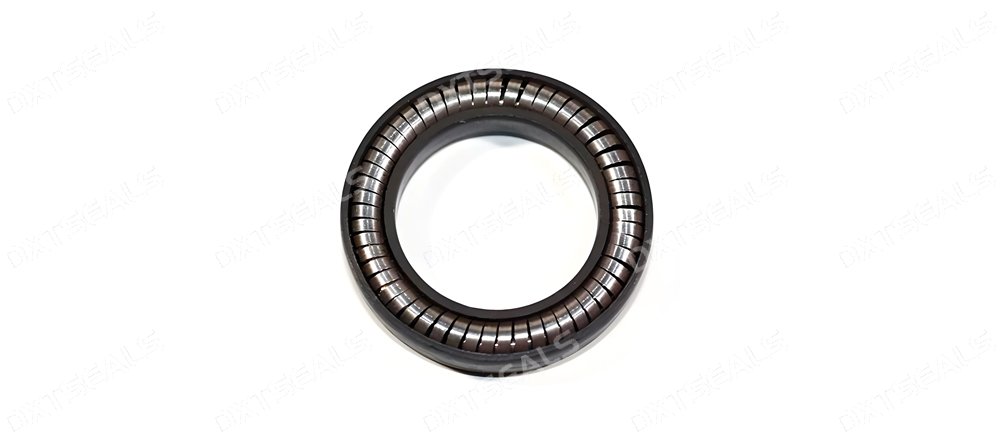
Spring-energized seals are widely used in high-performance sealing applications where conventional elastomer seals cannot meet demanding requirements. Among them, bore-type and rod-type spring-energized seals are the two most common configurations.
Although they share similar materials and working principles, their structural design and application focus differ significantly. This article compares their structural differences and typical application scenarios to support proper seal selection.
What Are Bore-Type and Rod-Type Spring-Energized Seals?
-
Bore-Type Spring-Energized Seals are installed in a housing groove and seal against a stationary or moving shaft or plug.
-
Rod-Type Spring-Energized Seals are mounted on a shaft or piston rod and seal against the inner surface of a bore.
Both designs use PTFE-based sealing jackets and internal metal springs to maintain consistent sealing force.
Structural Differences
Sealing Direction
Bore-type seals apply sealing force inward toward the shaft, while rod-type seals apply sealing force outward toward the bore surface.
Seal Lip Orientation
The orientation of the sealing lip is reversed between the two types to match installation direction and pressure loading.
Groove Design
Groove dimensions and tolerances differ due to installation position, affecting how pressure assists the sealing performance.
Application Performance Comparison
| Aspect | Bore-Type Spring-Energized Seal | Rod-Type Spring-Energized Seal |
|---|---|---|
| Installation Location | Housing groove | Shaft or rod groove |
| Sealing Direction | Inward | Outward |
| Typical Motion | Static or limited dynamic | Reciprocating or dynamic |
| Pressure Resistance | High static pressure | High dynamic pressure |
| Wear Sensitivity | Lower | Higher under motion |
Typical Applications
Bore-Type Spring-Energized Seals
-
Valve bodies and seats
-
Static sealing in manifolds
-
Pressure vessels
-
Chemical processing equipment
Rod-Type Spring-Energized Seals
-
Hydraulic and pneumatic cylinders
-
Linear actuators
-
Control valves
-
Aerospace and precision motion systems
At DXTSEALS, we provide both bore-type and rod-type spring-energized seals, engineered to meet specific operating conditions and application requirements.
Selection Considerations
When choosing between bore-type and rod-type spring-energized seals, engineers should evaluate:
-
Motion type (static vs dynamic)
-
Pressure direction and magnitude
-
Installation space and groove design
-
Wear requirements and service life
Correct configuration selection is critical to achieving optimal sealing performance.
Conclusion
Bore-type and rod-type spring-energized seals differ in structural design, sealing direction, and application focus. Bore-type seals excel in static and high-pressure applications, while rod-type seals are better suited for dynamic and reciprocating motion.
Understanding these differences helps ensure proper seal selection, improved reliability, and extended service life.