
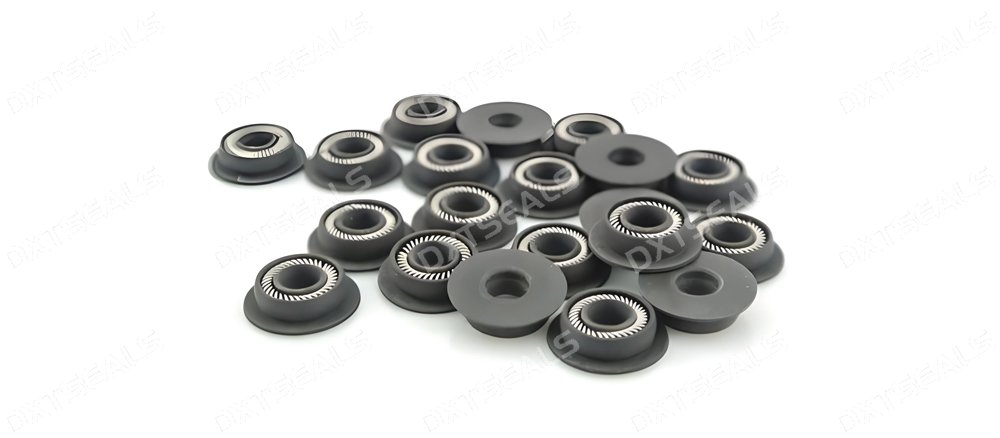
Comparison of Different Spring Energized Seal Types: Solutions for Static and Dynamic Sealing Applications
In modern industrial equipment, sealing performance directly affects operational reliability, efficiency, and service life. As operating environments become more demanding, traditional rubber seals often struggle to meet the requirements of high pressure, extreme temperatures, aggressive chemicals, and dynamic motion.
Spring energized seals have become a preferred sealing solution across industries because of their excellent sealing capability and adaptability. However, different spring energized seal types are designed for different applications. Selecting the correct seal structure is critical for achieving reliable performance in both static and dynamic sealing systems.
This article compares several common spring energized seal types and explains how to choose the best solution for static and dynamic applications.
What Is a Spring Energized Seal?
A spring energized seal is a high-performance sealing device consisting of:
- A PTFE or polymer sealing jacket
- A corrosion-resistant metal spring energizer
The internal spring applies continuous sealing force, compensating for:
- Wear
- Thermal expansion
- Pressure fluctuations
- Mechanical tolerances
Spring energized seals are widely used in:
- Aerospace
- Semiconductor manufacturing
- Oil and gas
- Medical equipment
- Chemical processing
- Hydraulic systems
Their ability to maintain sealing performance under extreme conditions makes them ideal for critical applications.
Static Sealing vs Dynamic Sealing
Before selecting a seal type, it is important to understand the difference between static and dynamic sealing.
Static Sealing
Static sealing refers to applications where there is no relative movement between sealing surfaces.
Examples include:
- Flange connections
- Valve bodies
- Pipe joints
- Pressure vessel covers
Static seals mainly require:
- Excellent leakage prevention
- Chemical resistance
- Long-term compression stability
Dynamic Sealing
Dynamic sealing involves relative motion between components.
Examples include:
- Hydraulic cylinders
- Rotary shafts
- Pistons
- Pumps and compressors
Dynamic seals must handle:
- Friction
- Wear
- Speed
- Pressure changes
- Continuous motion
Dynamic applications generally require lower friction and better wear resistance than static applications.
Common Types of Spring Energized Seals
Different spring configurations provide different sealing characteristics. The most common spring energized seal types include cantilever spring seals, helical spring seals, and canted coil spring seals.
Cantilever Spring Seals
Cantilever spring seals use a V-shaped metal spring that delivers moderate and flexible sealing force.
Key Advantages
- Low friction
- Excellent dynamic sealing performance
- Good wear resistance
- Suitable for reciprocating motion
Best Applications
- Hydraulic cylinders
- Pneumatic systems
- Rotary equipment
- Medium-pressure dynamic applications
Because cantilever springs generate relatively low preload force, they are ideal for applications requiring reduced friction and extended seal life.
Helical Spring Seals
Helical spring seals use a round-wire coil spring that provides highly uniform sealing force around the entire sealing surface.
Key Advantages
- Excellent leakage control
- Superior low-temperature performance
- High sealing reliability
- Suitable for vacuum conditions
Best Applications
- Static sealing systems
- Cryogenic applications
- Vacuum equipment
- Semiconductor processing systems
Helical spring seals are commonly selected for static sealing applications where maximum sealing integrity is required.
Canted Coil Spring Seals
Canted coil spring seals use an angled coil spring structure that delivers flexible load characteristics.
Key Advantages
- Wide deflection range
- Excellent load recovery
- Suitable for high-speed motion
- Stable sealing under varying pressure
Best Applications
- Rotary shaft sealing
- Aerospace systems
- High-speed dynamic applications
- Complex motion systems
These seals offer an excellent balance between sealing force and friction control.
Material Selection for Different Applications
The sealing jacket material also affects seal performance.
PTFE
PTFE is the most widely used material because of:
- Extremely low friction
- Excellent chemical resistance
- Wide temperature range
Filled PTFE
Filled PTFE improves wear resistance and mechanical strength.
Common fillers include:
- Carbon fiber
- Glass fiber
- Graphite
- Bronze
PEEK and Advanced Polymers
For extreme pressure and temperature applications, advanced engineering plastics such as PEEK may be used.
Material selection should consider:
- Operating temperature
- Pressure level
- Chemical media
- Motion type
- Surface speed
Choosing the Right Seal for Static Applications
For static sealing systems, the primary goals are leakage prevention and long-term reliability.
Recommended seal features include:
- Higher sealing preload
- Excellent chemical compatibility
- Strong compression recovery
- Stable dimensional performance
Helical spring energized seals are often the preferred choice for demanding static sealing applications.
Choosing the Right Seal for Dynamic Applications
Dynamic sealing applications require careful control of friction and wear.
Important considerations include:
- Low friction coefficient
- Excellent wear resistance
- Heat generation control
- Shaft surface finish compatibility
Cantilever spring seals and canted coil spring seals are typically better suited for dynamic motion systems.
Factors That Influence Seal Performance
Several operating conditions influence seal selection:
Pressure
Higher pressure may require stronger spring force and reinforced seal profiles.
Temperature
Extreme temperatures affect material expansion and seal elasticity.
Speed
High-speed motion increases friction and heat generation.
Media Compatibility
Chemical exposure requires compatible seal materials and spring alloys.
Surface Finish
Proper shaft and hardware surface finishes reduce wear and improve sealing efficiency.
Why Custom Seal Design Matters
Standard seals may not always meet the requirements of complex industrial systems.
Customized spring energized seals can optimize:
- Friction levels
- Seal geometry
- Spring force
- Material composition
- Groove compatibility
At DXTSEALS, customized sealing solutions are developed according to customer operating conditions, including pressure, temperature, motion type, and chemical environment.
Conclusion
Different spring energized seal types are designed to meet different sealing requirements. Understanding the differences between cantilever spring seals, helical spring seals, and canted coil spring seals is essential for selecting the right solution for static and dynamic applications.
Static sealing systems generally prioritize sealing integrity and pressure retention, while dynamic sealing systems require low friction and superior wear resistance.
By selecting the appropriate seal structure, spring type, and material combination, manufacturers can significantly improve equipment reliability, reduce maintenance costs, and extend service life.
DXTSEALS provides high-performance spring energized sealing solutions for demanding industrial environments worldwide.