
Introduction
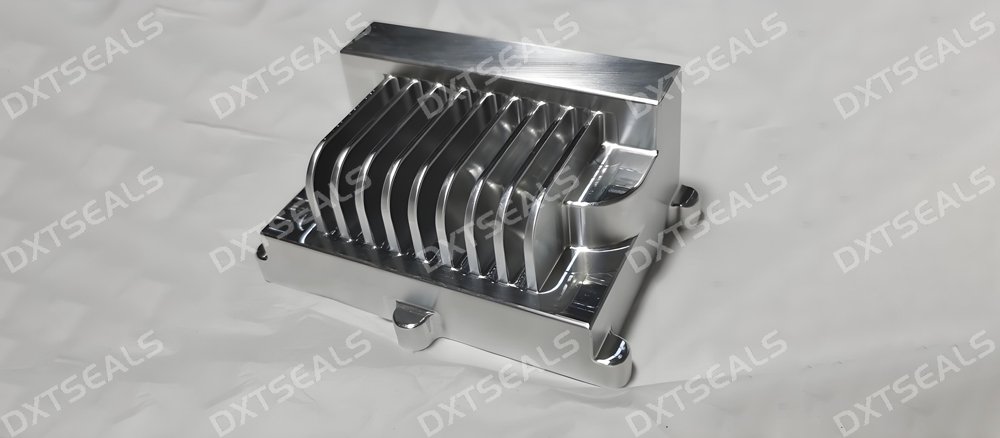
Complex structural metal parts are widely used in aerospace, energy, automation, medical equipment, and high-end industrial systems. These components often feature intricate geometries, thin walls, deep cavities, tight tolerances, and demanding material requirements.
Successfully machining such parts requires advanced equipment, optimized process planning, and strict quality control. This article explores the machining processes and key technical considerations for complex structural metal components.
Characteristics of Complex Structural Metal Parts
Complex metal components typically involve:
-
Multi-surface and multi-angle features
-
Thin-wall or lightweight structures
-
Deep pockets or internal cavities
-
High dimensional accuracy requirements
-
Difficult-to-machine materials
These characteristics increase machining complexity and require carefully designed production strategies.
Core Machining Processes
Multi-Axis CNC Milling
5-axis or 4-axis CNC machining enables access to complex surfaces and reduces the need for multiple setups, improving both precision and efficiency.
Precision CNC Turning (When Applicable)
For parts containing rotational features, CNC turning may be combined with milling operations to ensure concentricity and dimensional stability.
EDM (Electrical Discharge Machining)
For extremely fine details or hard materials, EDM may be used to achieve precise internal features.
Surface Finishing Processes
Grinding, polishing, and surface treatments improve surface quality and enhance durability.
At DXTSEALS, multi-process integration is applied to ensure precision and structural integrity when manufacturing complex metal components.
Key Technical Points in Machining
Process Planning and Sequencing
Careful planning of machining steps minimizes deformation and ensures consistent dimensional accuracy.
Fixture Design and Workholding
Custom fixtures are essential for stabilizing irregular geometries and preventing vibration.
Tool Selection and Path Optimization
Advanced cutting tools and optimized tool paths reduce tool wear and improve machining efficiency.
Control of Deformation in Thin-Wall Structures
Thin sections are prone to deformation under cutting forces. Reduced cutting depth, proper support, and staged machining help maintain dimensional stability.
Heat and Stress Management
Managing thermal buildup and residual stress is critical to preventing distortion in precision parts.
Material Considerations
Complex structural parts are often made from:
-
Stainless steel
-
Aluminum alloys
-
Titanium alloys
-
Alloy steels
Each material requires specific cutting parameters and machining strategies.
Industry Applications
Aerospace Components
Lightweight yet strong structural parts with complex geometries.
Industrial Automation Equipment
Precision frames and motion system components requiring tight tolerances.
Energy and Power Systems
High-strength parts operating under high pressure and temperature.
Precision Sealing and Equipment Hardware
Complex housings and structural supports used in advanced sealing systems.
Quality Control and Inspection
Complex structural components demand rigorous inspection methods, including:
-
Coordinate Measuring Machine (CMM) verification
-
In-process measurement
-
Surface roughness testing
Strict quality management ensures reliability and repeatability.
Conclusion
Machining complex structural metal parts requires advanced CNC capabilities, precise process control, and deep technical expertise. From multi-axis machining to deformation control and quality inspection, every stage must be optimized to achieve high accuracy and structural integrity.
With proper process planning and technical execution, manufacturers can successfully produce complex components that meet the demanding requirements of high-end industrial applications.