
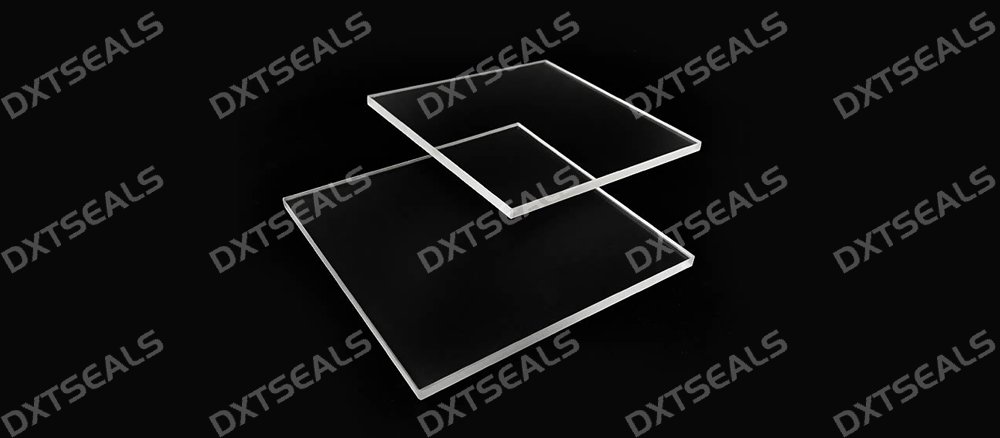
Level gauge glass is an important component in industrial equipment that requires direct visual monitoring of liquid levels. Boilers, pressure vessels, storage tanks, process equipment, and other industrial systems may operate under high temperature, pressure, or chemically demanding conditions, making the selection of suitable gauge glass particularly important.
Different applications require different material properties. Aluminosilicate glass, borosilicate glass, and mica assemblies each offer different characteristics and can be selected according to the operating environment and equipment design.
For replacement and OEM applications, standard dimensions are not always sufficient. Custom level gauge glass can be manufactured according to drawings, samples, dimensions, original specifications, and equipment requirements.
What Is Custom Level Gauge Glass?
Custom level gauge glass refers to glass components manufactured according to specific equipment dimensions or technical requirements rather than relying only on standard catalog sizes.
Customization may involve:
- Overall length and width
- Glass thickness
- Glass profile
- Edge configuration
- Hole dimensions and positions
- Surface requirements
- Special shapes
- Mica assembly configuration
- Matching gaskets
- OEM replacement dimensions
Custom manufacturing is especially useful when an existing gauge glass is obsolete, difficult to source, or designed for specialized equipment.
Choosing the Right Glass Material
Material selection is one of the most important steps when designing or replacing a level gauge glass.
The three materials or material systems commonly considered for demanding applications include:
| Material / Assembly | Typical Characteristics | Common Considerations |
|---|---|---|
| Borosilicate glass | Low thermal expansion, good thermal shock resistance, good chemical durability | General industrial and high-temperature applications |
| Aluminosilicate glass | High-temperature capability and strong mechanical properties depending on grade | Demanding temperature and mechanical environments |
| Mica assembly | Excellent heat resistance and electrical/thermal insulation properties | High-temperature protection and specialized assemblies |
The actual suitability depends on the glass grade, dimensions, thickness, assembly structure, temperature, pressure, process medium, and mounting conditions.
Aluminosilicate Level Gauge Glass
Aluminosilicate glass is an advanced glass material containing significant amounts of aluminum oxide and silicon dioxide. Depending on its formulation and processing, it can provide high mechanical strength and good resistance to elevated temperatures.
For industrial level measurement, aluminosilicate glass can be considered when the application places particularly demanding requirements on thermal or mechanical performance.
Potential applications include:
- High-temperature industrial equipment
- Process vessels
- Industrial sight glasses
- Specialized level indicators
- Thermal equipment
- High-temperature viewing systems
When selecting aluminosilicate glass, the specific material grade and manufacturer's technical specifications should be confirmed rather than assuming that all aluminosilicate glass products have identical performance.
Borosilicate Level Gauge Glass
Borosilicate glass is widely used in industrial sight and level measurement applications because of its relatively low thermal expansion and good resistance to thermal shock.
It is commonly considered for:
- Boiler level gauges
- Industrial tanks
- Pressure vessels
- Process equipment
- Steam and water systems
- Chemical processing equipment
- Industrial sight glass applications
Its combination of optical clarity, thermal stability, and chemical resistance makes it a practical material for many industrial level measurement systems.
However, the operating pressure and temperature limits must be determined based on the specific glass design, thickness, dimensions, and complete mounting assembly.
Mica Assemblies for High-Temperature Applications
Mica is a natural mineral material with excellent heat resistance and electrical insulation properties. In industrial equipment, mica may be used as part of a specialized protective or insulating assembly rather than functioning as a direct substitute for transparent gauge glass.
Mica assemblies can be used in applications where additional protection from high-temperature environments is required.
Typical functions may include:
- Thermal protection
- Insulation
- Protection of glass surfaces
- Separation between components
- High-temperature shielding
- Specialized viewing-window assemblies
The role of mica depends on the specific equipment design. Therefore, the mica thickness, shape, grade, and assembly method should be selected according to the actual application.
Aluminosilicate Glass vs. Borosilicate Glass
Although both materials can be used in demanding industrial environments, they are not interchangeable simply because both are heat-resistant glass materials.
| Feature | Aluminosilicate Glass | Borosilicate Glass |
|---|---|---|
| Thermal performance | High, depending on grade | Excellent thermal stability |
| Thermal expansion | Generally low | Low |
| Thermal shock resistance | Depends on formulation | Generally very good |
| Mechanical strength | Generally high depending on grade | Good |
| Chemical resistance | Good to excellent depending on grade | Generally good |
| Optical clarity | Excellent when properly manufactured | Excellent |
| Typical use | Specialized high-temperature applications | Boilers, tanks, process equipment, level gauges |
The correct choice should be based on the actual operating requirements rather than material name alone.
Why Mica May Be Combined With Glass
A glass and mica assembly can provide functions that are difficult to achieve with glass alone.
For example, a mica component may provide an additional protective or insulating layer in a high-temperature environment.
A typical assembly may include:
- Transparent gauge glass
- Mica protective component
- Gasket or sealing element
- Metal holder or gauge body
- Fastening components
The exact arrangement varies according to the equipment design.
Mica should therefore be considered as part of the overall assembly rather than simply as another type of transparent gauge glass.
Custom Dimensions for Industrial Equipment
One of the main advantages of custom manufacturing is the ability to reproduce existing components accurately.
Custom dimensions may include:
- Non-standard glass length
- Non-standard width
- Special thickness
- Rounded corners
- Special profiles
- Custom edge machining
- Mounting holes
- Special hole patterns
- Special cutouts
- Custom mica dimensions
This is particularly useful for replacement applications where the original equipment was manufactured many years ago and standard catalog products no longer match.
Custom Level Gauge Glass for Boilers
Boilers require careful consideration of temperature, pressure, thermal cycling, and sealing conditions.
Depending on the boiler design, borosilicate or other specified glass materials may be selected for level indication.
A custom boiler gauge glass project should consider:
- Boiler operating temperature
- Working pressure
- Glass material
- Glass thickness
- Gauge body dimensions
- Glass profile
- Gasket material
- Mica protection, if required
- Installation and tightening method
The complete assembly should be evaluated according to the equipment manufacturer's requirements and applicable specifications.
Custom Gauge Glass for Pressure Vessels
Pressure vessels place additional demands on viewing components because the glass may form part of a pressurized viewing or level indication assembly.
For pressure equipment, the following information should be confirmed:
- Design pressure
- Operating pressure
- Design temperature
- Operating temperature
- Process medium
- Glass dimensions
- Glass thickness
- Holder design
- Gasket configuration
- Safety requirements
A glass material's general temperature or pressure capability should not be treated as the rating of a complete pressure-containing assembly.
Matching Custom Gaskets
A properly designed level gauge requires more than the correct glass dimensions. The gasket must also match the glass and gauge body.
Custom gaskets can be manufactured to correspond with:
- Glass dimensions
- Bolt-hole patterns
- Sealing surfaces
- Gauge body geometry
- Operating temperature
- Process medium
- Required compression
Depending on the application, gasket materials may include graphite, PTFE, mica-based materials, or other suitable sealing materials.
Providing the glass and gasket as a matched set can simplify replacement and help improve installation compatibility.
OEM and Replacement Solutions
Custom level gauge glass is suitable for both OEM production and maintenance replacement.
OEM Applications
For OEM applications, manufacturers can supply glass according to:
- Engineering drawings
- Technical specifications
- Material requirements
- Dimensional tolerances
- Assembly requirements
- Production quantities
Replacement Applications
For replacement projects, customers may provide:
- Original gauge glass
- Physical sample
- Product drawing
- Equipment model
- Original part number
- Dimensional measurements
- Photographs with dimensions
These references can be used to determine the required glass and gasket configuration.
Quality Control of Custom Gauge Glass
Precision is important when manufacturing custom level gauge glass because dimensional errors can affect installation and sealing.
Typical inspection items include:
- Material specification
- Length and width
- Thickness
- Profile dimensions
- Edge condition
- Hole dimensions
- Hole positions
- Surface quality
- Optical clarity
- Mica dimensions
- Gasket dimensions
For demanding applications, inspection requirements can be defined according to the customer's drawings and technical specifications.
When Should You Choose a Custom Solution?
A custom level gauge glass solution may be appropriate when:
- Standard products do not match the original dimensions.
- The equipment uses an obsolete gauge glass.
- A special glass thickness is required.
- The glass has a unique profile.
- Special holes or cutouts are required.
- A mica assembly is required.
- A matching gasket is needed.
- The customer requires OEM production.
- Replacement parts must be manufactured from a sample.
Custom manufacturing provides greater flexibility than selecting a generic glass component based only on approximate dimensions.
How to Order Custom Level Gauge Glass
To improve quotation and technical confirmation efficiency, customers can provide as much information as possible.
Recommended information includes:
- Glass material or required application
- Overall dimensions
- Thickness
- Profile drawing
- Hole dimensions and locations
- Operating temperature
- Operating pressure
- Process medium
- Original part number
- Existing sample or drawing
- Gasket requirements
- Required quantity
If the material specification is unknown, an existing sample, drawing, or equipment information can help with product identification.
Standard and Custom Manufacturing Capabilities
Industrial customers often need both standard gauge glass and customized components.
Standard products can be supplied when the required dimensions and specifications correspond to existing configurations. For special equipment, custom manufacturing can provide non-standard glass, aluminosilicate components, borosilicate gauge glass, mica assemblies, and matching gaskets according to specific requirements.
This makes it possible to support a wide range of applications, from routine replacement parts to specialized OEM components.
Conclusion
Custom level gauge glass solutions provide flexibility for industrial equipment that requires reliable visual level monitoring under demanding conditions. Borosilicate glass, aluminosilicate glass, and mica assemblies each have different characteristics and should be selected according to the actual application.
Borosilicate glass is widely considered for industrial level gauges because of its low thermal expansion, thermal shock resistance, chemical durability, and optical clarity. Aluminosilicate glass can be considered for applications requiring specific high-temperature or mechanical properties. Mica assemblies can provide additional thermal protection, insulation, or high-temperature shielding where required.
For OEM and replacement applications, custom manufacturing allows the glass, mica components, and matching gaskets to be produced according to drawings, samples, dimensions, and equipment specifications. This provides a practical solution for both standard replacement requirements and non-standard industrial level gauge applications.