
Introduction
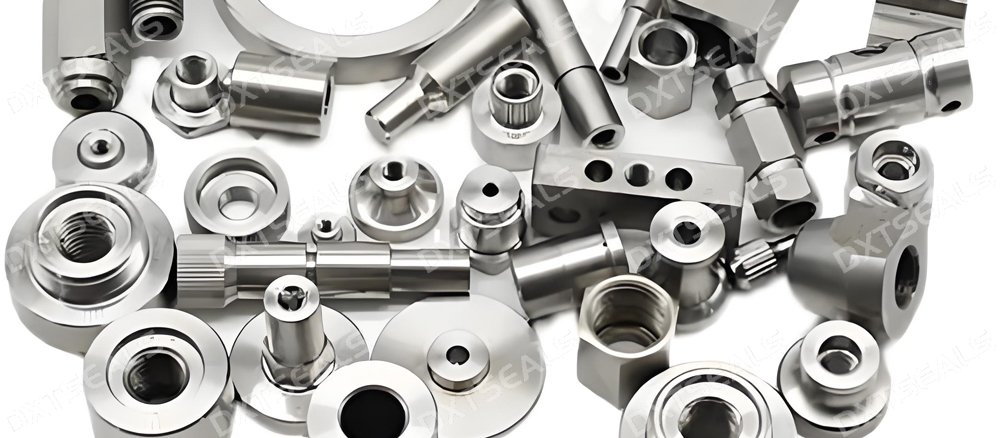
Custom metal machined parts are widely used in industries such as aerospace, automotive, energy, and industrial equipment. When developing customized components, selecting the appropriate material and controlling production costs are two key factors that directly affect product performance and manufacturing efficiency.
An effective balance between material properties, machining complexity, and production costs helps manufacturers achieve both technical performance and economic efficiency. This article explores practical strategies for material selection and cost optimization in custom metal machining.
Importance of Material Selection in Custom Machining
Material selection determines many aspects of the final product, including:
-
Mechanical strength
-
Corrosion resistance
-
Weight and structural performance
-
Machining difficulty
-
Overall manufacturing cost
Choosing the right material ensures the component performs reliably while avoiding unnecessary production expenses.
At DXTSEALS, engineering teams evaluate both functional requirements and manufacturability when selecting materials for precision machined components.
Common Materials Used for Custom Metal Machined Parts
Aluminum Alloys
Aluminum alloys are widely used for lightweight components with moderate strength requirements.
Advantages
-
Excellent machinability
-
Low material density
-
Good corrosion resistance
-
High production efficiency
Typical Applications
-
Structural housings
-
Automotive components
-
Aerospace lightweight parts
Because aluminum is easy to machine, it often helps reduce overall production costs.
Stainless Steel
Stainless steel offers strong corrosion resistance and durability.
Advantages
-
Excellent corrosion resistance
-
High strength and durability
-
Long service life
Challenges
-
Higher machining difficulty
-
Increased tool wear
Proper tool selection and machining parameters are essential to control costs.
Carbon Steel and Alloy Steel
These materials are commonly used for high-strength mechanical components.
Advantages
-
High load-bearing capacity
-
Good fatigue resistance
-
Wide availability
Heat treatment processes may be applied to further enhance mechanical properties.
Titanium Alloys
Titanium alloys are used in high-performance applications requiring superior strength-to-weight ratios.
Advantages
-
Excellent strength and corrosion resistance
-
High temperature resistance
Challenges
-
Difficult machining
-
Higher material cost
Titanium components require specialized machining techniques to maintain efficiency.
Key Factors Influencing Machining Costs
Material Cost
The base cost of raw materials directly affects the total production expense. Premium materials such as titanium or specialty alloys increase overall project costs.
Machining Complexity
Parts with complex geometries, tight tolerances, or intricate features require advanced machining processes, which increase manufacturing time and cost.
Production Volume
Production scale has a significant impact on cost efficiency.
-
Low-volume production typically involves higher per-unit costs.
-
High-volume manufacturing benefits from optimized tooling and reduced setup costs.
Tool Wear and Machining Time
Hard materials or difficult machining conditions accelerate tool wear and increase machining time, which directly raises production costs.
Practical Strategies for Cost Control
Optimize Design for Manufacturability (DFM)
Design optimization can significantly reduce machining complexity. Simplifying part geometry, reducing unnecessary features, and selecting practical tolerances help lower production costs.
Select Cost-Effective Materials
Not all applications require high-end materials. Choosing materials that meet performance requirements without excessive specifications helps control costs.
Improve Machining Efficiency
Efficient machining strategies include:
-
Optimized cutting parameters
-
Advanced CNC equipment
-
High-performance cutting tools
These methods improve productivity and reduce machining time.
Plan Production Batches
Proper production planning reduces setup time and improves overall efficiency, especially in medium to large production runs.
Role of Engineering Expertise
Professional engineering support is essential for balancing performance and cost. Experienced manufacturers can recommend suitable materials, machining processes, and optimization strategies.
At DXTSEALS, integrated engineering and manufacturing solutions help customers achieve cost-effective production while maintaining strict quality standards.
Conclusion
Material selection and cost control are critical aspects of custom metal machining. By carefully evaluating material properties, machining complexity, and production requirements, manufacturers can develop efficient production strategies that balance performance and cost.
Through optimized design, strategic material selection, and advanced machining technologies, custom machined components can achieve both high quality and cost efficiency for a wide range of industrial applications.