
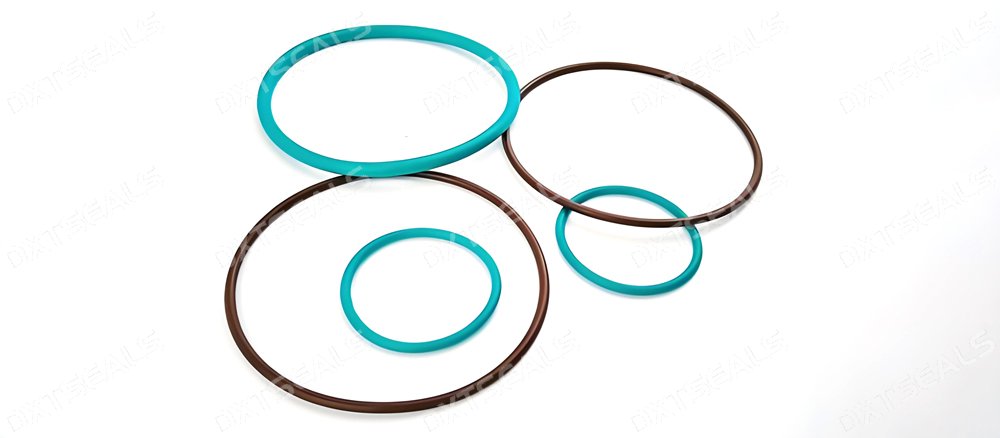
Selecting the right material is one of the most important decisions when customizing rubber seals. Each material—NBR, FKM, EPDM, and silicone—has different properties in terms of temperature resistance, chemical compatibility, hardness, flexibility, and cost.
Choosing incorrectly can result in:
-
leakage or sealing failure
-
swelling or cracking
-
premature aging
-
material incompatibility with oils, chemicals, or temperature
-
higher replacement or maintenance cost
In this guide, DXTSEALS provides a complete comparison to help you choose the best material for your application.
1️⃣ NBR (Nitrile Rubber): Best for Oil & Fuel Resistance
Key Features
-
Excellent resistance to oils, fuels, and grease
-
Good mechanical strength and abrasion resistance
-
Affordable and widely used
-
Common hardness: 60–90 Shore A
Temperature Range
–40°C to +120°C
Best Applications
-
O-rings and gaskets for hydraulic systems
-
Fuel system seals
-
Pneumatic seals
-
Automotive components
-
Compressor and pump seals
Limitations
-
Poor weather and ozone resistance
-
Not suitable for high temperatures
👉 Choose NBR when oil resistance and cost-effectiveness are priorities.
2️⃣ FKM (Viton®/Fluoroelastomer): Best for High Temperature & Harsh Chemicals
Key Features
-
Excellent high-temperature stability
-
Superior chemical resistance
-
Outstanding resistance to fuels, solvents, and aggressive media
-
Very low compression set
-
Premium performance material
Temperature Range
–20°C to +200°C (up to 250°C for special grades)
Best Applications
-
Automotive fuel systems
-
Aerospace sealing components
-
High-temperature valves and pumps
-
Chemical processing equipment
-
Oil & gas industries
Limitations
-
Higher cost
-
Poor performance in very low temperatures
👉 Choose FKM when demanding chemical resistance and high thermal stability are required.
3️⃣ EPDM (Ethylene Propylene Diene Rubber): Best for Weather & Hot Water Resistance
Key Features
-
Excellent ozone, UV, and weather resistance
-
Outstanding performance in steam and hot water
-
Good flexibility at low temperatures
-
Not affected by outdoor exposure
Temperature Range
–50°C to +150°C
Best Applications
-
Outdoor seals and gaskets
-
Drinking water systems
-
HVAC systems
-
Brake systems (non-oil environments)
-
Electrical insulation
Limitations
-
Not compatible with oils, fuels, and hydrocarbons
👉 Choose EPDM for outdoor, water, or steam applications—not for oil applications.
4️⃣ Silicone (VMQ): Best for Extreme Temperature Flexibility & Food-Grade Applications
Key Features
-
Excellent heat and cold resistance
-
Very flexible and elastic
-
Food-grade and medical-grade availability
-
Good electrical insulation properties
Temperature Range
–60°C to +200°C
Best Applications
-
Food & beverage equipment
-
Medical devices
-
Oven, heater, and high-temperature appliances
-
Electronics and automotive interiors
-
Seals requiring high flexibility
Limitations
-
Poor tear and abrasion resistance
-
Not suitable for dynamic sealing
-
Not ideal for oil and fuel environment
👉 Choose silicone for high-temperature, low-temperature, or food-grade sealing applications.
🔍 5️⃣ Comparison Table: NBR vs FKM vs EPDM vs Silicone
| Property | NBR | FKM | EPDM | Silicone |
|---|---|---|---|---|
| Oil Resistance | ★★★★★ | ★★★★★ | ★★☆☆☆ | ★☆☆☆☆ |
| Chemical Resistance | ★★★★☆ | ★★★★★ | ★★★☆☆ | ★★★☆☆ |
| Temperature Resistance | ★★★☆☆ | ★★★★★ | ★★★★☆ | ★★★★★ |
| Weather/Ozone Resistance | ★★☆☆☆ | ★★★★☆ | ★★★★★ | ★★★★☆ |
| Flexibility (Low Temperature) | ★★★☆☆ | ★★☆☆☆ | ★★★★☆ | ★★★★★ |
| Cost | Low | High | Medium | Medium |
📌 6️⃣ How to Choose the Right Material for Custom Rubber Seals?
Here are the main selection criteria that DXTSEALS recommends:
⭐ Environment Compatibility
-
Oil/fuel exposure → NBR / FKM
-
Water/steam → EPDM
-
Food/medical use → Silicone
⭐ Temperature Requirements
-
≤120°C → NBR
-
120–200°C → FKM / Silicone
-
Outdoor or temperature cycling → EPDM
⭐ Cost
-
Budget-friendly → NBR
-
Mid-range → EPDM / Silicone
-
Premium → FKM
⭐ Seal Function
-
Dynamic sealing → NBR, FKM
-
Static sealing → EPDM, silicone, NBR, FKM
⭐ Conclusion
Selecting the right rubber material is critical for the performance and lifespan of custom seals.
Each material—NBR, FKM, EPDM, and silicone—offers unique advantages:
-
NBR: best for oil resistance and cost efficiency
-
FKM: best for high temperature and chemical durability
-
EPDM: best for outdoor and water exposure
-
Silicone: best for extreme temperature flexibility and food-grade use
For professional guidance and high-quality custom sealing solutions, DXTSEALS provides engineering support, mold design, and material selection services to ensure optimal performance for every application.