
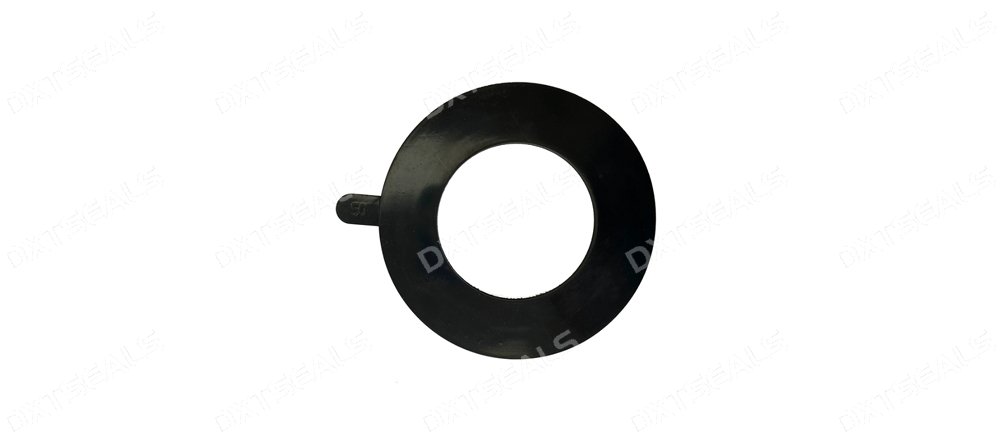
Selecting the correct flange gasket is essential for preventing leakage and maintaining reliable performance in industrial piping systems. Among the various elastomeric gasket materials available, EPDM flange gaskets are widely used because of their excellent resistance to water, weathering, ozone, and many water-based fluids.
However, choosing an EPDM gasket should not be based on material name alone. The flange standard, gasket dimensions, pressure rating, operating temperature, process medium, flange facing, and installation conditions all need to be considered.
This EPDM flange gasket selection guide explains the most important factors engineers, maintenance teams, and purchasing departments should evaluate when selecting EPDM gaskets for piping and equipment.
What Is an EPDM Flange Gasket?
EPDM stands for ethylene propylene diene monomer, a synthetic rubber widely used for sealing applications.
An EPDM flange gasket is installed between two mating flanges. When the flange bolts are tightened, the gasket is compressed and conforms to the flange surfaces, creating a sealing barrier that helps prevent fluid leakage.
EPDM flange gaskets are commonly used in:
- Water supply systems
- Cooling-water systems
- HVAC piping
- Chilled-water systems
- Water treatment equipment
- Industrial piping
- Outdoor piping systems
- Selected chemical applications
EPDM gaskets can be manufactured in standard sizes or customized according to drawings, samples, or specific flange dimensions.
Key Material Properties of EPDM
Excellent Resistance to Water
One of the main reasons EPDM is widely used for flange gaskets is its good resistance to water.
EPDM can be suitable for many applications involving:
- Cold water
- Hot water
- Cooling water
- Chilled water
- Process water
- Water treatment systems
The actual temperature and pressure limits depend on the specific EPDM compound and gasket design.
Excellent Ozone and Weather Resistance
EPDM has strong resistance to ozone, weathering, and environmental exposure.
This makes EPDM suitable for applications where the gasket may be exposed to outdoor conditions, sunlight, moisture, or changing weather conditions.
Good Resistance to Many Chemicals
EPDM can provide good resistance to various dilute acids, alkalis, and water-based chemicals.
However, chemical compatibility should always be confirmed for the specific medium, concentration, temperature, and operating conditions.
Good Elasticity
The elastic properties of EPDM allow the gasket to accommodate minor surface irregularities between mating flanges.
This helps the gasket establish and maintain a sealing interface when properly compressed.
Limitation with Petroleum-Based Fluids
EPDM is generally not the preferred material for petroleum-based oils, fuels, and many hydrocarbon fluids.
If the process medium contains mineral oil, fuel, or hydrocarbon-based fluids, alternative gasket materials such as NBR, FKM, or PTFE may need to be considered depending on the application.
EPDM Flange Gasket Standards
A correct gasket must match the flange system being used. Different piping systems may use different dimensional standards.
American Flange Standards
In North American piping systems, flange dimensions are commonly specified using NPS (Nominal Pipe Size) and pressure class designations such as Class 150, Class 300, and others.
ASME flange standards are commonly used to define flange dimensions and pressure-temperature relationships within their applicable scope.
The term "ANSI flange" is still frequently used in industry, although current specifications are generally referenced through ASME standards.
European Flange Standards
European piping systems commonly use DN (Nominal Diameter) and PN (Nominal Pressure) designations.
EN flange standards provide dimensional requirements for various flange configurations.
When selecting an EPDM flange gasket for a European piping system, the DN size, PN designation, flange type, and gasket dimensions should be confirmed.
American vs European Gasket Selection
| Selection Factor | American Systems | European Systems |
|---|---|---|
| Nominal Size | NPS | DN |
| Pressure Designation | Class | PN |
| Common Flange References | ASME-based standards | EN-based standards |
| Typical Dimension System | Inch-based | Metric-based |
| Gasket Selection | Match flange dimensions and facing | Match flange dimensions and facing |
Class and PN designations should not automatically be treated as direct one-to-one equivalents. The complete flange specification should be checked before selecting the gasket.
EPDM Flange Gasket Dimensions
Correct dimensions are critical for reliable flange sealing.
Depending on the gasket design, important dimensions can include:
- Inside diameter
- Outside diameter
- Bolt-hole diameter
- Bolt-hole quantity
- Bolt-circle diameter
- Overall gasket thickness
- Gasket profile
- Sealing area
A gasket that is too small may not provide adequate sealing coverage. A gasket that is too large may interfere with the flange or process flow.
For standard applications, gasket dimensions should be selected according to the applicable flange standard.
For non-standard applications, drawings or existing gasket samples can be used to determine the required dimensions.
Flange Facing and Gasket Design
The flange facing is another important selection factor.
Common flange configurations include:
- Raised face
- Full face
- Flat face
- Other specialized flange designs
The gasket should be designed to match the flange facing and sealing area.
For example, a full-face EPDM gasket may include bolt holes and cover a larger portion of the flange surface, while a gasket for a raised-face flange may have a different geometry.
Using the wrong gasket profile can result in poor compression, leakage, or installation problems.
EPDM Gasket Temperature Considerations
Temperature is one of the most important factors in EPDM gasket selection.
EPDM is commonly used in moderate-temperature water and HVAC applications, but the allowable temperature range varies according to the compound, formulation, gasket thickness, pressure, medium, and operating conditions.
When selecting an EPDM flange gasket, consider:
- Normal operating temperature
- Maximum operating temperature
- Minimum operating temperature
- Temperature cycling
- Startup and shutdown conditions
- Fluid temperature
- External environmental temperature
A gasket should not be selected based solely on a general temperature value associated with EPDM. The specific gasket compound and application requirements should be evaluated.
EPDM Gasket Pressure Considerations
Pressure affects the sealing force required to maintain a reliable gasket interface.
When selecting an EPDM flange gasket, consider:
- Normal operating pressure
- Maximum pressure
- Pressure fluctuations
- Pressure surges
- Flange rigidity
- Bolt preload
- Gasket thickness
- Gasket hardness
- Sealing geometry
Higher pressure applications may require a carefully controlled gasket design and appropriate flange and bolting configuration.
The pressure capability of the complete flange connection should always be considered rather than assigning a pressure rating to the rubber material alone.
Process Medium Compatibility
EPDM is commonly selected for water-based media, but the exact fluid must be evaluated.
Suitable applications may include:
- Water
- Cooling water
- Chilled water
- Hot water
- Dilute aqueous solutions
- Selected acids and alkalis
However, EPDM may not be suitable for:
- Petroleum-based oils
- Mineral oils
- Fuels
- Many hydrocarbon-based fluids
For aggressive or unusual media, compatibility should be confirmed using the specific EPDM compound and operating conditions.
EPDM Flange Gasket Hardness
Rubber hardness is another factor that can influence gasket performance.
A softer EPDM compound may conform well to flange surface irregularities, while a harder compound may provide greater resistance to extrusion and mechanical deformation in certain applications.
The appropriate hardness depends on:
- Flange condition
- Bolt load
- Pressure
- Temperature
- Gasket thickness
- Flange design
- Process medium
Hardness should therefore be selected as part of the complete gasket design rather than as an independent specification.
Gasket Thickness Selection
EPDM flange gaskets are available in different thicknesses.
A thicker gasket may provide greater ability to accommodate surface irregularities, but thicker is not automatically better.
Gasket thickness can affect:
- Compression
- Bolt load
- Flange separation
- Sealing stability
- Extrusion behavior
The appropriate thickness should be selected according to the flange design, surface condition, pressure, and manufacturer recommendations.
EPDM Flange Gasket Selection Process
A practical selection process can be divided into several steps.
Step 1: Identify the Flange Standard
Determine whether the system uses an ASME-based, EN-based, or another flange standard.
Step 2: Confirm the Nominal Size
For American systems, confirm the NPS size.
For European systems, confirm the DN size.
Step 3: Confirm the Pressure Designation
Check the applicable Class or PN designation and the actual operating pressure.
Step 4: Identify the Flange Facing
Determine whether the flange uses a raised face, full face, flat face, or another configuration.
Step 5: Confirm Gasket Dimensions
Verify the inside diameter, outside diameter, bolt-hole configuration, and thickness.
Step 6: Check the Process Medium
Confirm that EPDM is compatible with the actual fluid.
Step 7: Check Temperature
Compare the normal and maximum operating temperatures with the specific EPDM compound's capabilities.
Step 8: Check Pressure
Consider both continuous pressure and transient pressure conditions.
Step 9: Review Installation Conditions
Check flange alignment, bolt condition, surface finish, bolt tightening method, and gasket installation procedure.
Common EPDM Flange Gasket Applications
Water Supply Piping
EPDM flange gaskets are commonly used in water distribution and industrial water systems.
HVAC Systems
EPDM gaskets can be used in heating, cooling, and chilled-water piping systems where the material is compatible with the operating conditions.
Water Treatment Equipment
Water treatment plants use numerous flanged connections in pumps, pipelines, valves, tanks, and treatment equipment.
Cooling Water Systems
Industrial cooling-water systems often require elastomeric flange gaskets that can maintain sealing performance under temperature cycling.
Outdoor Piping
EPDM's weather and ozone resistance makes it suitable for many outdoor piping applications.
When Should You Choose a Custom EPDM Flange Gasket?
Standard EPDM flange gaskets are suitable for many common flange configurations, but custom manufacturing may be required when:
- The flange dimensions are non-standard.
- The equipment uses an obsolete flange design.
- A special gasket thickness is required.
- The flange has a unique bolt pattern.
- A special gasket profile is required.
- The original gasket is no longer available.
- An OEM drawing specifies a particular design.
Custom EPDM gaskets can be manufactured according to engineering drawings, physical samples, measurements, or customer specifications.
Common EPDM Gasket Selection Mistakes
Choosing the Wrong Flange Standard
An EPDM gasket with the correct nominal pipe size may still be incorrect if the flange standard or facing configuration is different.
Treating Class and PN as Direct Equivalents
Class and PN designations use different rating systems and should not simply be converted based on similar numerical values.
Ignoring the Process Medium
EPDM is excellent for many water applications but is generally unsuitable for many petroleum-based fluids.
Selecting Only by Temperature
Temperature is important, but chemical compatibility, pressure, flange design, and installation conditions also affect gasket performance.
Using the Wrong Gasket Thickness
An incorrect thickness can change compression and bolt-load requirements and may lead to leakage or installation problems.
Standard and Custom EPDM Flange Gasket Solutions
A professional gasket manufacturer can provide both standard and custom EPDM flange gasket solutions.
Standard products can be manufactured according to commonly used flange dimensions and specifications. For non-standard applications, gaskets can be customized according to:
- Technical drawings
- Existing gasket samples
- Flange measurements
- Equipment specifications
- Required thickness
- Material requirements
- Operating conditions
- OEM requirements
This approach allows EPDM flange gaskets to be used across a wide range of industrial piping and equipment applications.
Conclusion
Selecting an EPDM flange gasket requires more than simply choosing an EPDM rubber material. The flange standard, nominal size, pressure designation, flange facing, gasket dimensions, temperature, pressure, process medium, and installation conditions should all be evaluated.
EPDM is particularly well suited to water, HVAC, cooling-water, water-treatment, and outdoor piping applications because of its good water resistance, weather resistance, ozone resistance, elasticity, and compatibility with many water-based media.
For standard piping systems, EPDM flange gaskets can be manufactured according to commonly used American and European flange dimensions. For special equipment and OEM applications, custom EPDM flange gaskets can be produced according to drawings, samples, measurements, and specific operating requirements.