
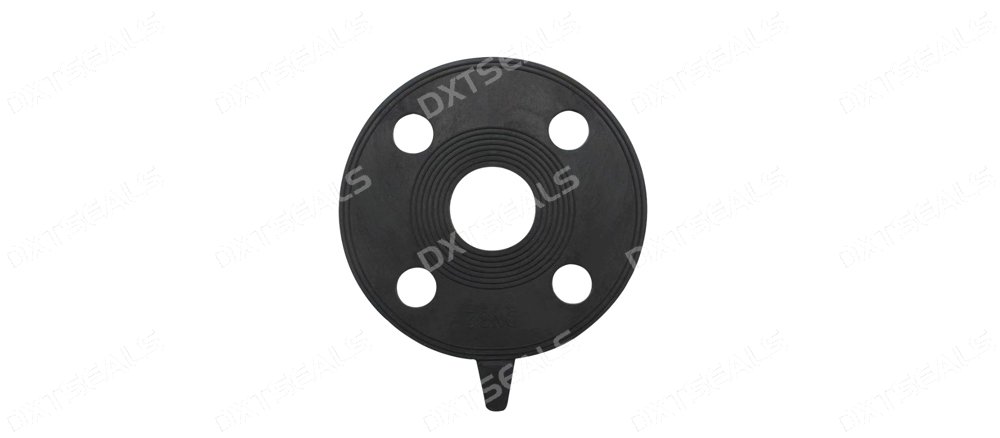
Industrial equipment and piping systems require sealing materials that can maintain reliable performance under different temperatures, pressures, chemical conditions, and mechanical loads. Among the commonly used sealing products are EPDM flange gaskets, PTFE packing, and graphite packing.
Although all three products are used for sealing, they are designed for different applications. EPDM is widely used for flange connections, especially in water and HVAC systems. PTFE packing offers excellent chemical resistance and low friction, making it suitable for valves, pumps, and chemical processing equipment. Graphite packing is commonly selected for high-temperature applications and demanding industrial equipment.
Understanding the characteristics and applications of these materials helps engineers and maintenance teams select the appropriate sealing solution.
What Are EPDM Flange Gaskets?
EPDM flange gaskets are sealing components made from ethylene propylene diene monomer rubber. They are installed between mating flanges to create a tight seal and prevent leakage.
EPDM has good resistance to water, hot water, steam under suitable conditions, weathering, ozone, and many dilute chemicals. This makes EPDM flange gaskets particularly common in water-related piping systems.
Typical applications include:
- Water supply piping
- Cooling water systems
- HVAC systems
- Chilled-water systems
- Water treatment equipment
- Industrial piping
- Outdoor piping systems
- Certain chemical service applications
EPDM flange gaskets can be manufactured in different shapes and dimensions according to flange standards, equipment requirements, or customer drawings.
Key Features of EPDM Flange Gaskets
Excellent Water Resistance
EPDM performs well in many water-based applications. It is commonly used for sealing connections in water supply, cooling, and HVAC systems.
Good Weather and Ozone Resistance
EPDM has good resistance to ozone, sunlight, and weathering. This makes it suitable for outdoor equipment and exposed piping applications.
Flexible Rubber Construction
The elasticity of EPDM allows the gasket to accommodate minor surface irregularities between mating flanges, helping create a reliable sealing interface.
Wide Range of Flange Configurations
EPDM gaskets can be manufactured for different flange dimensions and configurations, including products based on commonly used American and European piping standards.
Important Material Limitation
EPDM is generally not the first choice for petroleum-based oils, fuels, and many hydrocarbon services. The actual compatibility should always be evaluated according to the medium, temperature, concentration, and operating conditions.
What Is PTFE Packing?
PTFE packing, also called PTFE gland packing, is a sealing packing manufactured from polytetrafluoroethylene.
PTFE is known for its excellent chemical resistance, low coefficient of friction, and resistance to moisture and many aggressive chemicals. PTFE packing is therefore frequently used for valve stems, pump shafts, and other dynamic or static sealing applications.
Depending on the design, PTFE packing may be manufactured from expanded PTFE, PTFE yarn, PTFE fibers, or other PTFE-based constructions.
Key Features of PTFE Packing
Excellent Chemical Resistance
PTFE provides broad chemical resistance and is suitable for many aggressive chemical media. This is one of the main reasons PTFE packing is widely used in chemical processing applications.
Low Friction
PTFE has a low coefficient of friction, which can reduce friction between the packing and moving components such as shafts or valve stems.
Good Moisture Resistance
PTFE does not readily absorb water, making PTFE packing suitable for many wet and humid operating environments.
Clean Sealing Performance
PTFE packing can be used in applications where contamination control and chemical resistance are important, subject to the specific packing construction and service requirements.
Typical Applications
PTFE packing is commonly used for:
- Valves
- Pumps
- Agitators
- Mixers
- Chemical processing equipment
- Water treatment equipment
- Corrosive fluid handling systems
- Industrial rotating equipment
What Is Graphite Packing?
Graphite packing is a high-performance gland packing material manufactured using flexible graphite or graphite-based fibers.
Graphite has excellent resistance to high temperatures and can maintain useful sealing performance under demanding thermal conditions. Graphite packing is widely used in industrial valves, pumps, and equipment exposed to elevated temperatures.
Depending on the construction, graphite packing can be supplied as braided graphite packing, expanded graphite packing, or reinforced graphite packing.
Key Features of Graphite Packing
High-Temperature Performance
Graphite is particularly suitable for high-temperature sealing applications. The actual maximum service temperature depends on the graphite grade, packing construction, atmosphere, pressure, and equipment design.
Good Thermal Stability
Graphite maintains its structure and sealing characteristics over a wide temperature range, making it suitable for demanding industrial applications.
Good Chemical Resistance
Graphite has good resistance to many chemical environments, although compatibility must be evaluated based on the specific medium and operating conditions.
Suitable for Valve and Pump Sealing
Graphite packing is frequently used around valve stems and rotating shafts where both temperature resistance and sealing reliability are important.
Reinforced Options
Graphite packing can incorporate reinforcement materials to improve mechanical strength, extrusion resistance, handling characteristics, or service performance.
EPDM Flange Gaskets vs PTFE Packing vs Graphite Packing
Although these products are all used for industrial sealing, their construction and primary applications are different.
| Feature | EPDM Flange Gasket | PTFE Packing | Graphite Packing |
|---|---|---|---|
| Main Material | EPDM rubber | PTFE | Flexible graphite / graphite fiber |
| Typical Form | Sheet, ring, flange gasket | Braided or formed packing | Braided or formed packing |
| Main Application | Flange connections | Valve and pump sealing | High-temperature valve and pump sealing |
| Water Resistance | Excellent | Excellent | Good |
| Chemical Resistance | Good for suitable media | Excellent | Good to excellent depending on medium |
| Temperature Capability | Moderate | High, depending on design | Very high, depending on grade and construction |
| Friction | N/A for static flange sealing | Very low | Low |
| Weather/Ozone Resistance | Excellent | Excellent | Good |
| Typical Equipment | Piping and flanges | Pumps, valves, mixers | Valves, pumps, high-temperature equipment |
The table provides a general comparison. Actual performance depends on the material grade, product construction, dimensions, pressure, temperature, and process medium.
Applications of EPDM Flange Gaskets
EPDM flange gaskets are especially suitable for systems where water resistance and environmental durability are important.
Water Supply Systems
EPDM is widely used for water piping and flange connections because of its good resistance to water and aging.
HVAC Systems
Cooling water, chilled-water, and heating-water systems can use EPDM flange gaskets when the temperature and fluid conditions are within the material's service range.
Water Treatment
Pumps, pipelines, valves, and treatment equipment may require EPDM flange gaskets for sealing water-based media.
Outdoor Industrial Piping
The weather and ozone resistance of EPDM makes it useful for certain outdoor piping installations.
Applications of PTFE Packing
PTFE packing is commonly selected when chemical resistance and low friction are important.
Chemical Processing
PTFE packing can be used in valves, pumps, and rotating equipment handling many aggressive chemicals.
Pumps and Mixers
Its low-friction characteristics make PTFE packing suitable for dynamic sealing around shafts.
Industrial Valves
PTFE valve packing can provide reliable sealing around valve stems in applications where chemical compatibility is important.
Water and Wastewater Equipment
PTFE packing can also be used in water treatment and wastewater equipment where its chemical resistance provides an advantage.
Applications of Graphite Packing
Graphite packing is particularly useful in applications involving elevated temperatures.
High-Temperature Valves
Graphite packing is commonly used for valve stem sealing in industrial systems where operating temperatures exceed the practical range of many conventional packing materials.
Steam Systems
Graphite-based packing can be used in suitable steam applications, subject to pressure, temperature, packing construction, and equipment requirements.
Pumps and Rotating Equipment
Reinforced graphite packing may be used for shafts in demanding industrial equipment where temperature resistance is required.
Power and Process Industries
Graphite packing can be found in various industrial systems involving high-temperature fluids, including selected applications in power generation and process industries.
How to Select the Right Sealing Material
Selecting the correct sealing product requires more than simply comparing material names. The complete operating environment should be considered.
1. Check the Sealing Location
First determine whether the product is being used for a flange connection, valve stem, rotating shaft, pump, mixer, or another sealing position.
For example, EPDM flange gaskets are designed primarily for static flange sealing, while PTFE and graphite packing are commonly used in packing chambers and gland sealing applications.
2. Identify the Process Medium
Determine whether the system contains water, steam, chemicals, oils, fuels, gases, or other fluids.
Material compatibility should be checked against the actual medium and its concentration.
3. Check Temperature
Temperature is an important selection factor.
EPDM is commonly used in moderate-temperature applications, while PTFE and graphite can be considered for higher-temperature applications depending on their specific construction and operating conditions.
4. Check Pressure
Operating pressure, pressure fluctuations, and mechanical loading can affect sealing performance. The gasket or packing should be selected according to the actual pressure and equipment design.
5. Consider Dynamic Movement
For valve stems, pump shafts, mixers, and other moving components, friction and wear become important.
PTFE packing and graphite packing are both available in constructions designed for dynamic sealing applications.
6. Consider Flange and Equipment Dimensions
For EPDM flange gaskets, the flange standard, nominal size, pressure designation, facing type, gasket thickness, and bolt-hole configuration should be confirmed.
For packing, shaft or stem dimensions and stuffing-box dimensions should be checked.
Standard and Custom Sealing Solutions
Industrial sealing requirements are not always limited to standard sizes. Equipment manufacturers and maintenance teams may require replacement products with specific dimensions, materials, or constructions.
EPDM flange gaskets can be manufactured according to standard flange dimensions or customized according to drawings and samples.
PTFE packing can be supplied in different cross-sections, constructions, and material configurations depending on the application.
Graphite packing can also be supplied in different braided structures, reinforcement configurations, and sizes for specific operating requirements.
For replacement and OEM applications, providing the following information can help confirm the correct product:
- Product drawing
- Existing sample
- Inside and outside dimensions
- Cross-section size
- Equipment model
- Flange standard
- Operating temperature
- Operating pressure
- Process medium
- Shaft or valve stem dimensions
Why Material Selection Matters in Industrial Sealing
Choosing a sealing material based only on temperature or pressure can lead to premature failure. Chemical compatibility, mechanical movement, flange condition, installation method, compression, and equipment design can all influence sealing performance.
For example, EPDM may be an excellent choice for a water flange connection but unsuitable for certain oil services. PTFE offers excellent chemical resistance but may require an appropriate packing design for high-pressure dynamic applications. Graphite performs well at elevated temperatures but its suitability depends on the specific environment and construction.
A complete review of operating conditions is therefore recommended before selecting the final sealing material.
Conclusion
EPDM flange gaskets, PTFE packing, and graphite packing serve different sealing requirements across industrial equipment and piping systems.
EPDM flange gaskets are widely used for water, HVAC, and outdoor piping applications where elasticity, water resistance, and weather resistance are important. PTFE packing provides excellent chemical resistance and low friction for valves, pumps, mixers, and other equipment. Graphite packing is particularly valuable for demanding high-temperature sealing applications.
Selecting the right material requires consideration of the sealing location, process medium, temperature, pressure, movement, dimensions, and equipment design.
Manufacturers and suppliers with capabilities in both standard sealing products and custom sealing solutions can provide EPDM flange gaskets, PTFE packing, graphite packing, and other industrial sealing components according to standard specifications, drawings, samples, or specific OEM requirements.