
FAG 29430-E1 Spherical Roller Thrust Bearing | High Axial Load, Self-Aligning
Introduction
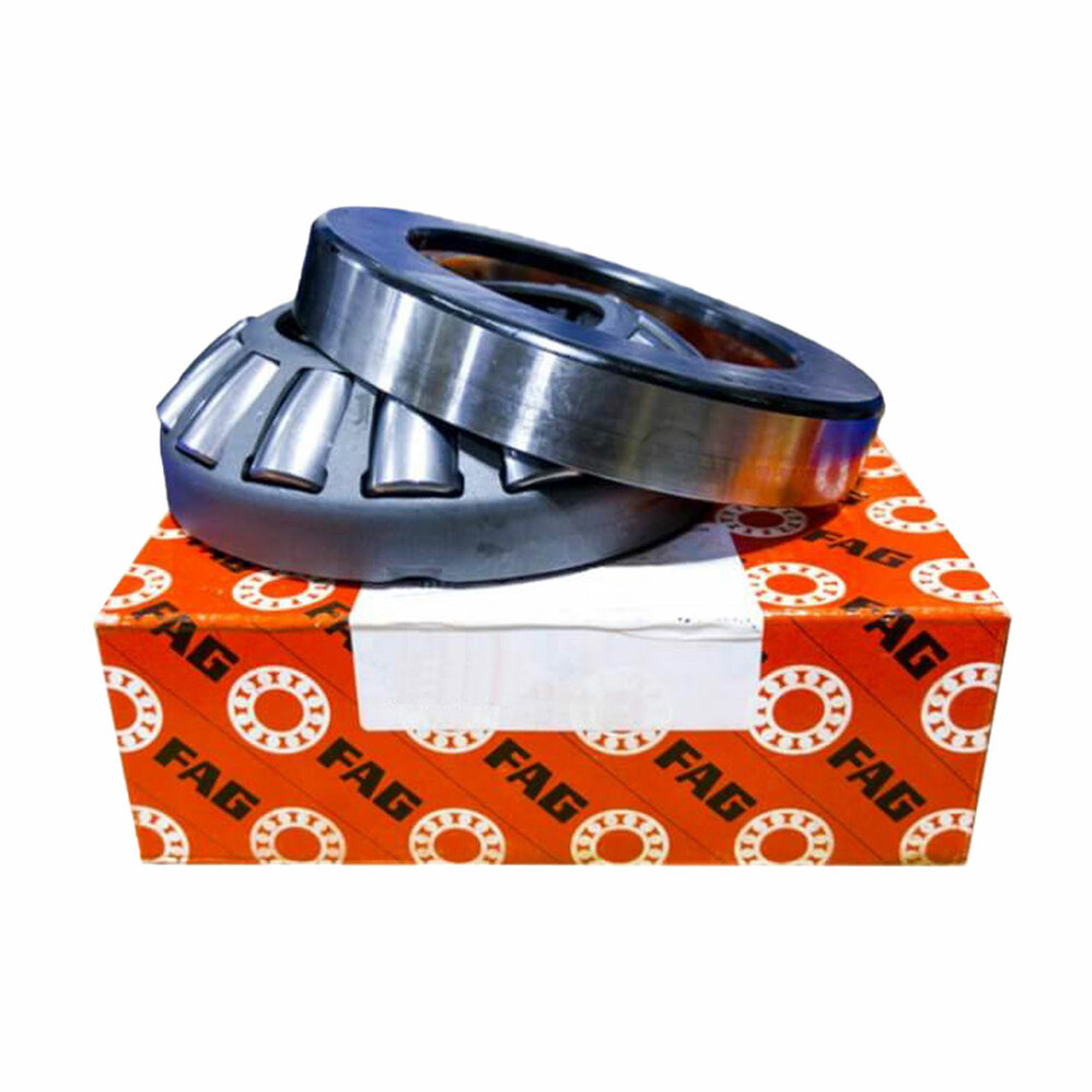
At DXTSEALS, we are pleased to present the FAG 29430-E1 single-row spherical roller thrust bearing — engineered for demanding industrial applications where heavy axial loads, moderate radial loads, and angular misalignment tolerance all coexist. With an internal geometry optimized for enhanced capacity, this bearing is ideal for turbines, gearboxes, presses, and other heavy-duty machinery.
1. Design & Structural Highlights
-
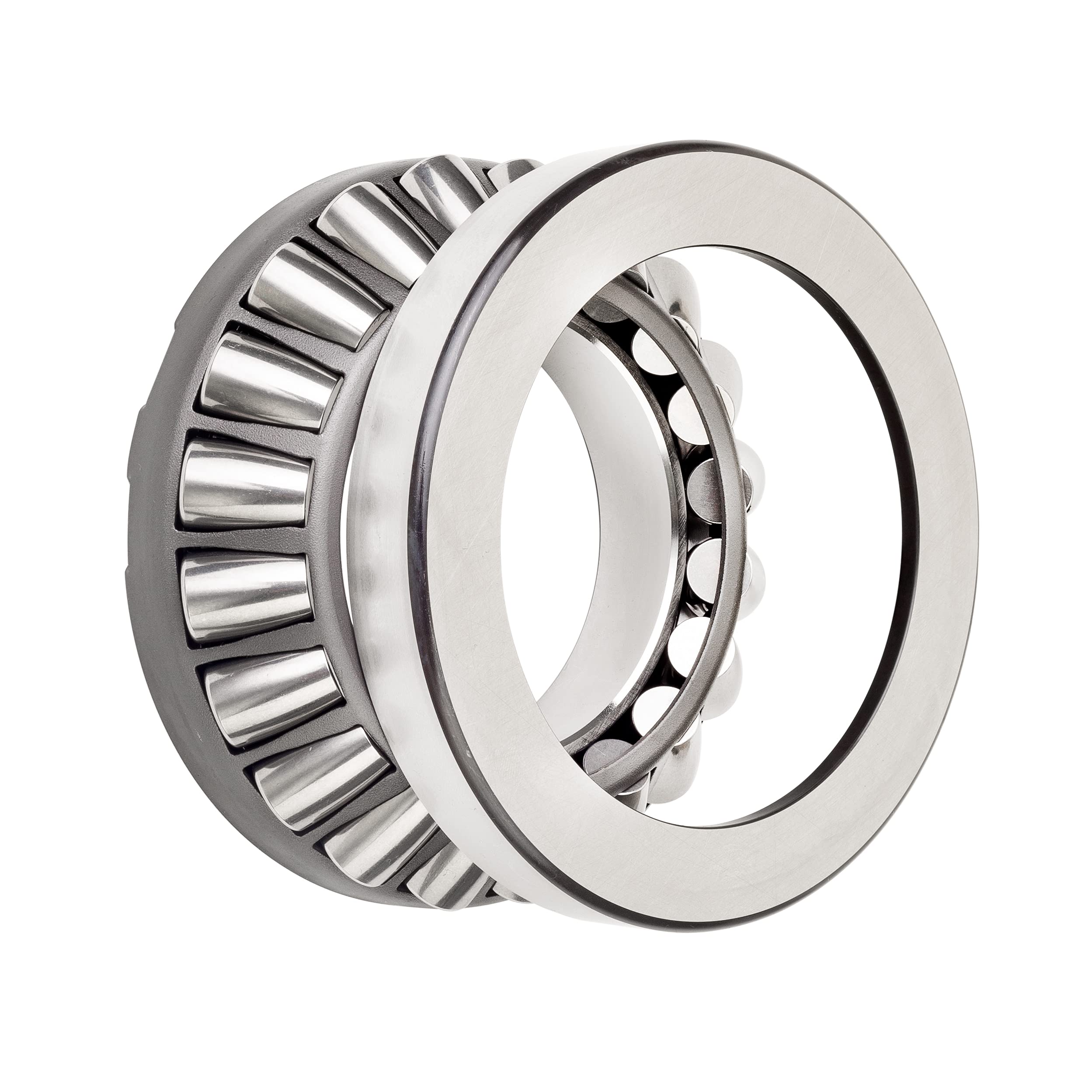
Single-row spherical roller thrust design — comprises a shaft-locating washer, housing washer, and barrel (asymmetrical) rollers held in a cage.
-
“E1” enhanced capacity design — delivers improved load handling over standard designs, thanks to refined contact geometry and structural robusticity.
-
Self-aligning capability — the spherical washer allows limited angular adjustment to compensate for shaft deflection or installation misalignment.
-
Modular assembly — the components (washers, rollers, cage) can be fitted separately, facilitating installation and maintenance.
-
Robust cage materials — in larger series, a solid brass cage is commonly used; in smaller sizes, sheet steel cages may be applied.
These design features combine to deliver a bearing that is resilient, high-performing, and service-friendly under challenging industrial conditions.
2. Key Specifications
| Parameter | Value |
|---|---|
| Bore (d) | 150 mm |
| Outer diameter (D) | 300 mm |
| Width (B) | 90 mm |
| Approximate weight | 27.20 kg |
| Dynamic load capacity | 2,000 kN |
| Static load capacity | 5,300 kN |
| Fatigue limit / reference load | 560 kN |
| Reference speed | 1,190 rpm |
| Limiting speed | 2,200 rpm |
3. Advantages & Performance Benefits
-
Exceptional axial load capacity
As a dedicated thrust bearing, the 29430-E1 excels under heavy axial loading while maintaining stability under combined loads. -
Self-alignment tolerance
The spherical seat design lets the bearing accommodate angular misalignment, reducing stress concentrations and improving reliability. -
High structural robustness
Enhanced geometry (E1) enables a favorable load distribution, high fatigue strength, and long service life under fluctuating forces. -
Ease of installation and servicing
The modular design allows separate mounting of washers, rollers, and cage. Combined with generous clearance alleys, this reduces complexity in assembly. -
Versatility in industrial environments
Suitable for turbines, presses, machine tools, gear units, and other heavy equipment where axial loads dominate.
4. Typical Applications
-
Turbine thrust bearing arrangements
-
Vertical shafts, rotor systems
-
Heavy press and forging machines
-
Gearboxes with thrust load components
-
Marine propulsion, shaft thrust systems
-
General heavy machines requiring axial and slight radial load support
5. Case Study: Prolonged Service Life in Rotary Kiln Application
Customer: A major cement plant in Southeast Asia
Application: Rotary kiln thrust support in cement production line
Challenge:
The plant’s rotary kiln transmits extremely high axial thrust loads due to tilt angle, material weight, and internal refractory ring forces. Previous thrust bearing solutions exhibited frequent maintenance issues—premature wear, high heat generation, and occasional seizure—especially after exposure to dust, heat, and vibration. Downtime was costly, and replacement bearings often could not withstand both the axial load magnitude and misalignment caused by kiln deflection.
Solution:
After technical evaluation, the plant selected the FAG 29430-E1 single-row spherical roller thrust bearing (150 × 300 × 90 mm, steel cage) for the kiln’s main thrust housing. Key reasons:
-
High axial static load rating (≈ 5,300 kN) for reliable support of heavy thrust.
-
Good dynamic / reference speed (~ 1,180 rpm) and limiting speed (~ 2,290 rpm) suited to rotary kiln conditions.
-
Robust operating temperature range (−30 °C to +200 °C), tolerating the high heat from the kiln and ambient variations.
-
Self-alignment capability to compensate for shaft misalignment under load and thermal expansion.
Implementation & Outcome:
-
The bearing was installed using separate housing and shaft washers, ensuring precise fit and ability to adjust alignment during startup.
-
Adequate lubrication and cooling were put in place, with regular monitoring of temperature and vibration.
-
After 18 months of continuous operation under full load, the FAG 29430-E1 bearing still showed minimal wear, maintained acceptable temperature levels (within design limits), and no signs of misalignment damage or roller fatigue.
-
Compared to the previous bearing, maintenance cost was reduced by ~ 40%, and downtime for thrust bearing failures dropped significantly.
Benefits Realized:
-
Extended bearing lifetime under heavy axial load
-
Improved reliability and reduced unplanned downtime
-
Lower maintenance and replacement costs
-
Improved operational efficiency in the rotary kiln line
6. Installation & Maintenance Guidance
-
Shaft & housing fits — adhere to FAG / Schaeffler recommended tolerances to avoid distortion or slippage.
-
Proper lubricant selection — use grease or oil suited to operating temperature and load; avoid over-lubrication.
-
Temperature effects & clearance — if operating at elevated temperatures, choose appropriate clearance or variant (verify with manufacturer).
-
Clean installation environment — prevent contamination (dust, particles, moisture) during assembly.
-
Alignment check — though self-aligning, better alignment yields lower stress and longer life.
-
Monitoring — during initial running-in, monitor vibration, temperature, and noise to detect early issues.
-
Disassembly methods — use proper removal tools (pullers, sleeves) to avoid damaging mating surfaces.