
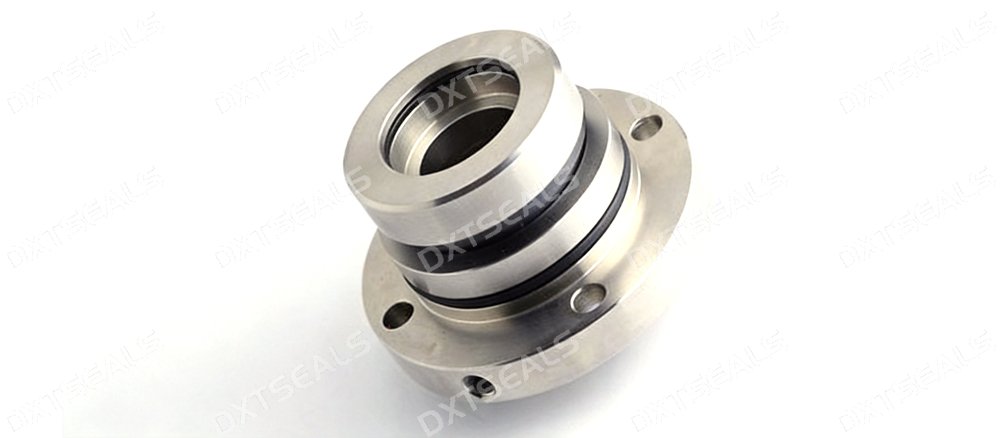
Sealing technology is one of the most fundamental aspects of industrial equipment design. Whether the goal is to prevent fluid leakage, retain lubricants, isolate contaminants, or protect process integrity, the correct sealing solution has a direct influence on equipment reliability, service life, maintenance cost, and operational safety.
However, not all sealing tasks are the same. Some applications require static sealing, where two stationary surfaces must be sealed against liquid or gas leakage. Others involve dynamic sealing, where the sealing system must function while a shaft, rod, or mating surface is moving. As operating conditions become more demanding—especially in pumps, compressors, mixers, hydraulic systems, and rotating machinery—the difference between static and dynamic sealing becomes increasingly important.
This is where the boundary between conventional sealing products and mechanical seals becomes clear. Conventional seals such as O-rings, gaskets, oil seals, lip seals, and PTFE seals remain essential across a wide range of industrial applications, particularly in static sealing and simpler dynamic sealing tasks. Mechanical seals, by contrast, are designed primarily for more demanding dynamic sealing duties involving rotating shafts and process fluids.
This article explains the transition from static sealing to dynamic sealing, compares the functional boundaries of conventional seals and mechanical seals, and provides practical guidance on where each solution fits best in industrial equipment.
Why Static Sealing and Dynamic Sealing Must Be Distinguished
In industrial systems, the type of movement at the sealing interface is one of the most important factors in seal selection.
Static sealing
Static sealing refers to applications where there is no relative motion between the sealing surfaces after assembly. The purpose is to block leakage through a stationary joint or interface.
Typical examples include:
- Pipe flange connections
- Valve covers
- Pump casings
- Hydraulic end caps
- Instrument housings
- Static joints in machinery and processing equipment
Dynamic sealing
Dynamic sealing refers to applications where one of the sealing surfaces moves relative to the other during operation. This movement may be:
- Rotary motion
- Reciprocating motion
- Oscillating motion
- Axial shaft movement
Typical examples include:
- Rotating pump shafts
- Gearbox shafts
- Hydraulic cylinders
- Compressor shafts
- Mixer and agitator shafts
- Valve stems and reciprocating rods
The shift from static to dynamic sealing fundamentally changes the sealing challenge. A seal that works perfectly in a static flange may fail quickly on a rotating shaft because friction, wear, heat, shaft runout, pressure fluctuation, and lubrication all become part of the sealing problem.
Conventional Seals and Mechanical Seals: Two Different Sealing Approaches
To understand their application boundaries, it is useful to define the two major sealing categories.
Conventional Seals: Broadly Used in Static and Basic Dynamic Applications
Conventional seals generally include:
- O-rings
- Gaskets
- Oil seals (radial shaft seals)
- Lip seals
- Packing seals
- PTFE seals
- Spring-energized seals in some non-mechanical-seal applications
These products are typically characterized by:
- Simple structures
- Lower manufacturing cost
- Ease of installation and replacement
- Wide applicability in both static and moderate-duty dynamic sealing
- Flexibility in material selection
Conventional seals are indispensable because they can solve a wide range of sealing problems economically and efficiently.
Mechanical Seals: Specialized for Demanding Rotary Dynamic Sealing
Mechanical seals are specialized sealing systems designed mainly for rotating equipment where leakage of process fluid must be tightly controlled.
A typical mechanical seal includes:
- A rotating seal face
- A stationary seal face
- Springs or bellows
- Secondary seals such as O-rings or PTFE elements
- Metal hardware and mounting components
Unlike a simple lip seal or gasket, a mechanical seal is a precision dynamic sealing assembly. It is designed to maintain a controlled sealing interface between rotating and stationary faces while handling pressure, temperature, speed, and media challenges that conventional seals often cannot manage alone.
Mechanical seals are widely used in:
- Pumps
- Compressors
- Mixers and agitators
- Reactors
- Process equipment handling chemicals, slurries, or sanitary fluids
The Application Boundary Begins with Static Sealing
The clearest boundary between conventional seals and mechanical seals begins with pure static sealing.
1. Static Sealing: The Core Domain of O-Rings, Gaskets, and Static PTFE Seals
In static applications, there is no relative motion between the sealed surfaces. Because friction and wear are not major concerns, the seal can rely primarily on compression or surface contact to block leakage.
Common static sealing products
- O-rings
- Flat gaskets
- Spiral wound gaskets
- PTFE gaskets
- bonded seals
- custom molded static sealing rings
Why conventional seals dominate static sealing
Conventional seals are ideal for static sealing because they provide:
- Simple installation
- low cost
- excellent sealing efficiency in stationary joints
- broad compatibility with standard groove and flange designs
- easy material matching for temperature and media requirements
Typical static sealing applications:
- Pump casing joints
- valve body connections
- pipe flanges
- hydraulic ports
- instrumentation housings
- covers, lids, and end caps
In these applications, a mechanical seal is generally unnecessary because there is no rotating shaft or dynamic sealing interface that requires a face-to-face sealing system.
2. Why Mechanical Seals Are Not Used for Ordinary Static Sealing
A mechanical seal is not simply a “better seal” for every application. It is a specialized dynamic seal. If a sealing point is purely static, using a mechanical seal would usually be:
- structurally unnecessary
- significantly more expensive
- more difficult to install
- less practical than a gasket or O-ring solution
For example, a pump casing flange or pipe connection only needs a static seal to prevent leakage between two fixed surfaces. An O-ring, gasket, or PTFE sealing ring is the correct solution because the sealing task does not involve shaft rotation or dynamic face loading.
This illustrates the first major application boundary: static sealing belongs primarily to conventional sealing components, not mechanical seals.
The Boundary Expands in Low-Complexity Dynamic Sealing
Once movement is introduced, the sealing challenge becomes more complex. However, not all dynamic sealing automatically requires a mechanical seal.
3. Reciprocating and Light Dynamic Sealing: Conventional Seals Still Play a Major Role
Dynamic sealing includes more than rotating shafts. In many systems, the movement is linear or reciprocating, and the sealing requirements can still be handled by conventional seals.
Typical products for reciprocating or light dynamic sealing
- O-rings in hydraulic and pneumatic systems
- U-cups
- PTFE piston seals
- rod seals
- spring-energized seals
- scraper and wiper seals
Common applications:
- hydraulic cylinders
- pneumatic actuators
- valve stems
- reciprocating rods
- low-speed linear motion systems
In these cases, the sealing interface is dynamic, but it does not involve the same combination of shaft speed, pressure, heat generation, and process-fluid leakage control seen in centrifugal pumps or compressors.
As a result, conventional seals remain the primary solution.
This marks the second application boundary: many dynamic sealing tasks still belong to conventional seals if the motion type is reciprocating or the operating demands are relatively moderate.
4. Rotary Lubrication Sealing: Oil Seals Occupy the Middle Ground
A very important transition area between simple conventional seals and mechanical seals is rotary shaft sealing for lubricant retention.
Oil seals, also known as radial shaft seals, are widely used for rotary applications such as:
- gearboxes
- electric motors
- reducers
- bearing housings
- automotive drivetrains
- agricultural equipment
Main purpose of oil seals
- retain oil or grease inside the housing
- prevent dust, dirt, and moisture from entering
- provide cost-effective rotary sealing in low-pressure systems
Why oil seals remain effective here
These systems usually involve:
- lubricating oil rather than process fluid
- low internal pressure
- moderate shaft speed within seal design limits
- relatively compact equipment structure
Because the sealing task is primarily lubricant retention and contamination exclusion, oil seals are often the most practical choice.
This creates an important middle boundary: not all rotary shaft sealing requires a mechanical seal. If the application involves low-pressure lubrication sealing rather than process-fluid containment, an oil seal may be entirely appropriate.
Where the Boundary Shifts Toward Mechanical Seals
The application boundary changes significantly when the sealing duty moves from simple motion sealing to demanding process-fluid sealing around rotating shafts.
5. High-Demand Rotary Process Sealing: The Core Domain of Mechanical Seals
Mechanical seals become the preferred solution when the application involves:
- a rotating shaft passing through equipment containing process fluid
- medium to high pressure
- high shaft speed
- hot, corrosive, hazardous, or expensive media
- strict leakage control requirements
- continuous-duty industrial operation
Typical applications:
- centrifugal pumps
- chemical process pumps
- compressors
- agitators and mixers
- pharmaceutical equipment
- food processing pumps
- reactors and vessel-mounted rotating equipment
In these systems, the seal must do much more than simply retain oil. It must control leakage of the actual process medium, often under pressure and in a dynamic environment where shaft movement, vibration, heat, and fluid characteristics all affect seal performance.
This is where conventional seals often reach their functional limits.
Why Conventional Seals Reach Their Limits in Demanding Rotary Process Equipment
Conventional seals such as O-rings and oil seals are not necessarily “poor” seals—they are simply designed for different tasks. In demanding rotary process applications, they often face several limitations.
1. Leakage control limitations
Oil seals and packing systems are generally not designed for near-zero leakage of pressurized process fluids.
2. Pressure limitations
High pressure can distort sealing lips, extrude elastomers, or reduce sealing stability in conventional dynamic seals.
3. Speed-related wear
At high shaft speed, continuous lip contact can generate heat, wear, and shaft damage.
4. Media compatibility challenges
Aggressive chemicals, slurries, sanitary media, or high-temperature fluids often require more advanced sealing structures and material combinations.
5. Reliability and environmental demands
In chemical, pharmaceutical, and energy systems, leakage control is often linked to safety, product loss prevention, and regulatory compliance.
These challenges define the upper boundary of conventional dynamic seals and the entry point for mechanical seal systems.
Mechanical Seals as the Boundary Solution for Rotary Dynamic Process Sealing
Mechanical seals are specifically designed to handle the type of dynamic sealing challenge described above.
Why mechanical seals are preferred in this boundary zone
They provide:
- lower leakage rates
- better pressure handling
- improved high-speed performance
- reduced shaft wear compared with packing or lip seals
- adaptability to corrosive, abrasive, or high-temperature service through material selection
- suitability for single, double, cartridge, or engineered seal arrangements
Mechanical seals do not replace every conventional seal in a machine, but they become essential when the sealing task crosses the boundary into high-demand rotary process sealing.
Static Seals and Mechanical Seals Are Not Opposites—They Often Work Together
It is also important to understand that conventional seals and mechanical seals are not completely separate worlds. In many machines, they are used together.
For example, a pump may contain:
- a mechanical seal at the shaft to contain the pumped fluid
- O-rings inside the mechanical seal as secondary seals
- gaskets between gland plate and pump casing
- oil seals or bearing isolators in the bearing housing to retain lubricant
- PTFE seals in auxiliary components or valves
This means the application boundary is not about “one product replacing all others.” Instead, it is about assigning the correct sealing technology to the correct sealing function within the equipment.
Application Boundary Summary: Which Seal Fits Which Sealing Zone?
The following comparison helps clarify the practical boundary between conventional seals and mechanical seals.
| Sealing Zone | Typical Motion | Common Seal Types | Typical Equipment / Locations | Main Selection Logic |
|---|---|---|---|---|
| Static sealing | No motion | O-rings, gaskets, PTFE gaskets, bonded seals | Flanges, valve bodies, pump casings, housings | Use conventional seals for stationary joints |
| Reciprocating / light dynamic sealing | Linear or limited motion | O-rings, U-cups, PTFE rod seals, spring-energized seals | Hydraulic cylinders, valve stems, actuators | Use conventional dynamic seals when motion is linear or moderate |
| Rotary lubrication sealing | Rotary | Oil seals, lip seals, bearing isolators | Gearboxes, motors, reducers, bearing housings | Use oil seals when the main task is lubricant retention and contamination exclusion |
| Rotary process-fluid sealing | Rotary under process conditions | Mechanical seals | Pumps, compressors, mixers, reactors | Use mechanical seals when leakage control, pressure, speed, and process fluid sealing become critical |
How to Choose the Right Seal at the Static-to-Dynamic Boundary
In real engineering practice, selecting the right seal requires more than just identifying whether the equipment “moves.” The following questions are critical:
1. Is the sealing point static, reciprocating, or rotary?
This is the first and most important classification step.
2. What is the sealed medium?
Is it lubricating oil, water, chemical fluid, slurry, gas, or sanitary product?
3. What is the pressure level?
Low-pressure lubrication systems and pressurized process systems require very different sealing strategies.
4. What is the shaft speed or motion frequency?
Higher speed generally increases the need for more specialized dynamic sealing solutions.
5. How strict are the leakage requirements?
A slight oil film in a gearbox may be acceptable; chemical leakage from a pump often is not.
6. What are the maintenance and service-life expectations?
Some conventional seals are inexpensive and easy to replace, while mechanical seals offer lower leakage and longer reliability in demanding applications.
DXTSEALS: Sealing Solutions Across the Full Range from Static to Dynamic Applications
At DXTSEALS, we understand that industrial sealing is not a single-product decision. The right solution depends on where the application falls on the spectrum from static sealing to dynamic rotary process sealing.
Our product range covers both conventional and advanced sealing technologies, including:
Conventional Sealing Products
- O-rings
- Oil seals
- PTFE seals
- gaskets
- spring-energized seals
- custom sealing rings for static and dynamic applications
Mechanical Sealing Solutions
- standard mechanical seals
- cartridge mechanical seals
- double mechanical seals
- OEM-equivalent replacements
- custom non-standard mechanical seals
Engineering and Manufacturing Support
- seal selection based on pressure, speed, media, and equipment type
- material recommendation for elastomers, PTFE compounds, and seal faces
- reverse engineering from samples or drawings
- CNC precision manufacturing
- support for both standard models and customized industrial sealing systems
Whether the requirement is a static O-ring for a valve body, an oil seal for a gearbox shaft, or a mechanical seal for a high-demand chemical pump, DXTSEALS can help customers select the most appropriate solution for the actual operating boundary.
Conclusion
The transition from static sealing to dynamic sealing defines one of the most important application boundaries in industrial sealing technology. Conventional seals such as O-rings, gaskets, oil seals, PTFE seals, and spring-energized seals remain indispensable for static joints, reciprocating systems, and many moderate-duty rotary applications. Mechanical seals, however, become the preferred solution when sealing requirements move into the demanding zone of rotary process-fluid containment, where pressure, speed, leakage control, and reliability are critical.
Understanding these application boundaries helps engineers avoid both under-specification and over-specification. A gasket should not be replaced with a mechanical seal where only a static joint needs to be sealed, just as a simple oil seal may not be sufficient for a high-speed chemical pump shaft.
The best sealing strategy is always based on motion type, media, pressure, speed, leakage tolerance, and equipment function. With comprehensive capabilities in both conventional seals and mechanical seals, DXTSEALS supports customers across the full sealing spectrum—from static sealing points to complex dynamic process equipment.