
Introduction
High-temperature and high-pressure operating conditions present some of the most demanding challenges for sealing systems. In such environments, conventional elastomer seals often fail due to thermal degradation, extrusion, or loss of elasticity.
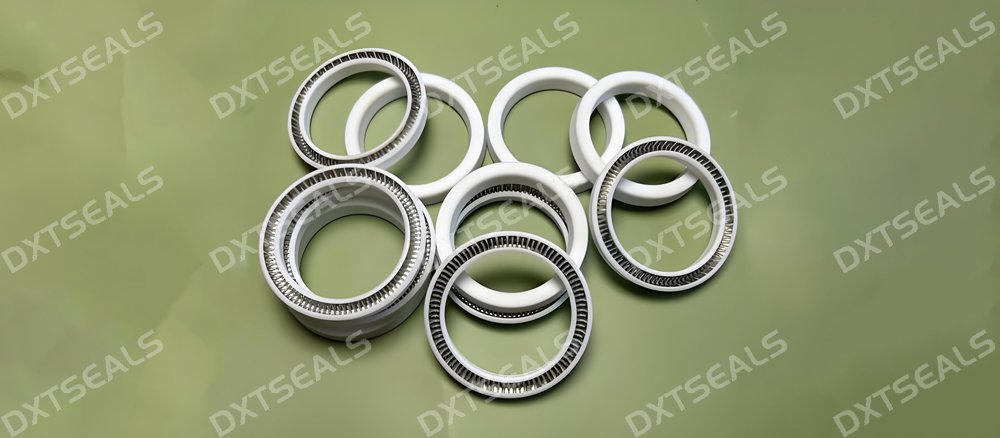
Spring-energized seals offer a reliable solution thanks to their unique structure and advanced material combinations. This article provides a practical guide to selecting suitable materials for spring-energized seals used in high-temperature and high-pressure applications.
Challenges of High-Temperature and High-Pressure Sealing
When exposed to extreme operating conditions, seals must withstand:
-
Thermal expansion and material softening
-
Increased system pressure and extrusion risk
-
Chemical attack at elevated temperatures
-
Accelerated wear and material aging
Material selection is therefore critical to maintaining sealing integrity and long service life.
PTFE Jacket Material Selection
Virgin PTFE
Virgin PTFE provides excellent chemical resistance and thermal stability. It is suitable for high-temperature environments with moderate pressure and low wear requirements.
Advantages:
-
Wide temperature range
-
Excellent chemical inertness
-
Low friction
Limitations:
-
Limited resistance to creep under high pressure
Filled PTFE Compounds
Filled PTFE materials enhance mechanical strength and reduce creep at high pressure. Common fillers include glass fiber, carbon, graphite, and bronze.
Advantages:
-
Improved wear resistance
-
Higher load-carrying capability
-
Better dimensional stability under pressure
Selection Note:
Filler type must be chosen carefully to ensure compatibility with the operating media.
Metal Spring Material Selection
Stainless Steel Springs
Stainless steel springs are widely used for high-temperature and moderate-pressure applications due to their corrosion resistance and stable elastic performance.
High-Performance Alloy Springs
For extreme temperature and pressure environments, special alloy springs provide improved fatigue resistance and long-term sealing force stability.
Balancing Sealing Performance and Friction
In high-pressure applications, excessive spring force may increase friction and wear. Proper matching of PTFE jacket material and spring preload is essential to balance sealing reliability with friction control.
At DXTSEALS, our spring-energized seal solutions are engineered with optimized material combinations to perform reliably under high-temperature and high-pressure conditions.
Typical High-Temperature and High-Pressure Applications
-
Oil and gas processing equipment
-
Chemical reactors and valves
-
Aerospace and power generation systems
-
High-pressure hydraulic systems
These applications demand precise material selection and careful seal design.
Conclusion
Selecting the right materials for spring-energized seals is critical when operating under high-temperature and high-pressure conditions. By combining appropriate PTFE compounds with suitable metal spring materials, spring-energized seals can deliver reliable, long-lasting sealing performance where conventional seals fail.
A systematic material selection approach ensures safety, efficiency, and reduced maintenance costs in extreme environments.