
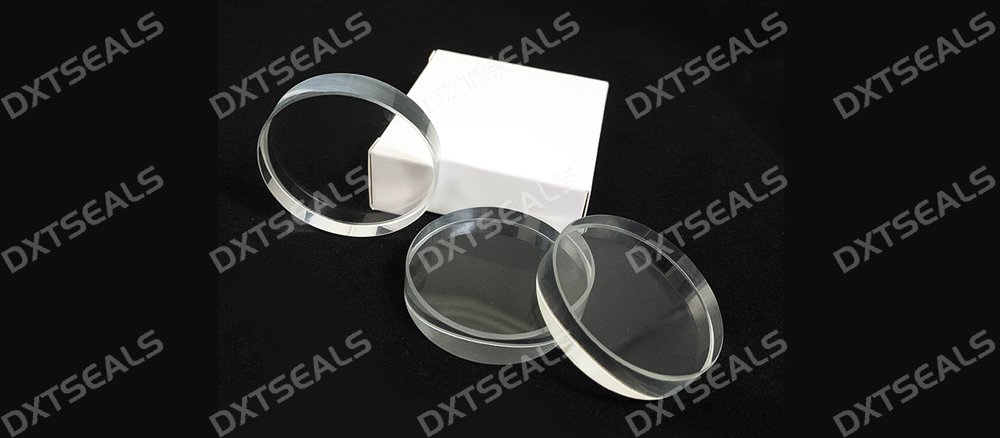
High-temperature level gauge glass is used in industrial equipment where direct visual monitoring of liquid levels is required under demanding thermal conditions. Boilers, pressure vessels, process tanks, steam equipment, and industrial heating systems may require specialized glass or protective components that can withstand elevated temperatures and repeated thermal changes.
Different applications may use borosilicate glass, aluminosilicate glass, mica components, or combinations of these materials. Each material has its own characteristics and is selected according to the operating temperature, pressure, process medium, mechanical requirements, and gauge construction.
Understanding the differences between these materials helps engineers and maintenance teams select the appropriate level gauge components for new equipment and replacement applications.
What Is High-Temperature Level Gauge Glass?
High-temperature level gauge glass is a specially manufactured glass component designed for industrial level indicators and sight glass assemblies.
Unlike ordinary glass, industrial gauge glass needs to maintain adequate optical and mechanical performance while exposed to temperature changes, pressure, and process media.
The actual performance of a gauge glass depends on several factors, including:
- Glass material and grade
- Glass thickness
- Dimensions and geometry
- Surface and edge quality
- Operating temperature
- Operating pressure
- Thermal shock conditions
- Installation method
- Gasket and mounting system
Therefore, the material should always be selected together with the complete gauge design.
Borosilicate Gauge Glass
Borosilicate glass is one of the most commonly used materials for industrial gauge glass applications.
Its low thermal expansion and good thermal shock resistance make it suitable for equipment exposed to heating and cooling cycles. It also provides good optical clarity and chemical resistance for many industrial media.
Main Advantages of Borosilicate Glass
- Low thermal expansion
- Good thermal shock resistance
- Good temperature stability
- Excellent optical clarity
- Good chemical resistance
- Suitable for many industrial liquid-level applications
- Available in a wide range of standard dimensions
Borosilicate gauge glass is commonly found in boiler level gauges, tanks, pressure equipment, industrial sight glasses, and process equipment.
For many conventional high-temperature level measurement applications, it provides a practical balance between performance, availability, and cost.
Aluminosilicate Gauge Glass
Aluminosilicate glass is another high-performance glass material that can be used in demanding industrial viewing applications.
Its material system contains alumina and silica as important components. Depending on the specific formulation and manufacturing process, aluminosilicate glass can provide high mechanical strength and good thermal stability.
Main Advantages of Aluminosilicate Glass
- High mechanical strength for suitable grades
- Good thermal stability
- Good resistance to demanding environments
- Excellent optical performance when properly processed
- Suitable for specialized industrial applications
- Can be manufactured in customized configurations
Aluminosilicate glass can be considered when the application places particular emphasis on mechanical strength or requires a specialized high-performance glass.
As with borosilicate glass, the actual temperature and pressure capability depends on the specific glass grade, dimensions, thickness, mounting system, and operating conditions.
Mica Components for High-Temperature Applications
Mica is different from conventional transparent gauge glass.
Mica is a naturally occurring mineral material with excellent heat resistance and good electrical insulation properties. In industrial equipment, mica components may be used as protective sheets, insulating components, viewing-window elements, or parts of specialized high-temperature assemblies.
Mica can be particularly useful in environments where conventional glass alone may not provide the required protection or thermal performance.
Main Advantages of Mica
- Excellent high-temperature resistance
- Good thermal stability
- Good electrical insulation
- Suitable for demanding thermal environments
- Can be processed into thin sheets and specialized components
- Useful as a protective or insulating material
Mica components are therefore often used differently from transparent borosilicate or aluminosilicate gauge glass.
Aluminosilicate vs Borosilicate vs Mica
The following table provides a general comparison:
| Property | Borosilicate Glass | Aluminosilicate Glass | Mica |
|---|---|---|---|
| Transparency | Excellent | Excellent | Generally not equivalent to transparent glass |
| Thermal expansion | Low | Low for suitable grades | Very low/varies by mica type |
| Thermal shock resistance | Excellent for suitable grades | Good to excellent depending on grade | Excellent high-temperature stability |
| Mechanical strength | Good | Generally high for suitable grades | Depends on mica type and thickness |
| High-temperature performance | Excellent for suitable grades | Excellent for suitable grades | Excellent |
| Chemical resistance | Good to excellent | Good to excellent | Good in many applications |
| Typical role | Transparent level gauge glass | Specialized high-performance glass | Protective, insulating, or high-temperature component |
| Typical applications | Boilers, tanks, process equipment | Specialized sight and viewing applications | High-temperature insulation and protective assemblies |
This comparison is a general guide. The technical specifications of the actual material grade should always be checked before use.
Why Material Selection Matters
A level gauge may be exposed to a combination of high temperature, internal pressure, thermal cycling, and chemical media.
Using the wrong material can result in poor visibility, premature damage, thermal stress, or sealing problems.
Material selection should therefore consider the complete operating environment rather than temperature alone.
Important parameters include:
Operating Temperature
The maximum continuous temperature and possible temperature fluctuations should be identified.
Startup and shutdown conditions can create thermal shock even when the normal operating temperature is relatively stable.
Operating Pressure
Pressure is particularly important for boiler and pressure-vessel applications.
The glass thickness, dimensions, gauge construction, and mounting method must be suitable for the required pressure conditions.
Thermal Cycling
Repeated heating and cooling can place stress on the glass.
Materials with suitable thermal expansion characteristics and good thermal shock resistance are preferred for applications with frequent temperature changes.
Process Medium
The chemical properties of the liquid or gas should also be considered.
Water, steam, oil, solvents, acids, alkaline solutions, and other industrial media may have different compatibility requirements.
High-Temperature Boiler Level Gauge Applications
Boiler level gauges are a typical application for high-temperature gauge glass.
The gauge provides direct visual information about the liquid level inside the boiler or related equipment. Because boilers operate at elevated temperature and pressure, the gauge glass and sealing components must be properly selected and installed.
Borosilicate gauge glass is commonly used in many boiler applications because of its thermal stability and thermal shock resistance.
For specialized equipment, aluminosilicate glass or additional protective components may also be considered depending on the gauge design and operating conditions.
Industrial Pressure Vessels
Pressure vessels may require level indication for monitoring liquids during production or storage.
The gauge glass must be compatible with the pressure, temperature, and process medium.
In these applications, the complete assembly is important. The glass, gasket, holder, bolts, and other components must work together to maintain reliable sealing and mechanical support.
Process Tanks and Chemical Equipment
Industrial process tanks often require direct visual liquid-level observation.
Borosilicate and aluminosilicate glass can be considered for different process conditions, while mica may be used as a protective or specialized component in high-temperature equipment.
For aggressive chemical environments, the exact material grade and gasket material should be evaluated together.
Mica Assemblies and Protective Components
Mica components can be used in specialized high-temperature assemblies where thermal protection is required.
A mica assembly may contain mica sheets, supporting components, gaskets, frames, or other materials depending on the equipment design.
In some applications, mica is used to protect a viewing area or provide thermal insulation around a glass component.
This type of assembly can help extend component life in demanding thermal environments.
Gasket Selection for High-Temperature Gauge Glass
The glass itself is only one part of a level gauge assembly.
A suitable gasket is required to create a reliable seal between the glass and the gauge body.
Depending on the application, gasket materials may include:
- Graphite
- PTFE
- Expanded graphite
- Mica-based materials
- Fiber-based sealing materials
- Other high-temperature sealing materials
The appropriate gasket depends on temperature, pressure, chemical compatibility, glass dimensions, and gauge construction.
For high-temperature applications, gasket selection should not be separated from glass selection.
Standard and Custom Level Gauge Glass
Many industrial level gauges use standard market dimensions. Standard borosilicate gauge glass can therefore be supplied for common equipment and replacement applications.
However, industrial maintenance projects frequently involve non-standard dimensions.
Custom gauge glass can be manufactured according to:
- Engineering drawings
- Original glass samples
- Detailed measurements
- OEM specifications
- Equipment model information
- Special mounting requirements
Custom manufacturing is particularly useful for discontinued equipment, modified machinery, and special industrial level gauge systems.
How to Select the Right High-Temperature Gauge Glass
A practical selection process should include the following steps:
1. Identify the gauge type
Determine whether the application uses a transparent level gauge, tubular gauge, reflex gauge, sight glass, or another design.
2. Confirm operating conditions
Record the normal and maximum temperature, pressure, thermal cycling conditions, and process medium.
3. Select the glass material
Choose borosilicate, aluminosilicate, or another specialized material according to the actual requirements.
4. Check dimensions
Confirm length, width, thickness, holes, edge configuration, and other critical dimensions.
5. Select compatible sealing components
Choose a gasket material that matches the temperature, pressure, and process medium.
6. Confirm the complete assembly
The glass, gasket, holder, and mounting system should be considered as one complete solution.
Quality Control of High-Temperature Gauge Glass
Quality control is essential for industrial gauge glass because dimensional accuracy and surface condition can affect both installation and performance.
Important inspection items may include:
- Overall dimensions
- Glass thickness
- Flatness
- Surface quality
- Edge condition
- Transparency
- Hole dimensions and positions
- Dimensional tolerances
- Material specifications
For custom products, drawings or original samples can be used as references for dimensional inspection.
Standard Replacement and Non-Standard Customization
Industrial users may need either standard replacement parts or fully customized components.
Standard borosilicate level gauge glass is suitable for many common industrial applications. Aluminosilicate glass can be supplied for specialized requirements, while mica components and assemblies can be manufactured for high-temperature protective or insulating applications.
Custom solutions can be produced according to drawings, samples, dimensions, or OEM requirements.
Matching gaskets and related sealing components can also be supplied to simplify maintenance and replacement.
Conclusion
High-temperature level gauge glass plays an important role in industrial liquid-level monitoring. Borosilicate glass, aluminosilicate glass, and mica components each have different characteristics and applications.
Borosilicate glass is widely used for transparent industrial level gauges because of its low thermal expansion, good thermal shock resistance, optical clarity, and chemical stability. Aluminosilicate glass can provide high mechanical strength and specialized thermal performance for demanding applications. Mica, while different from transparent gauge glass, offers excellent high-temperature performance and can be used for protective, insulating, and specialized assembly applications.
The correct selection should consider temperature, pressure, thermal cycling, process medium, dimensions, mounting configuration, and gasket compatibility.
We supply standard high-temperature level gauge glass and can also manufacture non-standard aluminosilicate glass, borosilicate gauge glass, mica components, and complete assemblies according to drawings, samples, dimensions, or OEM specifications.