
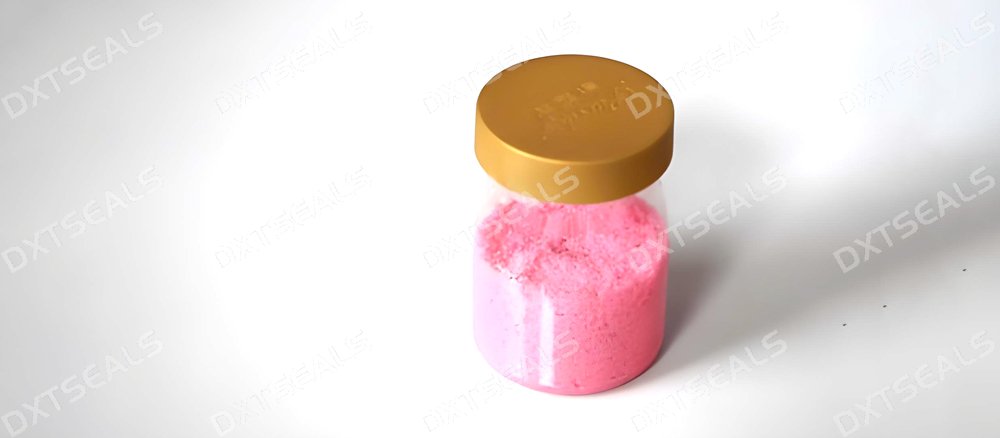
Glyd ring seals rely heavily on the performance characteristics of PTFE. While PTFE is widely recognized for its low friction, chemical inertness, and temperature stability, its mechanical properties can vary significantly based on formulation.
Different PTFE blends—pure PTFE, filled PTFE, and modified PTFE—have distinct impacts on wear resistance, pressure resistance, and overall sealing reliability.
This article dives deep into how these PTFE formulations affect Glyd ring performance, helping engineers choose the right material.
(Custom PTFE sealing solutions available from DXTSEALS.)
1️⃣ Why PTFE Formulation Matters in Glyd Ring Applications
A Glyd ring consists of a PTFE sealing ring paired with an elastomer energizer. The PTFE component directly determines:
-
Wear resistance under reciprocating motion
-
Extrusion resistance under high pressure
-
Dimensional stability under temperature variations
-
Friction coefficient and sealing smoothness
-
Overall service life of the seal
Thus, choosing the right PTFE formulation is crucial for maximizing the reliability of hydraulic and pneumatic equipment.
2️⃣ Types of PTFE Formulations Used in Glyd Ring Seals
PTFE materials used for sealing components typically fall into three categories:
1. Virgin (Pure) PTFE
-
No fillers added
-
Ultra-low friction
-
Highest chemical resistance
-
Lowest mechanical strength
-
Highest creep and deformation under load
2. Filled PTFE
PTFE enhanced with fillers to boost strength and wear characteristics. Common fillers:
-
Bronze (40%) – best wear resistance + compressive strength
-
Carbon (10–35%) – strong load capacity, good dry-running
-
Glass fiber (15–25%) – increased pressure resistance
-
Graphite – low friction at high speed
-
MoS₂ – lubrication improvement
3. Modified PTFE (e.g., PTFE + PFA, PTFE + PPS, nano-fillers)
-
Improved creep resistance
-
Better fatigue performance
-
Enhanced elasticity
-
Good for dynamic sealing under micro-lubrication
Each type affects wear and pressure resistance differently.
3️⃣ Impact on Wear Resistance Across PTFE Formulations
Wear resistance is essential for reciprocating motion found in:
-
hydraulic cylinders
-
injection molding machines
-
air compressors
-
linear actuators
Virgin PTFE
❌ Poor wear resistance
❌ Easily scratched under load
❌ Not suitable for heavy-duty or high-frequency systems
Filled PTFE
✔ 3–10× better wear resistance than virgin PTFE
✔ Ideal for high-speed or long-stroke applications
✔ Filler particles reduce surface abrasion
Ranking of common fillers (from highest to lowest wear resistance):
-
Bronze-filled PTFE
-
Carbon-filled PTFE
-
Glass-filled PTFE
-
Graphite-filled PTFE
-
Virgin PTFE
Modified PTFE
✔ Good wear performance
✔ More elastic surface contact
✔ Suitable for low-lubrication or dry-running systems
Conclusion: For wear-critical Glyd rings, bronze-filled or carbon-filled PTFE is typically the best choice.
4️⃣ Impact on Pressure Resistance Across PTFE Formulations
High-pressure environments can cause PTFE to:
-
extrude
-
permanently deform
-
lose sealing force
-
generate leakage or failure
Virgin PTFE
❌ Low pressure resistance
❌ High creep under continuous force
❌ Prone to extrusion at >10–12 MPa
Suitable only for low-pressure pneumatic systems.
Filled PTFE
✔ Significantly improved pressure resistance
✔ Less deformation under load
✔ Suitable for high-pressure hydraulics (20–40 MPa depending on design)
Best fillers for pressure resistance:
-
Glass-filled PTFE
-
Bronze-filled PTFE
-
Carbon-filled PTFE
Modified PTFE
✔ Excellent balance between elasticity and strength
✔ Good performance in medium-pressure applications
✔ Better safety margin compared to virgin PTFE
Conclusion: For high-pressure sealing (hydraulics, heavy machinery), filled PTFE is essential.
5️⃣ Performance Comparison Table
| Property | Virgin PTFE | Modified PTFE | Filled PTFE |
|---|---|---|---|
| Wear Resistance | ★★ | ★★★★ | ★★★★★ |
| Pressure Resistance | ★★ | ★★★★ | ★★★★★ |
| Creep / Deformation | High | Medium | Low |
| Friction | ★★★★★ | ★★★★★ | ★★★★ |
| Chemical Resistance | ★★★★★ | ★★★★ | ★★★ |
| High-Speed Suitability | Medium | High | High |
| Best Use Case | Corrosive or clean conditions | Balanced dynamics | Heavy-duty hydraulics |
6️⃣ How to Select the Right PTFE Formulation for Glyd Rings
✔ Choose Virgin PTFE if:
-
Chemical resistance is the top priority
-
The system pressure is low
-
There is minimal friction or load
✔ Choose Filled PTFE if:
-
High pressure (>20 MPa)
-
Long, high-frequency reciprocating motion
-
High wear environment
-
The seal must last long without frequent replacement
✔ Choose Modified PTFE if:
-
You need elasticity + wear resistance
-
Lubrication is poor
-
Medium-load dynamic sealing
Industry examples:
| Application | Recommended PTFE |
|---|---|
| Chemical pumps | Virgin PTFE |
| Excavator hydraulic cylinders | Bronze-filled PTFE |
| High-speed compressors | Carbon-filled PTFE |
| Food processing | Virgin or modified PTFE |
| Water hydraulics | Glass-filled PTFE |
7️⃣ Why Choose DXTSEALS for PTFE Glyd Rings?
DXTSEALS provides:
-
Virgin, filled, and modified PTFE materials
-
Custom-made Glyd rings for hydraulic & pneumatic systems
-
Material selection guidance based on real working conditions
-
Precision CNC-machined PTFE components
-
Long-life sealing solutions for industrial machinery
If you need PTFE formulation recommendations or customized sealing components, DXTSEALS can provide engineering-grade support.
✅ Conclusion
Different PTFE formulations dramatically influence the performance of Glyd ring seals.
-
Virgin PTFE → excellent chemical resistance, but weak mechanical strength
-
Filled PTFE → best wear and pressure resistance, ideal for heavy-duty conditions
-
Modified PTFE → balanced performance for dynamic sealing
By understanding these differences, engineers can choose the best PTFE grade to achieve long-lasting, reliable sealing performance.