
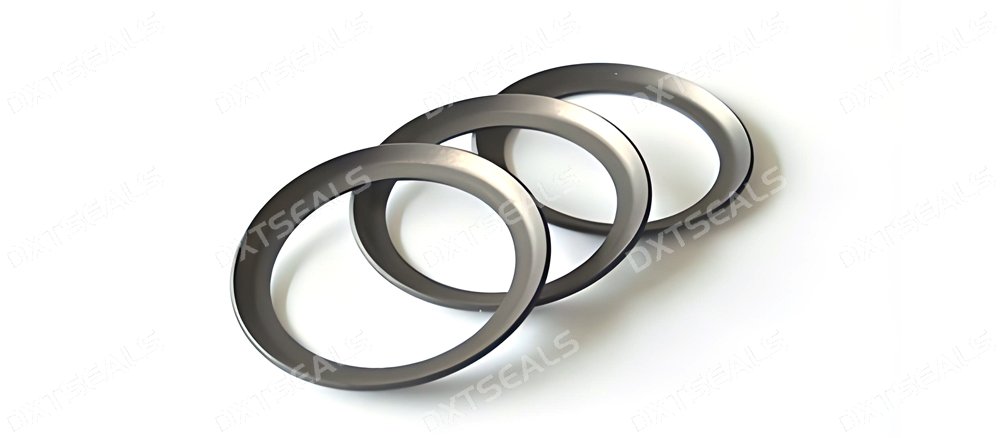
Sealing components are vital for maintaining pressure stability, preventing oil leakage, and ensuring the long-term reliability of air compressors. Whether it is an O-ring, oil seal, shaft seal, or PTFE wiper ring, the lifespan of these sealing elements depends on several key engineering factors.
In this article, DXTSEALS explains the three main aspects—material, structure, and working conditions—that directly determine the service life of air compressor seals.
1. Material Selection: The Foundation of Seal Longevity
The choice of material is the most influential factor in seal lifespan. A mismatch between seal material and working environment will inevitably lead to early failure.
1.1 Common Seal Materials and Their Features
| Material | Strengths | Limitations |
|---|---|---|
| NBR (Nitrile Rubber) | Good oil resistance, good sealing, affordable | Limited heat resistance (up to ~100°C) |
| FKM (Viton) | Excellent heat and chemical resistance | Higher cost |
| EPDM | Good heat, ozone, and steam resistance | Poor oil resistance |
| Silicone (VMQ) | Great low-temperature flexibility | Low wear resistance |
| PTFE | Excellent wear, temperature, and chemical resistance | Poor elasticity, requires precise design |
The correct material depends on:
-
Temperature (low / medium / high)
-
Medium type (air, oil, chemical vapor)
-
Required flexibility
-
Budget and service life expectations
DXTSEALS often helps customers compare NBR, FKM, and PTFE materials to achieve the best balance between cost and performance.
2. Structural Design: How Geometry Influences Performance
Even the best material will fail if the structure is not suitable for the application.
2.1 Cross-Section Design
Different seal types offer different performance characteristics:
-
O-rings: Simple, economical, limited for high dynamic friction.
-
Oil seals: Excellent for rotary shafts and oil-lubricated systems.
-
PTFE wiper rings: Low friction, suitable for high-speed or high-temperature applications.
-
Lip seals: Provide enhanced sealing pressure for uneven surfaces.
A mismatch between seal structure and compressor motion (rotary, reciprocating, high-speed) can cause premature wear.
2.2 Compression & Preload
Seals require correct:
-
Compression ratio
-
Preload
-
Fit tolerance
Too much compression → overheating, rapid wear
Too little compression → leakage, pressure loss
Professional manufacturers like DXTSEALS optimize these parameters during design to prevent early seal failure.
2.3 Surface Roughness & Shaft Finish
Surface finish directly affects friction and wear:
-
A rough surface will grind the seal
-
An overly smooth surface may reduce oil retention and increase friction heat
Typically, compressor shafts require Ra 0.2–0.6 μm for optimal seal life.
3. Working Conditions: The Real-World Influences
The actual operating conditions of the air compressor significantly affect sealing performance.
3.1 Temperature
High temperature accelerates:
-
Rubber aging
-
Hardening
-
Loss of elasticity
-
Surface cracking
If temperatures exceed material limits, failures occur quickly.
For example:
-
NBR may harden above 100°C
-
FKM performs well up to 200°C
-
PTFE handles 250–260°C
3.2 Pressure
Higher pressure increases:
-
Contact stress
-
Friction
-
Wear rate
-
Risk of extrusion
In high-pressure compressors, reinforced structures like:
-
Back-up rings
-
PTFE anti-extrusion rings
are commonly used.
3.3 Speed & Motion Type
Dynamic applications (like rotating shafts) require seals with:
-
High wear resistance
-
Low friction
-
Good heat dissipation
PTFE and FKM are preferred for high-speed compressor systems.
3.4 Lubrication & Contamination
Poor lubrication can quickly damage seals:
-
Increased friction
-
Elevated temperature
-
Accelerated wear
Contaminants such as dust, carbon particles, or metal debris can scratch the seal or shaft surface, leading to leakage.
4. How to Maximize Seal Lifespan?
To ensure long-lasting compressor sealing, follow these guidelines:
4.1 Choose the Right Material
Consider temperature, oil exposure, chemical environment, and expected lifespan.
4.2 Select the Correct Seal Structure
Match seal type with motion type and pressure conditions.
4.3 Maintain Proper Installation
Avoid twisting, overstretching, or damaging the seal during assembly.
4.4 Regular Maintenance
Check for:
-
Hardening
-
Cracks
-
Leakage
-
Shaft wear
Replace seals before they fail completely.
DXTSEALS offers custom-designed seals tailored to real working conditions to significantly extend seal life.
Conclusion
The lifespan of air compressor sealing components is determined by material selection, structural design, and actual working conditions. A well-designed seal made of the right material can dramatically reduce maintenance costs and improve compressor efficiency.
For custom air compressor seals—including NBR, FKM, PTFE, and high-performance composite seals—DXTSEALS provides engineering guidance and professional manufacturing support.