
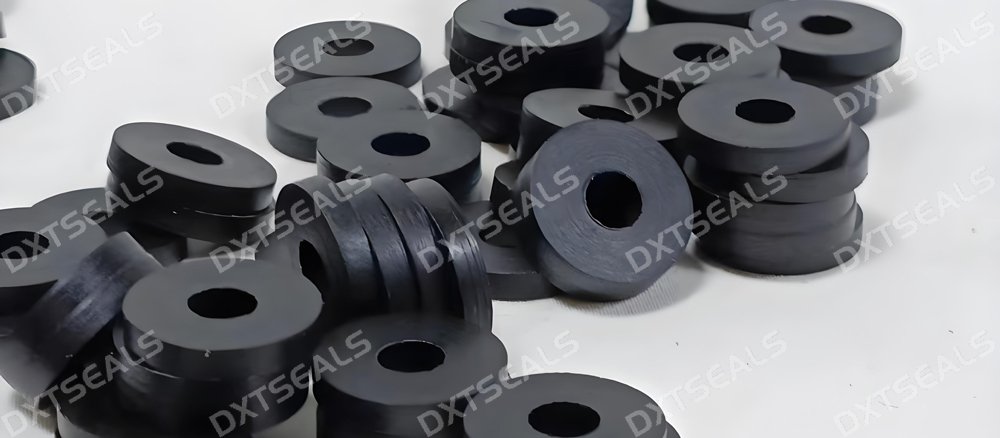
Rubber flat gaskets are widely used in sealing applications across industries such as automotive, chemical, mechanical equipment, and piping systems. When customizing these gaskets, choosing the right parameters and understanding usage precautions are critical to achieving reliable sealing performance and long-term durability.
This article highlights the key parameters to consider for custom rubber flat gaskets and the precautions to take during use.
1. Key Parameters for Custom Rubber Flat Gaskets
When designing or ordering a custom rubber flat gasket, several important factors must be considered:
a. Material Selection
The type of rubber directly determines chemical resistance, temperature tolerance, and service life. Common options include:
-
NBR (Nitrile Rubber): Excellent resistance to oil, fuel, and hydraulic fluids.
-
EPDM (Ethylene Propylene Diene Rubber): Great for weathering, ozone, and steam applications.
-
FKM (Viton®): High resistance to heat, chemicals, and oils.
-
Silicone Rubber: Ideal for high/low temperatures and food-grade sealing.
b. Hardness (Shore A)
Rubber hardness affects compression and sealing performance. Typical ranges are 40–80 Shore A:
-
Lower hardness (40–50): Better flexibility and sealing on rough surfaces.
-
Higher hardness (70–80): Better dimensional stability and wear resistance.
c. Thickness
The gasket’s thickness impacts compression set and sealing ability. Common thickness ranges from 1 mm to 10 mm, depending on the pressure and flange gap.
d. Operating Conditions
Key factors include:
-
Temperature Range: Ensure the rubber can handle the working environment (e.g., -40°C to +200°C depending on material).
-
Pressure Rating: Match the gasket’s compression strength to the system’s pressure.
-
Media Compatibility: Confirm resistance to chemicals, oils, water, or gases in contact.
2. Usage Precautions for Rubber Flat Gaskets
To maximize performance and lifespan, the following precautions should be observed:
-
Proper Installation: Ensure surfaces are clean, flat, and free from scratches or burrs.
-
Avoid Over-Compression: Excessive tightening can lead to permanent deformation and leakage.
-
Regular Inspection: Periodically check for wear, cracks, or hardening, and replace if needed.
-
Storage Conditions: Store gaskets in a cool, dry, and dark environment to prevent aging from ozone, UV, or heat exposure.
-
Correct Material Choice: Avoid using the wrong rubber type in chemical or high-temperature environments.
3. Advantages of Custom Rubber Flat Gaskets from DXTSEALS
At DXTSEALS, we provide custom rubber flat gaskets tailored to specific applications. Benefits include:
-
Wide range of rubber material options (NBR, EPDM, FKM, Silicone, etc.).
-
Customizable sizes, thicknesses, and hardness levels.
-
Precision manufacturing for tight dimensional tolerances.
-
Compliance with international sealing standards.
Conclusion
Custom rubber flat gaskets are essential for ensuring reliable sealing in various industrial systems. By carefully selecting material, hardness, thickness, and operating conditions, and by following proper usage precautions, businesses can achieve long-lasting sealing performance with reduced maintenance.
📩 Contact DXTSEALS today for tailored rubber flat gasket solutions that match your exact sealing requirements.