
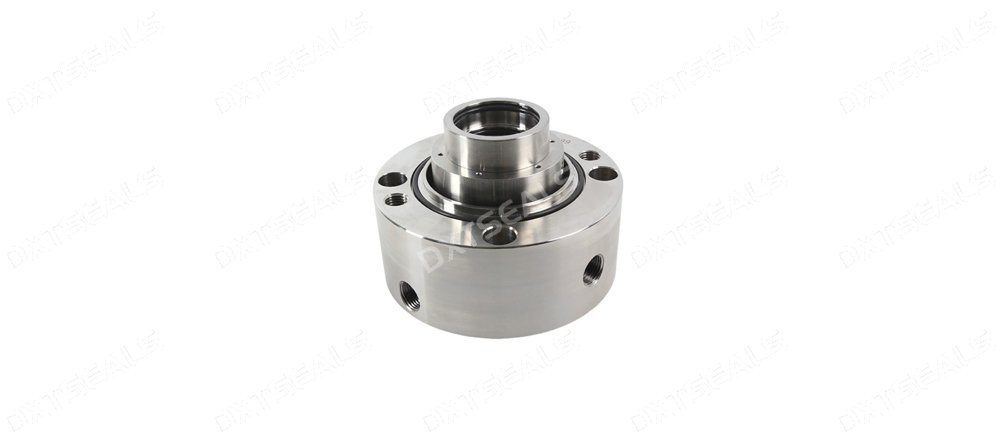
Mechanical seals are critical components in pumps, compressors, mixers, reactors, and various rotating equipment. Their primary function is to prevent fluid leakage while maintaining efficient and reliable operation under demanding conditions.
However, the sealing performance of a mechanical seal depends not only on its design but also on the precision of its manufacturing process. Even the most advanced seal design can fail prematurely if machining accuracy, surface quality, or assembly precision are not properly controlled.
This article explores the key precision manufacturing technologies behind modern mechanical seals and explains how they contribute to long-term sealing stability and operational reliability.
Why Manufacturing Precision Matters for Mechanical Seals
A mechanical seal operates by maintaining an extremely thin fluid film between two sealing faces. These faces rotate relative to each other while maintaining near-perfect contact.
The sealing effectiveness depends on several critical factors:
- Flatness of seal faces
- Surface roughness control
- Dimensional accuracy
- Material stability
- Assembly precision
- Dynamic balance
Even microscopic deviations can result in:
- Excessive leakage
- Increased friction
- Heat generation
- Accelerated wear
- Reduced service life
Therefore, high-precision manufacturing is essential for achieving consistent sealing performance.
Core Components of a Mechanical Seal
A typical mechanical seal consists of:
Rotary Face
Mounted on the rotating shaft and rotates with the equipment.
Stationary Face
Remains fixed within the seal housing.
Secondary Seals
Typically O-rings, bellows, or elastomer components that provide static sealing.
Springs or Bellows
Maintain contact pressure between sealing faces.
Hardware Components
Including retainers, glands, and drive mechanisms.
Each component must be manufactured within strict tolerances to ensure proper seal function.
Material Selection: The Foundation of Precision Performance
The first step in producing a high-performance mechanical seal is selecting suitable materials.
Silicon Carbide (SiC)
Silicon carbide is widely used because of its:
- Exceptional hardness
- Excellent wear resistance
- High thermal conductivity
- Outstanding corrosion resistance
It is commonly used in chemical processing, oil and gas, and slurry applications.
Tungsten Carbide (WC)
Tungsten carbide offers:
- Superior impact resistance
- High mechanical strength
- Excellent durability
Ideal for heavy-duty industrial environments.
Carbon Graphite
Carbon materials provide:
- Self-lubricating properties
- Low friction characteristics
- Good thermal stability
Frequently paired with hard-face materials.
Stainless Steel and Special Alloys
Used for springs and hardware components requiring:
- Corrosion resistance
- Mechanical strength
- Fatigue resistance
Proper material selection ensures dimensional stability and long-term sealing reliability.
Precision Machining Technology
The manufacturing accuracy of seal components directly affects seal performance.
CNC Precision Machining
Modern CNC equipment enables:
- High dimensional accuracy
- Repeatable production quality
- Complex geometry manufacturing
- Tight tolerance control
Critical dimensions such as face diameter, concentricity, and groove profiles must be precisely controlled.
Grinding Technology
Precision grinding is used to achieve:
- Tight dimensional tolerances
- Improved geometric accuracy
- Superior surface consistency
Grinding is particularly important for hard materials such as silicon carbide and tungsten carbide.
Seal Face Lapping Technology
Seal face lapping is one of the most important processes in mechanical seal manufacturing.
The purpose of lapping is to create an extremely flat sealing surface.
Benefits of Precision Lapping
High-quality lapping provides:
- Exceptional face flatness
- Uniform contact pressure
- Reduced leakage
- Improved wear resistance
Typical mechanical seal face flatness may reach:
- Less than 1 light band
- Sub-micron accuracy levels
This precision enables stable fluid film formation between sealing surfaces.
Surface Roughness Optimization
An ideal sealing surface must be smooth enough to prevent leakage while retaining sufficient lubrication.
Typical surface roughness values range from:
- Ra 0.02–0.1 μm
Proper roughness control minimizes friction and extends service life.
Dynamic Balance Control
For high-speed rotating equipment, dynamic balance is essential.
Imbalanced seal assemblies can cause:
- Excessive vibration
- Face distortion
- Increased wear
- Premature failure
Precision balancing reduces mechanical stress and improves operational stability.
Applications requiring dynamic balance include:
- Centrifugal pumps
- Compressors
- Turbines
- High-speed mixers
Heat Management and Thermal Stability
Mechanical seals generate heat during operation due to face contact and friction.
Precision manufacturing helps minimize heat generation through:
- Optimized face geometry
- Uniform contact pressure
- Reduced surface defects
- Improved lubrication conditions
Materials with high thermal conductivity further improve temperature control and seal stability.
Quality Inspection and Testing
High-performance mechanical seals require comprehensive quality control procedures.
Dimensional Inspection
Advanced measuring equipment verifies:
- Diameter accuracy
- Concentricity
- Parallelism
- Runout tolerance
Surface Analysis
Inspection methods include:
- Surface roughness measurement
- Optical flatness testing
- Microscopic defect detection
Performance Testing
Mechanical seals may undergo:
- Pressure testing
- Leakage testing
- Rotation testing
- Thermal cycling tests
These procedures help ensure consistent product quality before installation.
Factors Affecting Long-Term Sealing Stability
Even a precisely manufactured mechanical seal must be properly matched to operating conditions.
Important considerations include:
Operating Pressure
Higher pressures require optimized face loading and material selection.
Temperature
Thermal expansion characteristics must be considered during design and manufacturing.
Shaft Speed
Higher speeds demand better balance and face stability.
Process Media
Chemical compatibility affects material selection and seal longevity.
Installation Accuracy
Improper installation can negate the benefits of precision manufacturing.
The Role of Advanced Manufacturing in Modern Industries
Today's industries demand increasingly reliable sealing solutions.
Mechanical seals are widely used in:
Chemical Processing
Handling corrosive fluids and aggressive chemicals.
Oil and Gas
Operating under high pressure and extreme temperatures.
Water Treatment
Ensuring leak-free operation in pumps and filtration systems.
Food and Beverage
Supporting hygienic processing requirements.
Pharmaceutical Manufacturing
Maintaining clean and contamination-free environments.
Each industry benefits from the enhanced reliability provided by precision manufacturing technology.
Why Customized Mechanical Seals Deliver Better Results
Standard seals may not always satisfy unique operating conditions.
Customized mechanical seals allow optimization of:
- Face material combinations
- Seal geometry
- Spring load design
- Cooling arrangements
- Pressure resistance
- Wear performance
At DXTSEALS, mechanical seal solutions are engineered according to specific customer requirements, ensuring optimal performance in challenging industrial applications.
Conclusion
Long-term sealing reliability begins with precision manufacturing. From material selection and CNC machining to face lapping, dynamic balancing, and quality inspection, every production step influences the final sealing performance of a mechanical seal.
By combining advanced manufacturing technology with rigorous quality control, manufacturers can significantly reduce leakage risks, extend equipment service life, and improve overall operational efficiency.
As industrial systems continue to demand higher reliability and performance, precision-engineered mechanical seals from DXTSEALS provide the dependable sealing solutions required for modern applications worldwide.