
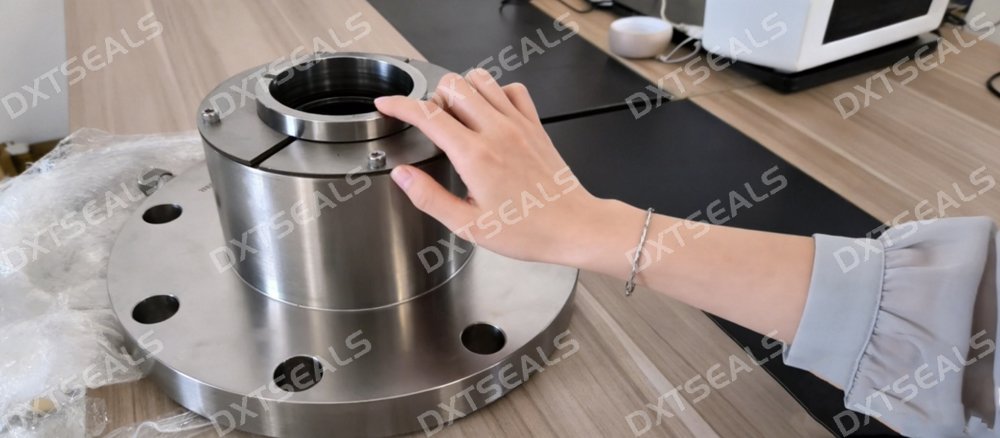
Sealing technology is essential for ensuring the reliability, efficiency, and safety of industrial equipment. Among the many sealing solutions available today, mechanical seals and oil seals (radial shaft seals) are two of the most widely used products for rotating equipment.
Although both are designed to prevent leakage around rotating shafts, they differ significantly in structure, working principles, performance capabilities, and application areas. Choosing the wrong seal can lead to excessive leakage, premature equipment wear, increased maintenance costs, and unexpected downtime.
This article provides a comprehensive comparison between mechanical seals and oil seals and explains how to select the most suitable sealing solution based on actual operating conditions.
What Is a Mechanical Seal?
A mechanical seal is a precision-engineered sealing device primarily used in rotating equipment where fluid containment is critical.
Common applications include:
- Centrifugal pumps
- Chemical pumps
- Compressors
- Mixers
- Agitators
- Reactors
- Marine pumps
A mechanical seal typically consists of:
- Rotating seal face
- Stationary seal face
- Springs
- Secondary seals (O-rings or bellows)
- Metal hardware
The sealing effect is achieved through the contact of two highly polished seal faces that rotate relative to each other while maintaining a microscopic lubricating film.
What Is an Oil Seal?
An oil seal, also known as a radial shaft seal, is a simpler sealing device designed to retain lubricants and prevent contaminants from entering mechanical systems.
Typical applications include:
- Gearboxes
- Electric motors
- Bearings
- Automotive transmissions
- Hydraulic equipment
- Industrial reducers
An oil seal generally consists of:
- Elastomer sealing lip
- Metal reinforcement ring
- Garter spring (in many designs)
The sealing lip maintains direct contact with the rotating shaft, creating a barrier that retains lubricants and excludes contaminants.
Comparison of Working Principles
Mechanical Seal Working Principle
Mechanical seals rely on two precision-machined sealing faces.
One face rotates with the shaft while the other remains stationary.
Spring force and system pressure keep the faces in contact, forming a highly controlled sealing interface.
Advantages include:
- Extremely low leakage
- Stable sealing performance
- High-pressure capability
Oil Seal Working Principle
Oil seals rely on an elastomer lip that presses against the shaft surface.
The sealing lip creates a physical barrier that:
- Retains oil or grease
- Prevents dust and moisture intrusion
Advantages include:
- Simple construction
- Easy installation
- Low cost
However, direct contact between the lip and shaft generates friction and wear.
Structural Differences
Mechanical Seal Structure
Mechanical seals feature a relatively complex design.
Main components include:
- Rotary ring
- Stationary ring
- Spring assembly
- Secondary sealing elements
- Housing components
Precision manufacturing is essential to ensure proper sealing performance.
Oil Seal Structure
Oil seals have a simpler design consisting mainly of:
- Elastomer sealing lip
- Metal case
- Spring-loaded tension ring
Their compact structure makes them suitable for space-limited applications.
Leakage Performance Comparison
Mechanical Seals
Mechanical seals offer exceptional leakage control.
Benefits include:
- Minimal product loss
- Better environmental protection
- Improved workplace safety
- Compliance with strict regulations
This makes them ideal for handling:
- Chemicals
- Hydrocarbons
- Pharmaceuticals
- Food products
Oil Seals
Oil seals provide effective lubricant retention but are not designed for zero-leakage performance.
Under demanding conditions, leakage may increase due to:
- Lip wear
- Shaft wear
- Temperature fluctuations
Oil seals are typically suitable where minor seepage is acceptable.
Pressure Capability Comparison
Pressure resistance is one of the biggest differences between the two sealing technologies.
Mechanical Seals
Mechanical seals are specifically designed for pressure-containing systems.
Typical capabilities include:
- Medium-pressure applications
- High-pressure applications
- Specialized ultra-high-pressure systems
Balanced seal designs can effectively manage significant fluid pressures.
Oil Seals
Standard oil seals are generally limited to:
- Low-pressure systems
- Splash lubrication environments
Excessive pressure can deform the sealing lip and cause leakage.
As a result, oil seals are usually not recommended for high-pressure fluid containment.
Speed Capability Comparison
Mechanical Seals
Mechanical seals perform exceptionally well at high shaft speeds.
Advantages include:
- Stable sealing interface
- Reduced friction
- Effective heat management
Common in:
- High-speed pumps
- Compressors
- Turbomachinery
Oil Seals
Oil seals are suitable for moderate shaft speeds.
At high speeds, challenges may include:
- Excessive heat generation
- Lip wear
- Reduced service life
Proper shaft surface finish becomes increasingly important.
Temperature Resistance Comparison
Mechanical Seals
Mechanical seals can be designed for:
- Cryogenic temperatures
- High-temperature processes
- Severe thermal cycling
Material options include:
- Silicon Carbide
- Tungsten Carbide
- Carbon Graphite
- Metal Bellows Designs
Oil Seals
Temperature capability depends primarily on elastomer selection.
Common materials include:
- NBR
- FKM
- HNBR
- PTFE
Although high-temperature oil seals are available, they generally have lower temperature limits than specialized mechanical seals.
Service Life and Maintenance
Mechanical Seals
Advantages:
- Longer service life
- Reduced shaft wear
- Lower maintenance frequency
When properly selected and installed, mechanical seals often operate for extended periods without adjustment.
Oil Seals
Advantages:
- Easy replacement
- Low initial cost
Limitations:
- Lip wear over time
- Shaft groove formation
- More frequent replacement cycles
Cost Comparison
Oil Seals
Advantages:
- Lower purchase price
- Simple installation
- Cost-effective for basic applications
Ideal for:
- Lubrication retention
- Dust exclusion
- General industrial machinery
Mechanical Seals
Advantages:
- Superior performance
- Longer lifespan
- Reduced leakage
Although the initial cost is higher, total ownership costs are often lower due to reduced maintenance and downtime.
Typical Applications of Mechanical Seals
Mechanical seals are commonly used in:
Chemical Processing
Requirements:
- Corrosion resistance
- Leak prevention
Oil and Gas
Requirements:
- High pressure
- Environmental compliance
Pharmaceutical Manufacturing
Requirements:
- Product purity
- Sterile operation
Food and Beverage Processing
Requirements:
- Hygienic design
- Cleanability
Water Treatment
Requirements:
- Continuous operation
- Reliability
Typical Applications of Oil Seals
Oil seals are commonly used in:
Electric Motors
Preventing grease leakage and contamination.
Gearboxes
Retaining lubricating oil.
Automotive Systems
Including:
- Engines
- Transmissions
- Wheel hubs
Bearings
Providing lubricant retention and contamination protection.
Agricultural Equipment
Protecting rotating shafts in dusty environments.
How to Choose Between a Mechanical Seal and an Oil Seal
The correct choice depends on several operating factors.
Choose a Mechanical Seal When:
The System Operates Under Pressure
Examples:
- Pumps
- Compressors
- Process equipment
Leakage Must Be Minimized
Suitable for:
- Chemicals
- Hazardous fluids
- Valuable products
High Reliability Is Required
Common in continuous industrial operations.
Extreme Operating Conditions Exist
Including:
- High temperature
- High speed
- Corrosive media
Choose an Oil Seal When:
The Primary Function Is Lubricant Retention
Examples:
- Bearings
- Gearboxes
- Motors
Operating Pressure Is Low
Ideal for splash-lubricated systems.
Installation Space Is Limited
Oil seals typically require less installation space.
Cost Is the Primary Concern
Suitable for basic sealing requirements.
Quick Comparison Table
| Feature | Mechanical Seal | Oil Seal |
|---|---|---|
| Sealing Principle | Face-to-face sealing | Lip contact sealing |
| Leakage Control | Excellent | Good |
| Pressure Capability | High | Low |
| Speed Capability | High | Moderate |
| Temperature Range | Wide | Moderate |
| Initial Cost | Higher | Lower |
| Service Life | Long | Moderate |
| Maintenance Frequency | Low | Moderate |
| Shaft Wear | Minimal | Higher |
| Typical Application | Pumps, compressors, mixers | Motors, gearboxes, bearings |
How DXTSEALS Supports Both Sealing Technologies
At DXTSEALS, we provide comprehensive sealing solutions for a wide range of industrial applications.
Our capabilities include:
Mechanical Seals
- Standard mechanical seals
- Cartridge seals
- Double mechanical seals
- Custom-engineered solutions
Oil Seals
- Rotary shaft seals
- High-temperature oil seals
- PTFE oil seals
- Customized sealing solutions
Manufacturing Expertise
- CNC precision machining
- Advanced material processing
- Strict quality control
- Reverse engineering services
Our engineering team helps customers select the most effective sealing technology based on actual operating conditions and performance requirements.
Conclusion
Although both mechanical seals and oil seals are designed to prevent leakage around rotating shafts, they serve different purposes and perform best under different conditions.
Oil seals are economical, compact, and highly effective for lubricant retention in low-pressure applications such as motors, bearings, and gearboxes. Mechanical seals, on the other hand, offer superior leakage control, pressure resistance, and durability for demanding industrial equipment such as pumps, compressors, and chemical processing systems.
By carefully evaluating factors such as pressure, temperature, shaft speed, media characteristics, and maintenance requirements, engineers can select the most suitable sealing solution for long-term reliability and efficiency.
At DXTSEALS, we offer both standard and customized sealing products to help customers optimize equipment performance across a wide range of industries and operating environments.