
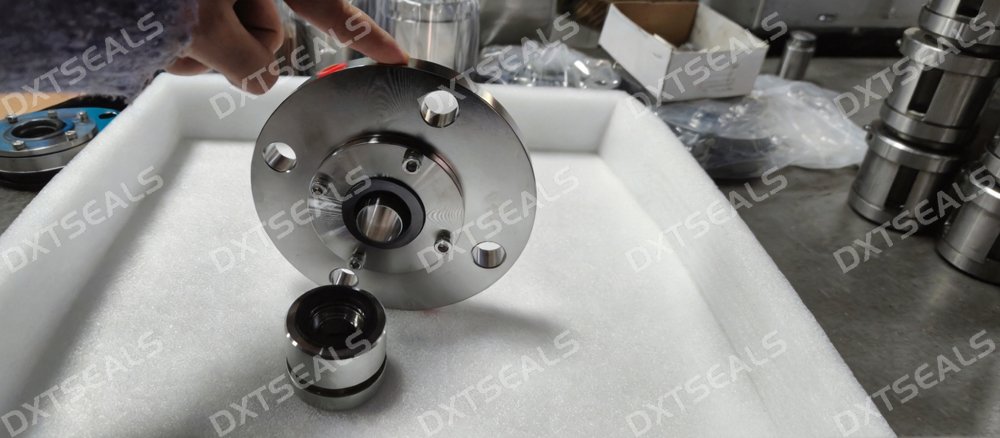
Mechanical Seals vs Traditional Sealing Devices: A Comprehensive Comparison of Structure, Working Principles, and Applications
Sealing technology plays a critical role in industrial equipment by preventing fluid leakage, maintaining system pressure, protecting equipment components, and ensuring safe operation. Over the years, various sealing solutions have been developed to meet different industrial requirements, including mechanical seals, packing seals, oil seals, O-rings, and gaskets.
While traditional sealing devices remain widely used in many applications, mechanical seals have become the preferred choice for modern rotating equipment due to their superior sealing performance, reliability, and efficiency.
Understanding the differences between mechanical seals and traditional sealing devices is essential for selecting the most appropriate solution for a specific application. This article provides a detailed comparison of their structures, working principles, advantages, limitations, and typical applications.
Understanding Traditional Sealing Devices
Traditional sealing devices generally include:
- Packing seals (gland packing)
- Oil seals (lip seals)
- O-rings
- Gaskets
- V-rings and other contact seals
These sealing methods have been used for decades across various industries because of their simple structure and relatively low cost.
However, their performance can be limited under demanding operating conditions.
What Is a Mechanical Seal?
A mechanical seal is a dynamic sealing device designed specifically for rotating equipment such as:
- Centrifugal pumps
- Compressors
- Mixers
- Agitators
- Reactors
- Marine equipment
Unlike traditional seals that rely primarily on soft materials to block leakage, mechanical seals use precision-machined sealing faces to create a highly effective sealing interface.
A typical mechanical seal consists of:
- Rotating seal face
- Stationary seal face
- Springs
- Elastomers
- Metal hardware
These components work together to maintain a controlled sealing gap that minimizes leakage while allowing shaft rotation.
Comparison of Working Principles
Traditional Packing Seals
Packing seals operate by compressing braided packing material around a rotating shaft.
Working Mechanism
The packing material is compressed by a gland follower, creating friction against the shaft surface to restrict fluid leakage.
Characteristics
- Continuous shaft contact
- Relatively high friction
- Controlled leakage often required
- Periodic adjustment necessary
Although simple and inexpensive, packing seals typically experience wear over time and require regular maintenance.
Mechanical Seals
Mechanical seals operate using two highly polished sealing faces:
- One rotates with the shaft
- One remains stationary
A microscopic fluid film forms between the faces, providing lubrication while maintaining an effective seal.
Working Mechanism
The seal faces are pressed together by spring force and fluid pressure.
This arrangement allows:
- Extremely low leakage
- Stable operation
- Reduced shaft wear
Mechanical seals are specifically designed to handle dynamic operating conditions more effectively than traditional sealing methods.
Structural Comparison
Traditional Packing Seal Structure
Main components include:
- Packing rings
- Gland follower
- Stuffing box
- Shaft sleeve
The structure is relatively simple and easy to maintain.
However, sealing effectiveness depends heavily on proper adjustment.
Mechanical Seal Structure
Main components include:
- Rotary ring
- Stationary ring
- Spring assembly
- Secondary seals
- Metal hardware
The structure is more sophisticated but offers significantly higher performance.
Precision manufacturing and proper installation are critical for reliable operation.
Leakage Performance Comparison
One of the most important differences between mechanical seals and traditional seals is leakage control.
Traditional Packing Seals
Packing systems generally require a small amount of leakage for lubrication and cooling.
Typical characteristics:
- Visible leakage is common
- Leakage rates increase with wear
- Frequent adjustments may be necessary
For many older industrial systems, this level of leakage is acceptable.
Mechanical Seals
Mechanical seals are designed to minimize leakage.
Advantages include:
- Extremely low leakage rates
- Better environmental protection
- Improved process safety
- Reduced product loss
This makes mechanical seals particularly valuable when handling hazardous, expensive, or environmentally sensitive fluids.
Friction and Energy Efficiency
Traditional Sealing Devices
Packing seals create significant friction due to direct contact between the packing material and shaft.
Consequences include:
- Higher power consumption
- Increased heat generation
- Accelerated shaft wear
As equipment speed increases, these disadvantages become more significant.
Mechanical Seals
Mechanical seals operate with lower friction because the sealing faces are precisely engineered to maintain a lubricating fluid film.
Benefits include:
- Reduced energy consumption
- Lower operating temperatures
- Improved equipment efficiency
- Longer component life
For high-speed rotating equipment, these advantages can significantly reduce operating costs.
Maintenance Requirements
Traditional Packing Seals
Routine maintenance often includes:
- Gland adjustment
- Packing replacement
- Shaft sleeve inspection
Over time, shaft wear can become a significant issue.
Maintenance frequency is generally higher than with mechanical seals.
Mechanical Seals
Mechanical seals typically require:
- Correct installation
- Periodic inspection
- Scheduled replacement during maintenance intervals
Because they maintain stable sealing performance, maintenance requirements are usually lower.
This helps reduce downtime and labor costs.
Service Life Comparison
Traditional Seals
Service life is influenced by:
- Packing wear
- Shaft wear
- Operating conditions
Frequent replacement may be necessary in demanding applications.
Mechanical Seals
High-quality mechanical seals often provide:
- Longer operating life
- Consistent sealing performance
- Reduced wear on rotating equipment
When properly selected and installed, mechanical seals can significantly outperform traditional sealing methods.
Application Comparison
Applications Suitable for Traditional Seals
Traditional sealing devices remain effective in:
Low-Speed Equipment
Examples:
- Agricultural machinery
- Basic industrial equipment
Low-Pressure Systems
Examples:
- Utility water systems
- Simple fluid transfer equipment
Cost-Sensitive Applications
Where initial investment is the primary concern.
Applications Suitable for Mechanical Seals
Mechanical seals are preferred in:
Chemical Processing
Requirements:
- Corrosion resistance
- Leak prevention
Oil and Gas
Requirements:
- High-pressure capability
- Safety compliance
Pharmaceutical Manufacturing
Requirements:
- Product purity
- Clean operation
Food and Beverage Processing
Requirements:
- Hygienic design
- Regulatory compliance
Water Treatment
Requirements:
- Continuous operation
- Reduced maintenance
Power Generation
Requirements:
- High reliability
- Long service intervals
Mechanical Seals vs Oil Seals
Oil seals, also known as radial shaft seals, are another common sealing solution.
Oil Seal Characteristics
- Simple design
- Rubber sealing lip
- Cost-effective
- Suitable for moderate speeds
Mechanical Seal Advantages
Compared with oil seals, mechanical seals generally provide:
- Better leakage control
- Higher pressure capability
- Improved temperature resistance
- Longer service life
As a result, mechanical seals are typically chosen for more demanding industrial applications.
Mechanical Seals vs Gaskets
Gaskets are static sealing devices used between stationary surfaces.
Examples include:
- Pipe flanges
- Valve covers
- Pressure vessel joints
Unlike mechanical seals:
- Gaskets do not accommodate shaft rotation
- Gaskets are used for static sealing only
Mechanical seals are specifically designed for dynamic sealing applications involving rotating shafts.
Cost Comparison: Initial Cost vs Total Cost of Ownership
Traditional Seals
Advantages:
- Lower purchase price
- Simple installation
Disadvantages:
- Higher maintenance frequency
- Increased leakage
- Greater energy losses
- More frequent replacement
Mechanical Seals
Advantages:
- Lower leakage rates
- Longer service life
- Reduced maintenance
- Improved efficiency
Although initial costs are typically higher, mechanical seals often provide lower total ownership costs over time.
Why Modern Industries Prefer Mechanical Seals
As environmental regulations become stricter and equipment reliability becomes more important, mechanical seals have become the standard sealing solution for most modern rotating equipment.
Key benefits include:
- Superior sealing performance
- Improved workplace safety
- Reduced environmental impact
- Lower maintenance costs
- Enhanced equipment efficiency
- Longer service life
These advantages explain why mechanical seals are increasingly replacing traditional sealing technologies across industries.
Why Choose DXTSEALS Mechanical Seals?
At DXTSEALS, we specialize in high-quality mechanical sealing solutions for a wide range of industrial applications.
Our capabilities include:
Standard Mechanical Seals
- OEM-equivalent replacements
- Industry-standard designs
- Fast delivery
Custom Mechanical Seals
- Non-standard dimensions
- Material optimization
- Application-specific designs
Advanced Manufacturing
- CNC precision machining
- Seal face lapping
- Strict quality control
Industry Support
Serving industries such as:
- Chemical processing
- Oil and gas
- Water treatment
- Food and beverage
- Pharmaceutical manufacturing
- Mining and power generation
Our engineering expertise helps customers select the most effective sealing solution for their specific operating conditions.
Conclusion
Both mechanical seals and traditional sealing devices play important roles in industrial applications. Traditional seals offer simplicity and lower initial costs, while mechanical seals provide superior leakage control, improved reliability, reduced maintenance, and longer service life.
For modern rotating equipment operating under demanding conditions, mechanical seals have become the preferred solution due to their advanced design and outstanding performance.
By understanding the differences in structure, working principles, and applications, engineers and equipment operators can make informed decisions that improve operational efficiency and reduce long-term maintenance costs.
DXTSEALS offers both standard and customized mechanical seal solutions designed to meet the evolving demands of today's industrial environments.