
Introduction
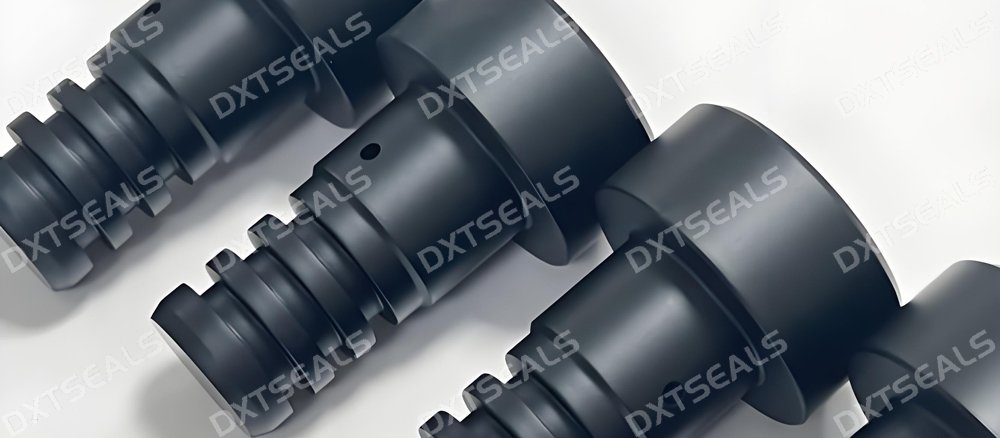
Surface treatment plays a crucial role in metal machining. While precision machining ensures dimensional accuracy and structural integrity, surface finishing processes significantly enhance performance, durability, and appearance.
Different surface treatment methods are selected based on material type, operating environment, and functional requirements. This article introduces common surface treatment techniques used in metal machining and explains how they improve component performance.
Why Surface Treatment Is Important in Metal Machining
Machined metal components may face challenges such as corrosion, wear, oxidation, friction, or aesthetic demands. Surface treatment helps to:
-
Improve corrosion resistance
-
Enhance wear resistance
-
Increase surface hardness
-
Reduce friction
-
Improve appearance
-
Extend service life
At DXTSEALS, appropriate surface treatments are selected to ensure that precision-machined components meet industrial performance requirements.
Common Surface Treatment Methods
1. Anodizing
Primarily used for aluminum alloys, anodizing forms a protective oxide layer on the surface.
Performance Benefits:
-
Improved corrosion resistance
-
Increased surface hardness
-
Enhanced wear resistance
-
Better decorative finish options
Anodizing is widely used in aerospace, electronics, and industrial equipment.
2. Electroplating
Electroplating deposits a thin layer of metal (such as nickel, chromium, or zinc) onto the surface.
Performance Benefits:
-
Corrosion protection
-
Improved surface hardness
-
Enhanced electrical conductivity (depending on coating)
-
Decorative finish
Nickel plating and zinc plating are commonly applied in industrial hardware and structural components.
3. Powder Coating
Powder coating applies a dry powder that is cured to form a protective layer.
Performance Benefits:
-
Strong corrosion resistance
-
High durability
-
Excellent aesthetic appearance
-
Environmental friendliness
4. Heat Treatment
Although not a surface coating, heat treatment alters the microstructure of metal to enhance performance.
Performance Benefits:
-
Increased hardness
-
Improved strength
-
Enhanced wear resistance
-
Better fatigue performance
Heat treatment is commonly used for carbon steel and alloy steel components.
5. Polishing and Surface Finishing
Mechanical polishing and grinding improve surface smoothness.
Performance Benefits:
-
Reduced friction
-
Improved sealing performance
-
Enhanced appearance
-
Lower contamination risk
Polished surfaces are critical in sealing systems and precision equipment.
6. Passivation
Passivation enhances corrosion resistance, particularly for stainless steel.
Performance Benefits:
-
Removal of free iron contamination
-
Improved corrosion resistance
-
Extended component lifespan
Surface Treatment Selection Factors
Choosing the appropriate surface treatment depends on:
-
Base material type
-
Operating environment (humidity, chemicals, temperature)
-
Mechanical load and friction requirements
-
Appearance requirements
-
Cost considerations
Proper process selection ensures optimal balance between performance and cost.
Applications in Industrial Manufacturing
Surface-treated machined components are widely used in:
-
Aerospace systems
-
Energy and power equipment
-
Automation machinery
-
Medical equipment
-
Sealing and precision hardware
For sealing-related components, surface finish quality directly impacts reliability and service life.
Performance Enhancement Summary
Surface treatment significantly enhances:
-
Corrosion resistance in harsh environments
-
Wear resistance under friction conditions
-
Structural durability under mechanical stress
-
Overall product lifespan
By combining precision machining with suitable surface finishing processes, manufacturers can maximize component performance.
Conclusion
Surface treatment is an essential extension of metal machining. From anodizing and electroplating to heat treatment and polishing, each method plays a vital role in improving mechanical properties and durability.
Careful selection of surface finishing processes ensures that machined metal components achieve optimal performance, reliability, and long-term value in demanding industrial applications.