
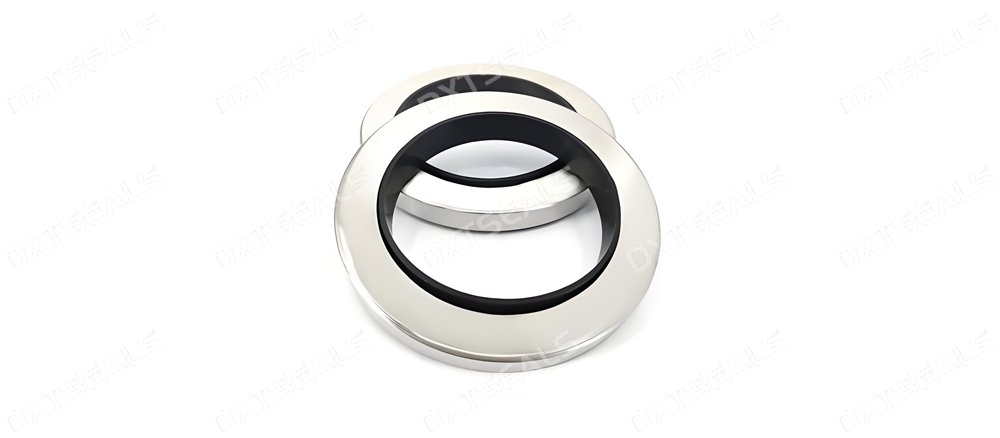
In an air compressor system, oil seals play a vital role in maintaining stable operation and preventing oil leakage. Though often overlooked, these small components directly determine the compressor’s efficiency, reliability, and service life.
As a professional sealing solution provider, DXTSEALS explores the performance characteristics of air compressor oil seals and analyzes the common causes of seal failure to help users make better material and design choices.
1. What Is an Oil Seal in an Air Compressor?
An oil seal (also known as a rotary shaft seal) is designed to prevent oil leakage along the rotating shaft and to block contaminants such as dust and moisture from entering the internal system.
In an air compressor, the oil seal is typically installed on the crankshaft, drive shaft, or bearing housing, maintaining proper lubrication while ensuring that oil does not leak into the air chamber.
2. Performance Characteristics of Air Compressor Oil Seals
High-quality oil seals for compressors must withstand continuous operation under high temperature, high speed, and pressure differentials. The key performance characteristics include:
(1) Excellent Sealing Performance
Oil seals must maintain tight contact between the lip and shaft surface, effectively preventing oil leakage under various operating pressures.
(2) Heat and Oil Resistance
Materials such as NBR (Nitrile Rubber), FKM (Viton), or PTFE are used to endure high oil temperatures (up to 200°C) and resist degradation caused by lubricants.
(3) Wear Resistance
The dynamic sealing lip must resist friction and wear during continuous shaft rotation, ensuring long-term sealing reliability.
(4) Chemical Compatibility
Oil seals must be compatible with lubricants, coolants, and gases, avoiding swelling, hardening, or cracking.
(5) Dust and Contaminant Exclusion
Dual-lip or dust-lip designs provide additional protection against external particles, extending bearing and shaft life.
(6) Dimensional Stability
Even under thermal expansion or pressure fluctuation, high-quality seals retain their shape and elasticity.
3. Common Materials Used for Air Compressor Oil Seals
| Material | Temperature Range | Key Features | Typical Application |
|---|---|---|---|
| NBR (Nitrile Rubber) | -30°C ~ 120°C | Excellent oil resistance, affordable | General compressors |
| FKM (Viton) | -20°C ~ 200°C | High temperature and chemical resistance | High-speed compressors |
| PTFE (Teflon) | -50°C ~ 250°C | Low friction, non-stick surface | Oil-free compressors |
| Silicone (VMQ) | -60°C ~ 180°C | Flexible, low-temperature sealing | Light-duty air systems |
At DXTSEALS, we offer a full range of standard and custom oil seals, including metal-cased, PTFE composite, and double-lip designs, suitable for both rotary and reciprocating compressors.
4. Common Failure Causes of Air Compressor Oil Seals
Even high-quality seals can fail if installed or maintained improperly. The following are the most frequent causes of oil seal failure:
(1) Shaft Surface Damage
Rough or scratched shafts can tear the seal lip, causing oil leakage. The shaft finish should typically be Ra ≤ 0.2 μm with proper hardness.
(2) Excessive Temperature
Overheating from poor lubrication or high friction can cause rubber hardening, lip deformation, and loss of elasticity.
(3) Incorrect Installation
Misalignment or over-compression during installation leads to uneven pressure on the sealing lip, resulting in early wear.
(4) Improper Material Selection
Using NBR instead of FKM in high-temperature or aggressive lubricant environments often leads to swelling and leakage.
(5) Pressure Surges
Excessive internal pressure can push oil past the seal lip. In such cases, pressure-resistant or vented oil seals should be used.
(6) Contamination
Dust, metal particles, or moisture intrusion can cause abrasion and chemical degradation, compromising the sealing surface.
5. Preventive Measures and Maintenance Tips
To ensure long-term reliability of oil seals in air compressors:
-
Select materials compatible with the lubricant and operating temperature.
-
Inspect shaft surface roughness and concentricity before installation.
-
Use correct installation tools to avoid lip deformation.
-
Monitor operating temperature and pressure during maintenance cycles.
-
Replace seals periodically, especially after overhaul or extended use.
-
Use trusted brands such as DXTSEALS, ensuring certified materials and precision manufacturing.
6. DXTSEALS — Reliable Supplier for Compressor Sealing Solutions
At DXTSEALS, we manufacture precision-engineered oil seals using advanced rubber compounds and PTFE composites. Our seals are designed to provide:
-
Superior heat and oil resistance
-
Low-friction sealing performance
-
Excellent wear resistance
-
Custom designs for OEM and aftermarket applications
Whether for reciprocating, rotary screw, or centrifugal compressors, DXTSEALS ensures every product meets stringent quality standards for tight sealing, extended service life, and easy installation.
7. Conclusion
Oil seals are small yet indispensable components that directly affect an air compressor’s reliability and performance. Understanding their functions, material behavior, and common failure causes helps extend the lifespan of both the seal and the machine.
Partnering with DXTSEALS ensures you receive optimized sealing solutions that combine durability, efficiency, and precision for every industrial application.