
Introduction
Ultra-high pressure environments—such as those found in aerospace systems, oil & gas exploration, and advanced industrial equipment—require sealing solutions that can maintain integrity, durability, and leak-tight performance under extreme loads.
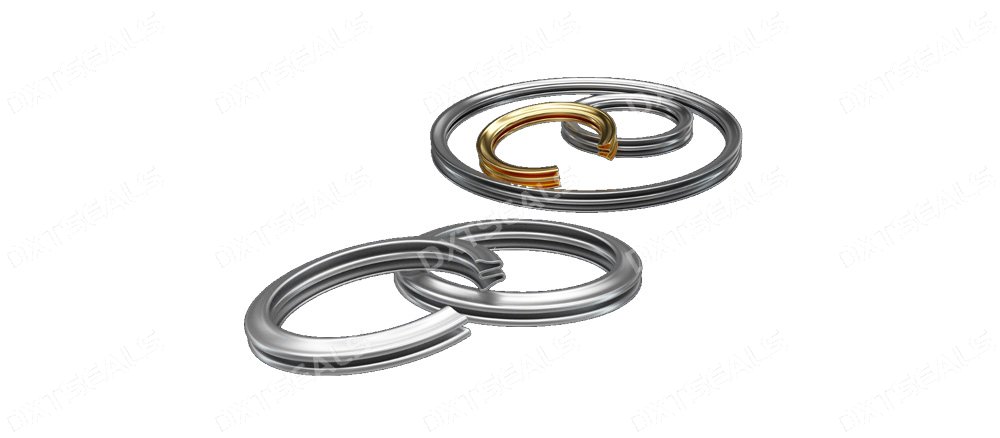
Among the most reliable solutions are metal sealing rings, including O-rings, C-rings, and E-rings. Each structure offers unique advantages depending on pressure levels, surface conditions, and system requirements.
In this article, we compare the performance of different metal seal structures in ultra-high pressure environments, helping you choose the most suitable solution. At DXTSEALS, we provide customized metal sealing technologies designed for extreme applications.
1. Challenges in Ultra-High Pressure Sealing
Sealing under ultra-high pressure involves several critical challenges:
- Extremely high contact stress requirements
- Risk of material deformation or failure
- Increased leakage potential
- Sensitivity to surface imperfections
To overcome these challenges, seal design must ensure:
- Sufficient strength
- Controlled deformation
- Reliable pressure response
2. Metal O-Rings in Ultra-High Pressure Applications
Structural Characteristics
Metal O-rings feature a circular cross-section and can be:
- Solid
- Hollow (pressure-energized or vented)
Performance Advantages
- Excellent structural strength
- High resistance to deformation
- Reliable sealing in static applications
Limitations
- Higher installation force required
- Limited elasticity compared to other designs
- Less adaptable to surface irregularities
Best Use Cases
Metal O-rings are ideal for:
- Static sealing in ultra-high pressure systems
- Applications with precise machining and smooth surfaces
3. Metal C-Rings in Ultra-High Pressure Applications
Structural Characteristics
C-rings have an open “C” shaped cross-section, providing flexibility and elastic recovery.
Performance Advantages
- Moderate elasticity for pressure adaptation
- Lower compression force compared to O-rings
- Good performance under thermal cycling
Limitations
- Slightly lower maximum pressure resistance than solid O-rings
- May require optimized design for extreme pressures
Best Use Cases
C-rings are suitable for:
- Flange sealing under high pressure
- Systems with thermal expansion or minor misalignment
4. Metal E-Rings in Ultra-High Pressure Applications
Structural Characteristics
E-rings feature a multi-lip “E” shaped cross-section, providing multiple sealing contact points.
Performance Advantages
- Superior leak tightness due to multi-lip design
- Enhanced sealing redundancy
- Excellent adaptability to surface imperfections
Limitations
- More complex design and higher manufacturing cost
- Requires precise engineering for optimal performance
Best Use Cases
E-rings are ideal for:
- Ultra-critical applications requiring minimal leakage
- Systems with challenging surface conditions
5. Comparative Performance Analysis
| Feature | Metal O-Ring | Metal C-Ring | Metal E-Ring |
|---|---|---|---|
| Pressure Resistance | Very High | High | High–Very High |
| Elasticity | Low | Moderate | High |
| Sealing Force | High | Medium | Medium–High |
| Leak Tightness | Good | Very Good | Excellent |
| Surface Adaptability | Low | Moderate | High |
| Cost | Moderate | Moderate | Higher |
6. Key Factors for Selection
When choosing a metal sealing ring for ultra-high pressure applications, consider:
Pressure Level
- Extremely high pressure → Metal O-ring or E-ring
- High but variable pressure → C-ring or E-ring
Surface Condition
- Smooth surfaces → O-ring
- Irregular surfaces → C-ring or E-ring
Leakage Requirements
- Standard sealing → O-ring or C-ring
- Critical sealing → E-ring
Installation Constraints
- Limited compression force → C-ring or E-ring
- High load capacity available → O-ring
At DXTSEALS, we assist customers in evaluating these factors to ensure optimal seal selection.
7. Practical Recommendations
- Use metal O-rings for maximum strength and static ultra-high pressure sealing
- Choose C-rings for a balance between flexibility and performance
- Select E-rings for critical applications requiring superior leak tightness
Combining proper material selection (e.g., stainless steel, Inconel) with optimized design further enhances performance.
Conclusion
Different metal sealing ring structures offer distinct advantages in ultra-high pressure environments:
- O-rings provide unmatched strength for static sealing
- C-rings deliver flexibility and adaptability
- E-rings offer the highest level of sealing reliability
Selecting the right seal depends on a careful evaluation of pressure, surface conditions, and performance requirements.
At DXTSEALS, we are committed to delivering high-performance metal sealing solutions tailored to extreme operating environments.
If you need expert guidance on selecting metal seals for ultra-high pressure applications, contact DXTSEALS today for customized solutions and professional support.