
PTFE is widely recognized for its excellent chemical resistance, low friction, non-stick properties, and resistance to high and low temperatures. These characteristics make it an important engineering material for chemical processing equipment, semiconductor equipment, industrial machinery, sealing systems, and other demanding applications.
However, machining large PTFE components such as PTFE grid plates, covers, large plates, and custom structural parts is considerably more challenging than producing small standard components.
Large PTFE parts require not only precision machining but also effective control of material deformation, dimensional changes, flatness, and machining stress. For oversized applications, the combination of suitable CNC equipment, large machining platforms, experienced technicians, and appropriate processing methods is essential.
What Are PTFE Grid Plates and Covers?
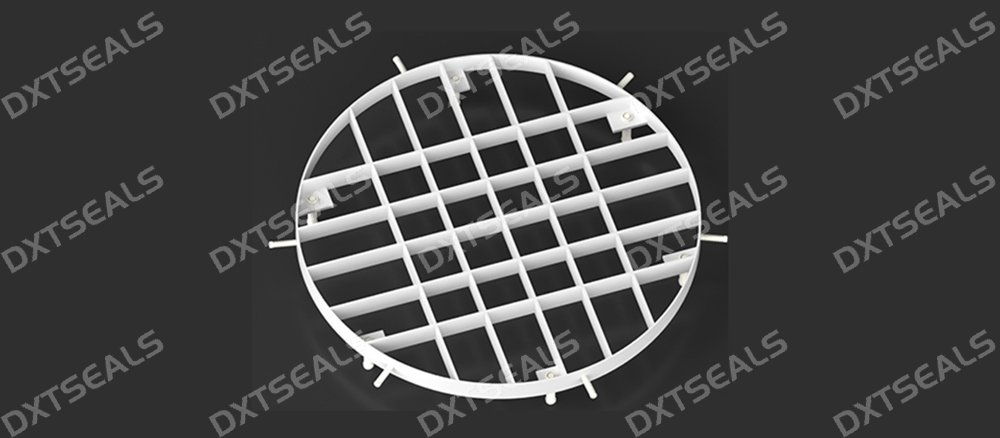
PTFE grid plates are large custom-machined PTFE components featuring multiple holes, slots, openings, or grid structures. Depending on the application, they may be used as support plates, protective plates, insulation components, process equipment components, or customized structural parts.
PTFE covers are also widely used as protective or sealing components in industrial equipment.
Typical custom PTFE components include:
- PTFE grid plates
- Large PTFE covers
- PTFE support plates
- PTFE partition plates
- PTFE liners
- PTFE protective covers
- PTFE equipment components
- Large custom PTFE machined parts
These components can be manufactured according to technical drawings, samples, or specific equipment requirements.
Why Large PTFE Machining Is Challenging
Large PTFE components present several unique machining challenges.
Material Deformation
PTFE has a relatively high coefficient of thermal expansion compared with many metals. Temperature changes during machining can therefore affect dimensional accuracy.
When a large PTFE plate is machined, heat generated during cutting may cause temporary or permanent dimensional changes if the process is not properly controlled.
Machining Stress
PTFE is relatively soft and flexible compared with metals. Cutting forces can cause deformation, especially when machining thin or large-area components.
After machining, internal stresses may be released, resulting in dimensional changes or distortion.
Flatness Control
Maintaining flatness across a large PTFE plate is one of the most difficult aspects of oversized PTFE machining.
A large plate may experience:
- Warping
- Edge deformation
- Uneven thickness
- Localized stress
- Flatness changes after machining
Therefore, machining sequence and workholding methods are particularly important.
Large-Scale CNC Machining Capabilities
Producing oversized PTFE components requires machining equipment with sufficient working dimensions.
Large CNC machines, including large gantry milling equipment, can provide the necessary machining envelope for oversized PTFE plates and covers.
Large-format machining capabilities allow manufacturers to process:
- Large PTFE plates
- Oversized grid plates
- Large covers
- Multi-hole PTFE panels
- Custom structural components
- Non-standard industrial PTFE parts
Compared with machining a large component in several sections and assembling them afterward, machining a complete component on suitable large-scale equipment can improve dimensional consistency and reduce assembly-related errors.
Precision Machining of PTFE Grid Plates
PTFE grid plates can contain a large number of holes, slots, or other features. Maintaining consistent positioning and dimensions across a large workpiece requires careful CNC programming and process control.
Important factors include:
- Hole positioning accuracy
- Hole diameter
- Grid spacing
- Plate thickness
- Overall dimensions
- Flatness
- Surface finish
For large grid plates, accumulated dimensional errors must also be considered. Accurate CNC programming and appropriate inspection procedures help maintain consistency throughout the entire component.
Machining Large PTFE Covers
Large PTFE covers may require complex profiles, mounting holes, sealing grooves, or custom interfaces.
The machining process may include:
- Face milling
- Contour machining
- Hole drilling
- Groove machining
- Slot machining
- Counterboring
- Chamfering
- Precision finishing
The machining sequence should be carefully planned to minimize deformation and maintain the required dimensional accuracy.
Importance of Workholding and Machining Sequence
Workholding is particularly important when machining large PTFE components.
If a large PTFE plate is clamped too tightly, excessive deformation may occur. If it is not adequately supported, vibration or movement can affect machining accuracy.
An appropriate manufacturing process may involve:
- Initial rough machining
- Stress stabilization
- Semi-finishing
- Controlled finishing
- Dimensional inspection
- Final correction or finishing when required
The exact process depends on the material grade, component dimensions, thickness, geometry, and tolerance requirements.
Material Selection for Large PTFE Components
Not all PTFE materials behave identically during machining.
Common options include:
Virgin PTFE
Virgin PTFE provides excellent chemical resistance, low friction, and electrical insulation properties.
It is commonly used for:
- Chemical equipment
- Corrosion-resistant components
- Insulation parts
- General industrial applications
Filled PTFE
Filled PTFE can contain materials such as:
- Glass fiber
- Bronze
- Carbon
- Graphite
- Other performance-enhancing fillers
Filled grades can improve mechanical strength, wear resistance, dimensional stability, or thermal properties depending on the formulation.
Material selection should be based on the actual application rather than machining requirements alone.
Custom Manufacturing According to Drawings
Large PTFE grid plates and covers are often non-standard components. Professional custom machining services can manufacture parts according to:
- 2D technical drawings
- 3D CAD models
- Physical samples
- Customer specifications
- OEM requirements
Before production, key technical information should be confirmed, including:
- Overall dimensions
- Material grade
- Thickness
- Hole pattern
- Tolerances
- Flatness requirements
- Surface finish
- Installation requirements
This helps ensure that the finished PTFE component matches the equipment design.
Applications of Large PTFE Machined Components
Large PTFE plates and covers are used in a wide range of industries.
Chemical Processing
PTFE provides excellent resistance to many corrosive chemicals and is therefore suitable for custom components used in chemical processing equipment.
Semiconductor and Electronics Equipment
PTFE's chemical resistance and electrical insulation properties make it useful for specialized equipment and processing systems.
Industrial Machinery
Large PTFE components can be used for:
- Protective covers
- Liners
- Support plates
- Insulation components
- Custom equipment parts
Sealing and Fluid Handling Equipment
Large PTFE plates and covers can be incorporated into customized sealing and fluid-handling systems where chemical resistance and low friction are required.
Quality Control for Large PTFE Parts
Large PTFE components require comprehensive inspection because dimensional deviations can become significant as component size increases.
Typical inspection items include:
- Overall dimensions
- Thickness
- Hole diameter
- Hole positioning
- Flatness
- Parallelism
- Surface finish
- Critical tolerances
For large components, inspection should cover multiple measurement locations rather than relying on a single measurement point.
Advantages of Custom Large PTFE Machining
Working with an experienced large-scale PTFE machining manufacturer provides several advantages:
- Large-format CNC machining capability
- Custom manufacturing according to drawings
- Ability to process oversized PTFE components
- Standard and non-standard production
- Material selection support
- Precision dimensional inspection
- Flexible production quantities
This is particularly important when standard PTFE sheets or molded components cannot meet the customer's dimensional or structural requirements.
How to Choose a Large PTFE Machining Manufacturer
When selecting a supplier for large PTFE grid plates or covers, consider:
- Maximum machining dimensions
- Large CNC or gantry machining capability
- Experience with PTFE machining
- Ability to control deformation
- Precision inspection equipment
- Experience with large custom components
- Material availability
- OEM and non-standard machining capabilities
A manufacturer with suitable equipment and experience can provide a more reliable solution for oversized PTFE components.
Conclusion
Large PTFE grid plates and covers require considerably more than basic plastic machining. Their large dimensions, material flexibility, thermal expansion, machining stress, and flatness requirements create unique manufacturing challenges.
With suitable large-format CNC machining equipment, including large gantry milling machines, experienced process control, appropriate workholding methods, and careful dimensional inspection, it is possible to manufacture large PTFE components with reliable accuracy and consistent quality.
For chemical processing equipment, industrial machinery, sealing systems, semiconductor equipment, and other specialized applications, custom-machined PTFE grid plates, covers, and oversized components provide a flexible solution for demanding engineering requirements.