
Introduction
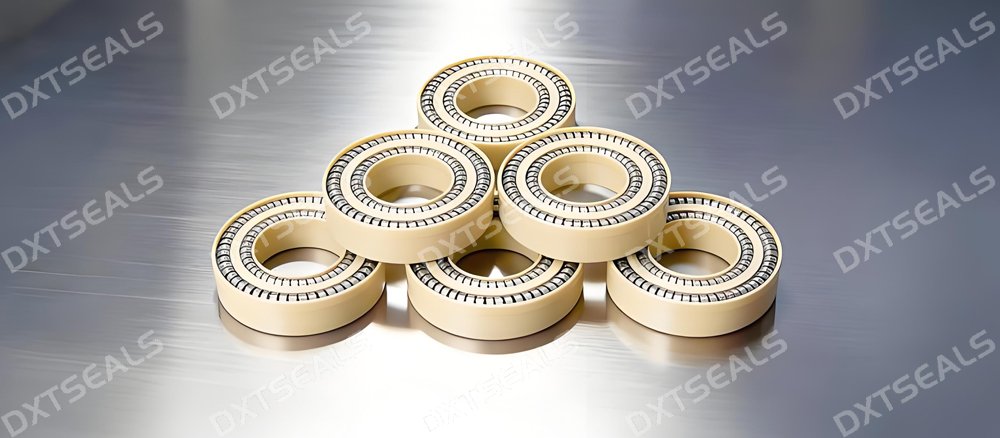
PTFE is the most commonly used sealing jacket material for spring-energized seals due to its low friction, excellent chemical resistance, and wide temperature range. However, pure PTFE is often modified with fillers to enhance specific performance characteristics.
This article compares the performance differences of various PTFE materials used in spring-energized seals, helping engineers select the most suitable material for their applications.
Why Material Selection Matters in Spring-Energized Seals
In spring-energized seals, the PTFE jacket directly contacts the sealing surface. Material properties such as wear resistance, friction coefficient, thermal stability, and chemical compatibility significantly influence sealing performance and service life.
Choosing the right PTFE compound ensures reliable sealing under dynamic, static, high-speed, or high-pressure conditions.
Common PTFE Materials Used in Spring-Energized Seals
Virgin PTFE
Virgin PTFE offers the lowest friction and excellent chemical resistance. It is suitable for low-load, low-wear applications where chemical compatibility and purity are critical.
Key characteristics:
-
Very low friction
-
Excellent chemical inertness
-
Limited wear resistance under high load
Glass-Filled PTFE
Glass-filled PTFE improves wear resistance and compressive strength compared to virgin PTFE, making it suitable for higher pressure applications.
Key characteristics:
-
Improved wear resistance
-
Better dimensional stability
-
Reduced performance in highly alkaline environments
Carbon-Filled PTFE
Carbon-filled PTFE provides a good balance between low friction and wear resistance and offers improved thermal conductivity.
Key characteristics:
-
Enhanced wear resistance
-
Good thermal dissipation
-
Moderate chemical resistance compared to virgin PTFE
Bronze-Filled PTFE
Bronze-filled PTFE is designed for high-load and high-wear applications, offering excellent mechanical strength and thermal conductivity.
Key characteristics:
-
High wear resistance
-
Excellent load-carrying capability
-
Not recommended for corrosive media
Performance Comparison Summary
| PTFE Material | Friction | Wear Resistance | Chemical Resistance | Typical Applications |
|---|---|---|---|---|
| Virgin PTFE | Very Low | Low | Excellent | Chemical, low load |
| Glass-Filled PTFE | Low | Medium | Good | High pressure static |
| Carbon-Filled PTFE | Low | Medium-High | Good | Dynamic sealing |
| Bronze-Filled PTFE | Medium | High | Moderate | Heavy-duty sealing |
Material Selection Considerations
When selecting a PTFE material for spring-energized seals, engineers should consider:
-
Operating pressure and speed
-
Dynamic or static motion
-
Chemical exposure and corrosion risk
-
Temperature range
-
Required service life
At DXTSEALS, we offer a wide range of PTFE compounds for spring-energized seals, helping customers achieve optimal sealing performance across various operating conditions.
Conclusion
Different PTFE materials used in spring-energized seals exhibit distinct performance characteristics. While virgin PTFE excels in chemical resistance and low friction, filled PTFE compounds offer enhanced wear resistance and load capacity.
Understanding these material differences is essential for selecting the right spring-energized seal and achieving reliable, long-lasting sealing performance.