
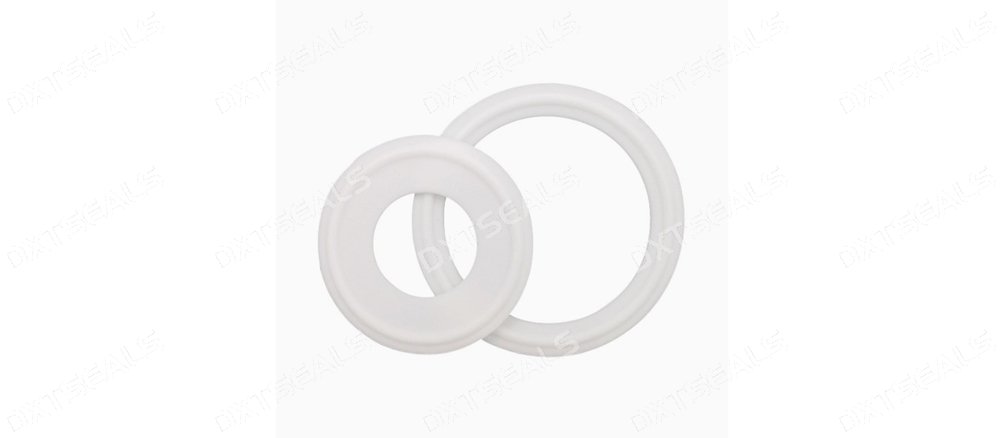
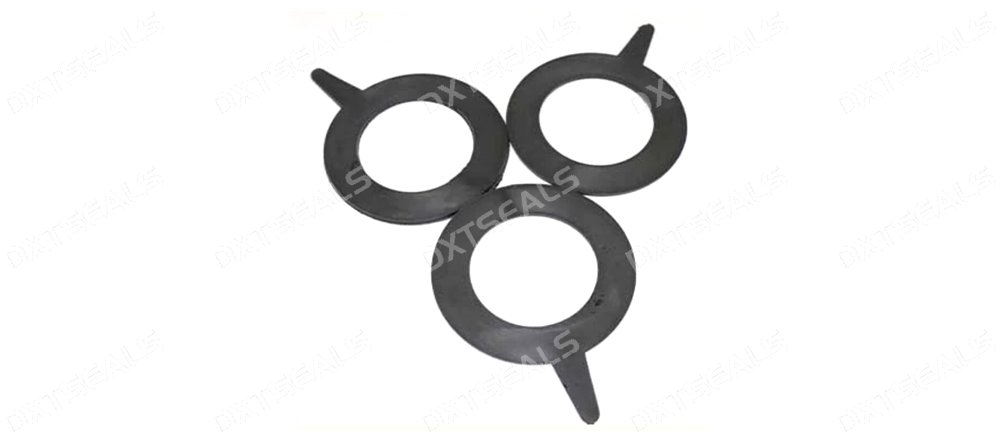
Packing seals are widely used in industrial valves, pumps, mixers, agitators, and rotating equipment. Among the most commonly selected materials are PTFE packing and graphite packing.
Both materials can provide reliable sealing performance, but their properties are different. PTFE packing is widely recognized for its excellent chemical resistance and low friction, while graphite packing is commonly selected for applications requiring high-temperature resistance and thermal stability.
Choosing between PTFE packing and graphite packing requires consideration of the operating temperature, process medium, pressure, equipment movement, shaft or valve-stem conditions, and packing construction.
This article compares PTFE packing vs graphite packing and explains where each material is commonly used.
What Is PTFE Packing?
PTFE packing is a gland packing material based on polytetrafluoroethylene (PTFE). It can be manufactured using PTFE yarn, PTFE fibers, expanded PTFE, or other PTFE-based constructions.
PTFE has a very low coefficient of friction and excellent resistance to many chemicals. These properties make PTFE packing suitable for sealing applications involving corrosive fluids and moving components.
Typical applications include:
- Industrial valves
- Centrifugal and rotary pumps
- Mixers and agitators
- Chemical processing equipment
- Water treatment systems
- Corrosive fluid handling equipment
- General industrial machinery
The actual performance of PTFE packing depends on its construction, density, cross-section, reinforcement, lubrication, and operating conditions.
Key Features of PTFE Packing
Excellent Chemical Resistance
One of the main advantages of PTFE packing is its broad chemical resistance. It can be used with many acids, alkalis, solvents, and other aggressive media, although compatibility should always be confirmed for the specific application.
Low Friction
PTFE has a very low coefficient of friction. This is particularly useful for dynamic sealing applications involving rotating shafts or reciprocating valve stems.
Low friction can help reduce heat generation and wear when the packing is correctly installed and adjusted.
Good Moisture Resistance
PTFE has very low water absorption and provides good resistance in wet environments. This makes PTFE packing suitable for many water-based industrial applications.
Wide Chemical-Service Range
PTFE packing is often considered when chemical compatibility is the primary concern. It can be used in many chemical processing and fluid-handling applications where conventional packing materials may not provide sufficient resistance.
Clean and Non-Staining Characteristics
Depending on the specific product construction, PTFE packing can provide a relatively clean sealing solution for applications where contamination and packing residue need to be controlled.
What Is Graphite Packing?
Graphite packing is a gland packing material manufactured from flexible graphite, graphite yarn, expanded graphite, or graphite-based fibers.
Graphite is known for its high-temperature capability, thermal stability, and good sealing properties. Graphite packing is therefore commonly used in industrial valves, pumps, and other equipment operating at elevated temperatures.
Different graphite packing constructions can include braided graphite packing, expanded graphite packing, reinforced graphite packing, and combinations with other materials.
Key Features of Graphite Packing
High-Temperature Performance
Graphite packing is particularly suitable for high-temperature sealing applications. Its actual temperature capability depends on the graphite grade, packing construction, atmosphere, pressure, and equipment design.
Excellent Thermal Stability
Graphite maintains useful sealing characteristics over a broad temperature range, which makes graphite packing suitable for demanding industrial equipment.
Good Chemical Resistance
Graphite has good resistance to many chemical environments. However, chemical compatibility should still be checked against the actual process medium, temperature, concentration, and operating conditions.
Good Heat Dissipation
Graphite has favorable thermal conductivity compared with many conventional packing materials. This can be beneficial in dynamic sealing applications where frictional heat needs to be managed.
Suitable for High-Temperature Valves
Graphite packing is widely considered for valve-stem sealing in steam, thermal-fluid, power-generation, and other high-temperature industrial systems.
PTFE Packing vs Graphite Packing: Performance Comparison
The following table provides a general comparison of the two materials.
| Property | PTFE Packing | Graphite Packing |
|---|---|---|
| Main Material | PTFE | Flexible graphite / graphite fiber |
| Chemical Resistance | Excellent for many media | Good to excellent depending on medium |
| Temperature Performance | High, depending on construction | Very high, depending on grade and construction |
| Friction | Very low | Low |
| Thermal Stability | Good | Excellent |
| Water Resistance | Excellent | Good |
| Heat Dissipation | Relatively limited | Good |
| Typical Dynamic Sealing | Excellent for suitable applications | Good to excellent depending on construction |
| High-Temperature Service | Suitable within specified limits | Particularly suitable |
| Typical Equipment | Pumps, valves, mixers | Valves, pumps, high-temperature equipment |
| Main Advantage | Chemical resistance and low friction | High-temperature and thermal performance |
These characteristics are general guidelines. The performance of a specific packing product depends on its material grade, construction, reinforcement, density, dimensions, and operating conditions.
PTFE Packing Applications
Chemical Processing Equipment
PTFE packing is frequently used in chemical processing equipment because of its broad chemical resistance.
It can be used for valves, pumps, mixers, and other equipment handling corrosive or chemically aggressive fluids.
Industrial Pumps
PTFE pump packing can provide low-friction sealing around rotating shafts. It is commonly considered for water, chemical, and other compatible fluid services.
Valves
PTFE valve packing can be used around valve stems where low friction and chemical resistance are important.
Water Treatment Equipment
PTFE packing can be used in pumps and valves within water treatment systems, particularly when chemical resistance is required.
Mixers and Agitators
For rotating equipment, PTFE packing can be considered when low friction and resistance to the process medium are important selection factors.
Graphite Packing Applications
Steam Valves
Graphite packing is commonly used for suitable steam valve applications because of its high-temperature capability.
High-Temperature Pumps
Graphite packing can be used in selected pump applications involving elevated temperatures, provided that the packing construction is appropriate for shaft speed, pressure, and medium.
Power Generation Equipment
Industrial power-generation systems may use graphite-based packing for valves and other equipment exposed to high-temperature fluids.
Thermal Oil and Process Equipment
Graphite packing may be selected for certain high-temperature process systems, subject to the specific fluid and operating conditions.
High-Temperature Industrial Valves
Where temperature is a primary sealing challenge, graphite packing is often considered because of its thermal stability.
Chemical Resistance: PTFE vs Graphite
Chemical compatibility is one of the most important differences between PTFE packing and graphite packing.
PTFE is widely recognized for its broad chemical resistance and is frequently selected for aggressive chemical media.
Graphite also provides good resistance to many chemicals, but its compatibility depends on the chemical environment and operating conditions. Certain strong oxidizing environments can require special consideration when using graphite-based materials.
Therefore, chemical compatibility should not be determined only from a material name. The actual medium, concentration, temperature, pressure, and packing construction should be evaluated.
Temperature Performance: PTFE vs Graphite
Temperature is another major factor in material selection.
PTFE can operate at relatively high temperatures compared with many conventional polymers, but its practical operating limit depends on the specific packing design and equipment conditions.
Graphite is generally preferred for applications where elevated temperature is a primary requirement. Its thermal stability makes it suitable for many high-temperature valve and industrial sealing applications.
However, a graphite packing product should not be assigned a universal maximum temperature simply because it contains graphite. Product construction, oxidation conditions, pressure, and manufacturer specifications all influence actual service capability.
Friction and Shaft Movement
For dynamic applications, friction is an important consideration.
PTFE has a very low coefficient of friction, making PTFE packing attractive for applications involving rotating shafts and moving valve stems.
Graphite packing can also provide good dynamic sealing performance. Its thermal characteristics can be advantageous where frictional heat is significant.
The final performance depends not only on the material but also on:
- Shaft surface finish
- Shaft speed
- Packing density
- Packing cross-section
- Gland pressure
- Lubrication
- Installation method
- Cooling conditions
PTFE Packing vs Graphite Packing: Which Should Be Used?
There is no universal material that is suitable for every packing application. The correct choice depends on the actual operating environment.
Choose PTFE Packing When:
PTFE packing may be considered when the application requires:
- Excellent chemical resistance
- Very low friction
- Good moisture resistance
- Compatibility with aggressive chemical media
- Smooth dynamic movement
- Pump or valve sealing at suitable temperatures
Choose Graphite Packing When:
Graphite packing may be considered when the application requires:
- High-temperature resistance
- High thermal stability
- Suitable performance in steam service
- High-temperature valve sealing
- Good heat dissipation
- Industrial sealing under demanding thermal conditions
Consider Composite or Reinforced Packing
Some applications require a combination of properties rather than relying on a single material.
For example, reinforced graphite packing can improve mechanical strength, while composite packing constructions can combine different materials to balance chemical resistance, friction, temperature capability, and wear resistance.
Important Factors When Selecting Packing
1. Operating Temperature
Determine the normal and maximum operating temperature. Temperature fluctuations and startup/shutdown conditions should also be considered.
2. Operating Pressure
Pressure affects packing compression, extrusion resistance, and sealing performance. The packing should be selected according to the actual equipment conditions.
3. Process Medium
Identify the exact fluid being sealed, including concentration and chemical characteristics.
4. Shaft or Valve-Stem Speed
For rotating or reciprocating applications, movement speed can significantly affect friction and wear.
5. Equipment Type
A pump packing application can have different requirements from a valve-stem packing application. Equipment design should therefore be considered during selection.
6. Packing Cross-Section
Correct packing dimensions are essential for proper installation and gland adjustment.
7. Shaft Surface Condition
A suitable shaft or stem surface finish can significantly influence packing service life.
8. Installation and Compression
Even a high-performance packing material can fail prematurely if it is incorrectly installed or excessively compressed.
Standard and Custom PTFE and Graphite Packing
Industrial equipment does not always use standard packing dimensions. Replacement and OEM applications may require specific cross-sections, lengths, constructions, or material combinations.
Custom packing solutions can be manufactured according to:
- Equipment drawings
- Existing packing samples
- Shaft or valve-stem dimensions
- Stuffing-box dimensions
- Operating temperature
- Operating pressure
- Process medium
- Equipment model
- Specific sealing requirements
PTFE packing can be supplied in different constructions and dimensions, while graphite packing can be produced using different graphite grades, reinforcement structures, and braiding configurations.
This allows sealing products to be matched more closely to the requirements of pumps, valves, mixers, agitators, and other industrial equipment.
Conclusion
PTFE packing and graphite packing are both important industrial sealing materials, but they are designed for different performance requirements.
PTFE packing is particularly suitable when chemical resistance, low friction, and moisture resistance are important. It is widely used in chemical processing, pumps, valves, mixers, and water treatment equipment.
Graphite packing is especially suitable for applications where high-temperature performance, thermal stability, and heat management are important. It is commonly considered for steam valves, high-temperature pumps, power-generation equipment, and other demanding industrial systems.
The correct packing material should be selected based on the complete operating environment rather than material type alone. Temperature, pressure, process medium, shaft speed, equipment design, packing construction, and installation conditions should all be considered.
A professional sealing manufacturer can provide both standard PTFE packing and graphite packing as well as customized packing solutions according to drawings, samples, dimensions, and specific operating requirements.