
Introduction
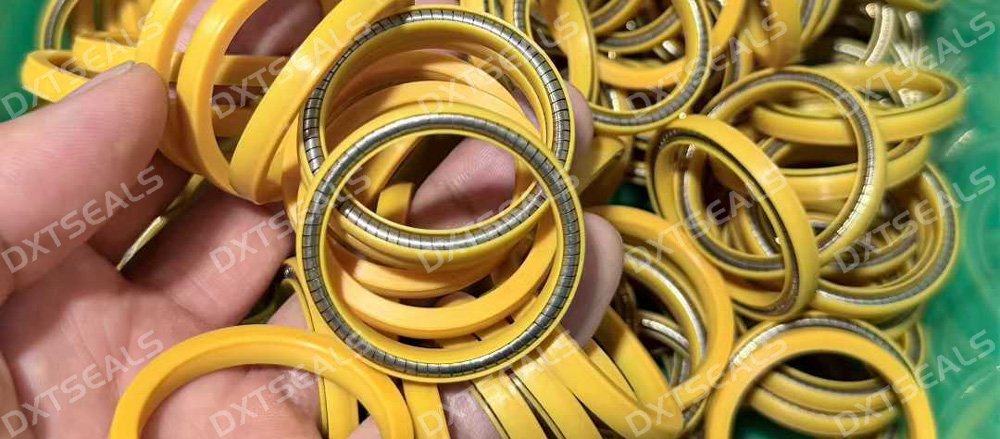
Spring energized seals are widely used in demanding applications where low friction, chemical resistance, and reliable sealing are required. At the core of their performance lies PTFE (Polytetrafluoroethylene) and its various filled formulations.
Selecting the right PTFE material and filler combination is critical for ensuring optimal sealing performance under different working conditions.
In this guide, we explain how to match PTFE and filler materials with specific operating environments. At DXTSEALS, we provide customized spring energized sealing solutions based on precise material engineering.
1. Why PTFE Is Used in Spring Energized Seals
PTFE is the most commonly used material for spring energized seals due to its unique properties:
- Excellent chemical resistance (compatible with most media)
- Wide temperature range (-200°C to +260°C)
- Low friction coefficient
- Non-stick surface characteristics
However, pure PTFE also has limitations:
- Low wear resistance
- High creep (cold flow) under load
To overcome these issues, filled PTFE materials are used.
2. Common PTFE Fillers and Their Functions
Glass Fiber Filled PTFE
- Improves wear resistance
- Enhances compressive strength
- Reduces creep
Best for: general industrial applications with moderate load
Carbon Filled PTFE
- Increases thermal conductivity
- Improves wear resistance
- Suitable for dynamic sealing
Best for: high-speed or high-friction applications
Graphite Filled PTFE
- Excellent self-lubricating properties
- High temperature resistance
- Low friction in dry conditions
Best for: high-temperature and dry-running environments
Bronze Filled PTFE
- High mechanical strength
- Improved wear resistance
- Better load-bearing capacity
Best for: heavy-duty applications with high pressure
PEEK or Advanced Fillers
- Exceptional strength and stability
- High resistance to extreme conditions
Best for: aerospace and high-end industrial applications
3. Matching Materials to Working Conditions
High-Temperature Environments
- Recommended: Graphite-filled PTFE or carbon-filled PTFE
- Reason: improved thermal stability and reduced degradation
High-Pressure Applications
- Recommended: Bronze-filled PTFE or glass-filled PTFE
- Reason: enhanced strength and reduced deformation
Chemical and Corrosive Media
- Recommended: Pure PTFE or chemically resistant filled PTFE
- Reason: maximum chemical compatibility
Dynamic Sealing Conditions
- Recommended: Carbon-filled PTFE or graphite-filled PTFE
- Reason: low friction and improved wear resistance
Low-Friction Requirements
- Recommended: Pure PTFE or graphite-filled PTFE
- Reason: excellent self-lubrication
4. Role of Spring Design in Material Selection
In spring energized seals, the metal spring works together with PTFE materials to provide:
- Continuous contact force
- Compensation for wear and deformation
- Stable sealing under pressure fluctuations
Different spring types (V-spring, U-spring, O-spring) influence:
- Load distribution
- Sealing response
- Application suitability
Material selection must be coordinated with spring design for optimal performance.
5. Key Factors to Consider
When selecting PTFE materials and fillers, consider:
- Operating temperature range
- Pressure conditions
- Type of media (chemical compatibility)
- Speed and motion (static vs dynamic)
- Surface finish of mating components
At DXTSEALS, we analyze these parameters to recommend the most suitable material combination.
6. Common Mistakes in Material Selection
- Using pure PTFE in high-load applications (leads to creep)
- Selecting inappropriate fillers for chemical environments
- Ignoring dynamic conditions and wear requirements
- Not matching material with spring design
Avoiding these mistakes can significantly improve seal performance and lifespan.
Conclusion
Selecting the right PTFE and filler combination is essential for the performance of spring energized seals.
- Pure PTFE offers excellent chemical resistance and low friction
- Filled PTFE materials improve strength, wear resistance, and thermal performance
- Proper matching with working conditions ensures long-term reliability
By understanding the characteristics of different fillers and their applications, engineers can achieve optimal sealing performance in demanding environments.
At DXTSEALS, we provide expert guidance and customized solutions to help you choose the right materials for your spring energized seals.
If you need assistance with PTFE material selection or seal design, contact DXTSEALS today for professional support and tailored solutions.