
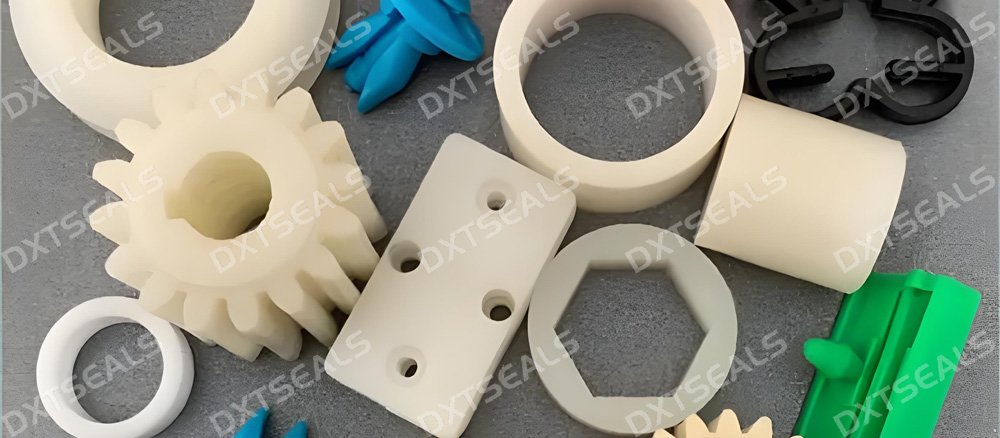
Introduction
In custom manufacturing of rubber and plastic products, mold cost is one of the most significant upfront investments. Many customers focus on product design and material performance, but overlook a critical factor: material selection directly determines mold cost.
Different materials require different mold structures, processing conditions, and engineering considerations. As a result, even identical product designs can lead to significantly different mold costs depending on the chosen material.
This article explains the relationship between material selection and mold cost in both rubber and plastic manufacturing.
Why Material Selection Comes First in Mold Development
Before mold design begins, engineers must fully understand the material to be used. This is because material properties influence:
- Shrinkage rate
- Flow behavior
- Processing temperature
- Mechanical stress during molding
- Demolding characteristics
Changing the material after mold fabrication often leads to costly modifications or even complete redesign.
At DXTSEALS, material selection is always finalized before mold engineering to ensure cost efficiency and product accuracy.
How Material Affects Mold Cost
1. Shrinkage Rate and Dimensional Compensation
Different materials have different shrinkage rates during cooling or curing.
Impact on cost:
- Requires precise mold cavity compensation
- Increases design complexity
- May require multiple design iterations
Materials with unstable or high shrinkage (e.g., silicone or certain semi-crystalline plastics) often increase mold development cost.
2. Processing Temperature Requirements
Material processing temperature directly affects mold material and design.
- High-temperature plastics (e.g., PEEK) require heat-resistant mold steel
- Rubber materials require molds capable of uniform heating
Impact on cost:
- Use of premium mold materials
- Additional heating or cooling systems
- Increased machining complexity
3. Flowability and Mold Structure
Material flow behavior determines how easily it fills the mold cavity.
- Low-flow materials require optimized gate and runner design
- High-flow materials require tighter tolerances to prevent flash
Impact on cost:
- More complex mold structures
- Additional engineering time
- Higher precision machining requirements
4. Mold Lifespan and Wear Resistance
Some materials are more abrasive or require higher pressure during processing.
Impact on cost:
- Need for hardened mold steel
- Surface treatments (e.g., nitriding, coating)
- Increased maintenance requirements
5. Product Tolerance Requirements
High-performance materials are often used in precision applications with tight tolerances.
Impact on cost:
- Higher mold accuracy requirements
- Advanced machining processes
- Increased inspection and testing
Differences Between Rubber and Plastic Mold Cost Drivers
Rubber Molding
- Requires shrinkage compensation based on vulcanization
- Needs heating systems for curing
- Sensitive to elastic deformation
Cost Drivers:
- Temperature control systems
- Venting and parting line design
- Material-specific mold adjustments
Plastic Injection Molding
- Requires precise cooling systems
- Sensitive to shrinkage and warpage
- Depends heavily on flow characteristics
Cost Drivers:
- Cooling channel complexity
- Gate and runner system design
- Mold precision and durability
Examples of Material Impact on Mold Cost
- Switching from PP to PEEK can significantly increase mold cost due to higher temperature and precision requirements
- Using silicone instead of NBR may require redesigning venting and shrinkage compensation
- Choosing filled plastics may increase mold wear, requiring stronger materials
These examples highlight how material decisions directly influence tooling investment.
Strategies to Control Mold Cost
Select Materials Based on Application Needs
Avoid over-specifying materials that exceed performance requirements.
Optimize Product Design
Simplify geometry to reduce mold complexity.
Collaborate Early with Manufacturers
Early engineering input helps balance material performance and cost.
Use Standardized Materials When Possible
Common materials often reduce mold design complexity and cost.
At DXTSEALS, engineers work closely with customers to optimize both material selection and mold design, ensuring cost-effective and high-quality production.
Applications of Custom Rubber and Plastic Components
Material-driven mold design is critical in:
- Sealing systems
- Automotive components
- Industrial machinery
- Electronic housings
- Fluid control systems
In these applications, balancing performance and cost is essential.
Conclusion
In custom rubber and plastic manufacturing, material selection is a key factor that directly determines mold cost. Differences in shrinkage, temperature requirements, flow behavior, and tolerance demands all influence mold complexity and production expenses.
By carefully selecting materials and aligning them with optimized mold design, manufacturers can control costs while maintaining high product quality.
With extensive experience in both rubber and plastic processing, DXTSEALS provides customized solutions that balance performance, precision, and cost efficiency.