
SKF 22220 E Spherical Roller Bearing — Superior Strength, Robust Reliability
Introduction
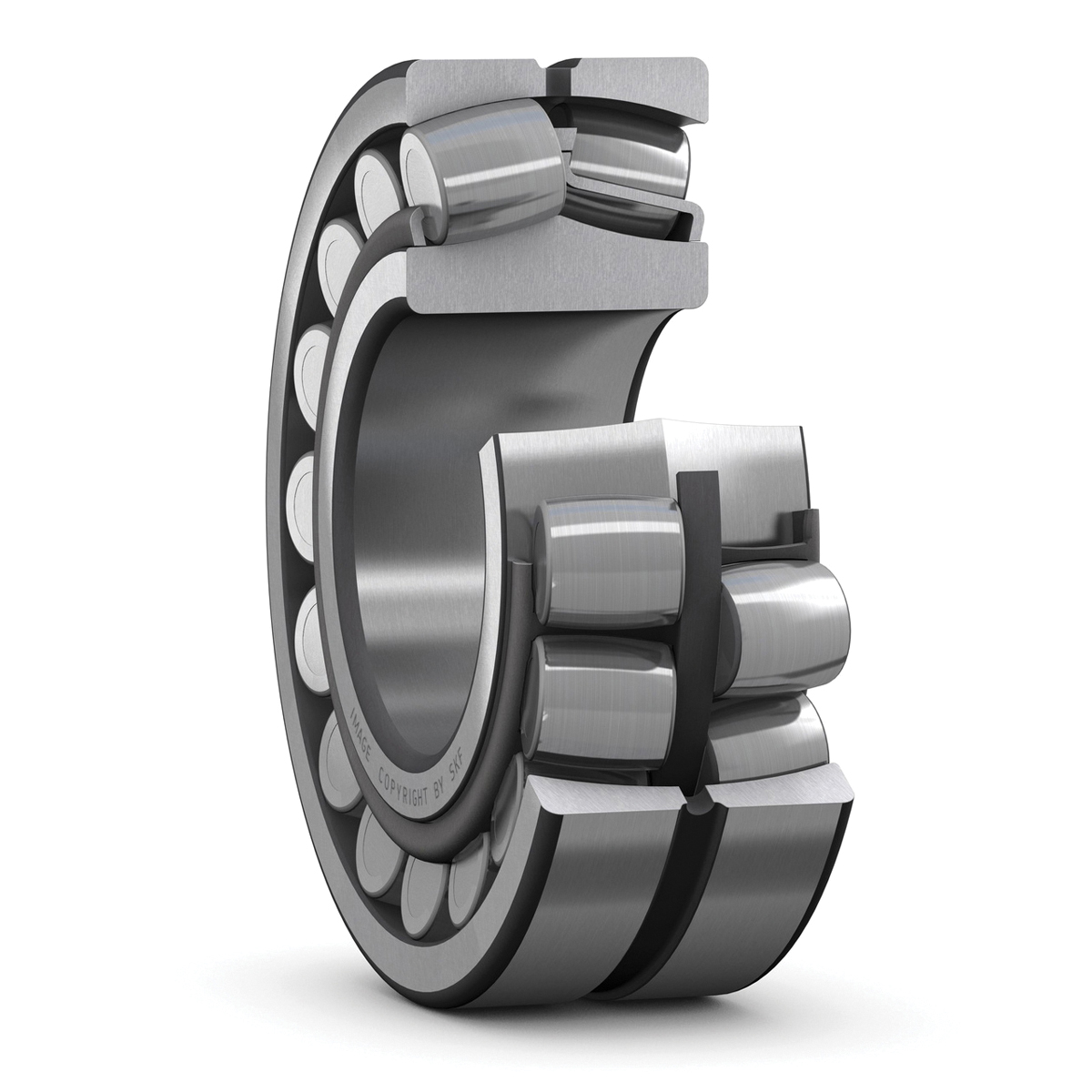
The SKF 22220 E series double-row spherical roller bearing is designed to deliver outstanding performance in heavy-duty industrial applications. With high load capacity, self-aligning capability, robust construction, and optional relubrication features, the 22220 E (and its EK variant) is ideal for use where reliability and long service life are critical. In this article, we explore its design, specifications, benefits, applications, and installation/maintenance guidelines—helping users select and apply it with confidence.
Design Features & Technical Highlights
-
Double-row spherical roller design: Two rows of symmetrical rollers run on a spherical outer ring raceway. This allows the bearing to tolerate shaft misalignment or deflection without excessive stress.
-
“E” internal design optimization: The “E” suffix indicates reinforced internal geometry (optimized roller profile, improved load distribution) to enhance load capacity and performance.
-
Relubrication provisions: Many 22220 E bearings offer holes and grooves for relubrication to facilitate maintenance.
-
Variants:
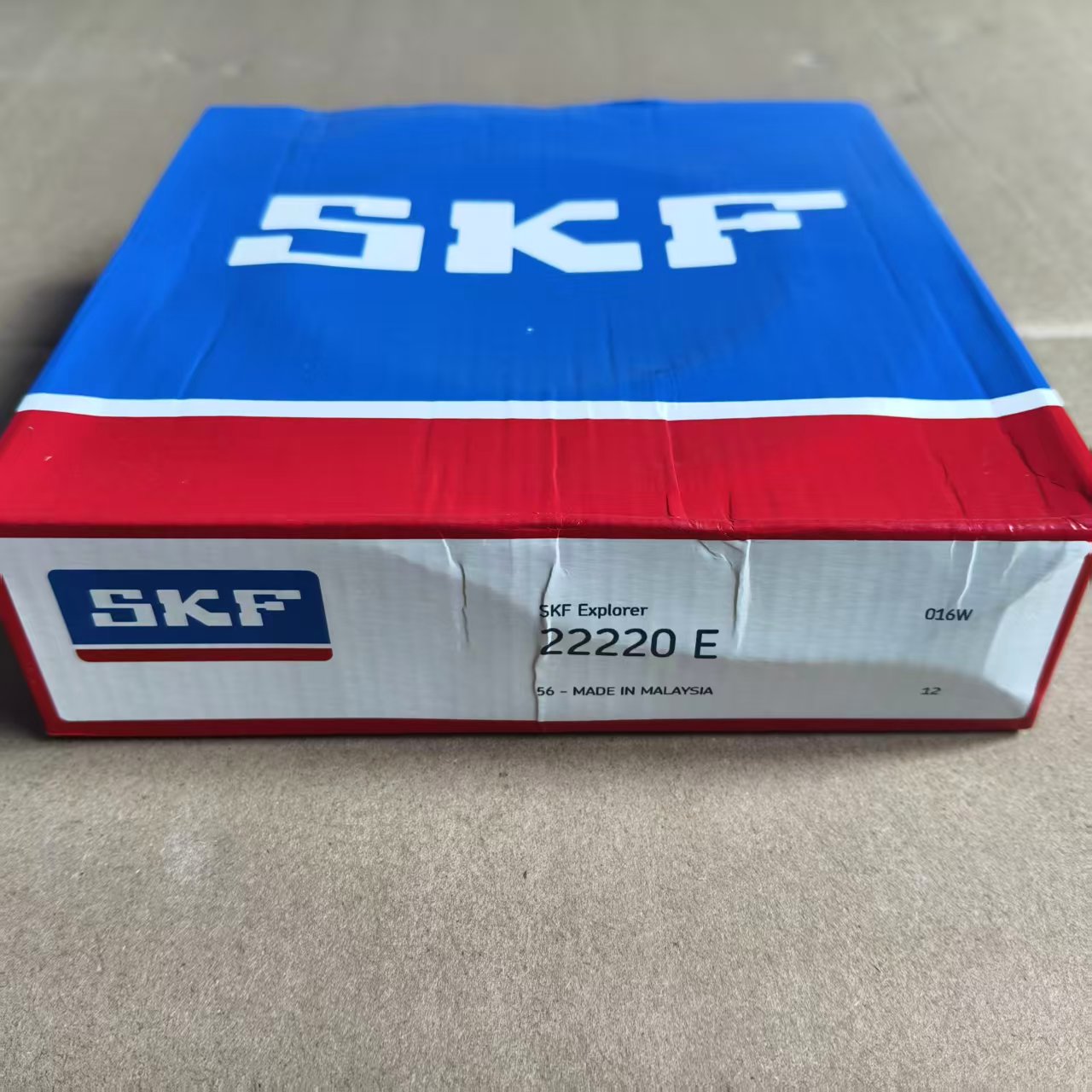
– 22220 E — cylindrical bore, open type, straight bore.
– 22220 EK — tapered bore version (commonly 1:12 taper), enables use with adapter or withdrawal sleeves.
Key Specifications & Parameters
Here is a summary of typical dimensions and performance data for the SKF 22220 E / EK versions (cylindrical and tapered bore):
| Parameter | Value / Description |
|---|---|
| Bore diameter (d) | 100 mm |
| Outside diameter (D) | 180 mm |
| Width (B) | 46 mm |
| Mass / Weight | ~ 4.85 kg for EK variant |
| Dynamic load rating (C) | 433 kN for standard E variant |
| Static load rating (C₀) | 490 kN |
| Limiting / max speed | ≈ 4,500 rpm (depending on lubrication) |
| Reference speed | ~ 3,400 rpm |
Other geometrical details include the shoulder diameters, groove widths, fillet radii, etc. For example, the lubrication groove width is ~ 8.3 mm in many cases.
Note: For precise design and selection, always refer to the full SKF datasheet to check tolerances, internal clearances (normal, C3, etc.), fits, misalignment limits, temperature limits, and more.
Advantages & Benefits
-
High load capacity
Thanks to the optimized internal geometry (“E” design) and dual rows, the 22220 E can handle heavy radial loads and significant axial loads in both directions. -
Self-alignment capability
The spherical outer ring allows angular misalignment between the inner ring (shaft) and housing, compensating for deflections or mounting errors with minimal adverse effects. -
Robustness under challenging conditions
Designed to withstand harsh industrial conditions — mechanical shocks, temperature changes, shaft bending — while maintaining performance. -
Ease of maintenance / relubrication
Provision for lubrication holes and grooves makes field servicing easier, especially in applications with heavy or continuous duty. -
Flexibility of mounting
The EK (tapered bore) variant allows use with adapter sleeves, facilitating mounting or dismounting, especially in larger shaft systems.
Typical Applications
The SKF 22220 E / EK bearing series is particularly suited for:
-
Heavy-duty gearboxes
-
Crushers, mills and mining equipment
-
Vibrating screens, conveyors, material handling machinery
-
Wind turbine main shafts
-
Rolling mills, steel/metal plants
-
Other heavy industrial machines requiring high load capacity and tolerance to misalignment
Installation & Maintenance Recommendations
-
Mounting fits & tolerances: Use proper shaft/housing fits per SKF recommendations; incorrect fits may lead to premature failure.
-
Internal clearance selection: In high-temperature or heavily loaded applications, a greater radial clearance (e.g. C3) may be preferred to accommodate thermal expansion.
-
Lubrication: Use SKF-recommended grease or oil type, quantity, and relubrication intervals. Avoid overfilling.
-
Alignment: Even though the bearing tolerates misalignment, aim for the best possible alignment to minimize stress, friction, and wear.
-
Clean installation: Protect against contamination (dust, water, debris) during mounting.
-
Monitoring: Early operation should include vibration, temperature, and noise checks to confirm proper performance.
-
Use of proper tools: Heating, hydraulic presses, sleeves, spacers, or proper mounting fixtures should be used — avoid shock or hammering.