
Introduction
Modern industrial equipment increasingly operates under extreme conditions such as high temperature, high pressure, and aggressive chemical environments. Traditional rubber seals often fail in these applications due to material degradation, excessive wear, or loss of sealing force.
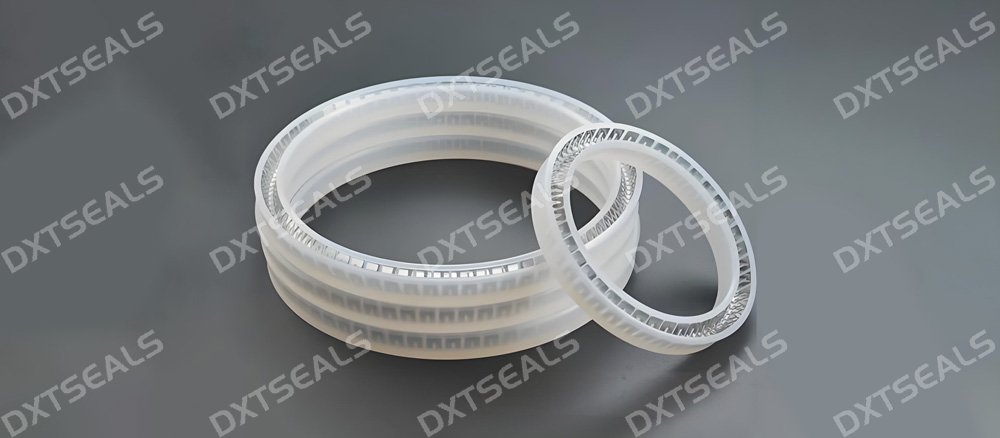
Spring energized seals have become a preferred sealing solution because of their:
- Excellent chemical resistance
- Wide temperature capability
- Low friction performance
- Long service life
By combining advanced PTFE materials with precision-engineered metal springs, spring energized seals provide reliable sealing performance in the most demanding environments.
This article explores the application solutions of spring energized seals in extreme operating conditions and explains how proper material and structural selection can improve system reliability. At DXTSEALS, we specialize in customized sealing solutions for harsh industrial applications.
1. Challenges in Extreme Operating Environments
High-Temperature Challenges
High temperatures can cause:
- Material softening or deformation
- Accelerated wear
- Loss of sealing elasticity
- Thermal expansion issues
Traditional elastomer seals often experience rapid aging under continuous high-temperature operation.
High-Pressure Challenges
Under high pressure, seals may suffer from:
- Extrusion damage
- Excessive deformation
- Increased friction and heat generation
- Loss of dimensional stability
Pressure fluctuations further increase sealing difficulty.
Strong Corrosive Media Challenges
Aggressive chemicals can cause:
- Material swelling
- Corrosion of metal components
- Surface degradation
- Reduced sealing performance
Chemical compatibility is therefore one of the most important selection factors.
2. Why Spring Energized Seals Are Suitable for Harsh Conditions
Spring energized seals combine:
- A high-performance PTFE sealing jacket
- A corrosion-resistant metal spring
This design offers several advantages:
- Continuous sealing force compensation
- Excellent resistance to thermal cycling
- Stable sealing under pressure changes
- Outstanding chemical compatibility
At DXTSEALS, we optimize both PTFE materials and spring structures based on actual operating conditions.
3. Material Solutions for High-Temperature Applications
PTFE Material Selection
For high-temperature environments, commonly used materials include:
- Graphite-filled PTFE
- Carbon-filled PTFE
- High-performance composite PTFE materials
These materials provide:
- Better thermal stability
- Lower wear at elevated temperatures
- Improved dimensional stability
Spring Material Selection
The spring material must maintain elasticity under heat. Common choices include:
- Stainless steel
- Inconel
- Hastelloy
These alloys offer excellent:
- Heat resistance
- Oxidation resistance
- Fatigue performance
Typical High-Temperature Applications
- Aerospace systems
- Turbine equipment
- High-temperature valves
- Chemical processing equipment
4. Solutions for High-Pressure Applications
Structural Optimization
High-pressure applications require:
- Strong anti-extrusion capability
- Stable sealing geometry
- Optimized groove support design
Helical spring energized seals are often preferred because they provide:
- Strong radial sealing force
- Excellent compensation capability
- Reliable pressure response
Filled PTFE Materials for High Pressure
Recommended materials include:
- Glass-filled PTFE
- Bronze-filled PTFE
- High-strength composite PTFE
These materials reduce:
- Cold flow (creep)
- Deformation under load
- Seal instability
Typical High-Pressure Applications
- Oil & gas systems
- Hydraulic equipment
- High-pressure pumps and valves
- Industrial automation systems
5. Solutions for Strong Corrosive Environments
Chemical Resistance of PTFE
PTFE is highly resistant to:
- Acids
- Alkalis
- Solvents
- Aggressive chemicals
Virgin PTFE is often selected for highly corrosive applications because of its excellent chemical inertness.
Corrosion-Resistant Spring Materials
In corrosive environments, the spring material is equally important. Common choices include:
- Hastelloy
- Elgiloy
- Corrosion-resistant stainless steel alloys
These materials help prevent:
- Spring corrosion
- Loss of elasticity
- Premature seal failure
Typical Corrosive Applications
- Chemical processing plants
- Semiconductor manufacturing
- Pharmaceutical equipment
- Marine systems
6. Groove Design and Installation Considerations
Proper groove design is essential for reliable sealing performance in harsh conditions. Key factors include:
- Correct compression ratio
- Tight dimensional tolerances
- Appropriate surface roughness
- Adequate anti-extrusion support
Installation must also avoid:
- Seal damage
- Misalignment
- Excessive deformation
At DXTSEALS, we provide complete engineering support for seal and groove design optimization.
7. Common Selection Mistakes in Extreme Applications
Incorrect Material Selection
Using unsuitable PTFE fillers or spring materials can result in:
- Rapid wear
- Chemical attack
- Seal deformation
Ignoring Thermal Expansion
Failure to account for temperature changes may cause:
- Increased friction
- Leakage
- Reduced service life
Insufficient Pressure Support
High-pressure applications require proper groove and backup design to prevent extrusion damage.
8. Future Trends in Extreme Environment Sealing
As industrial systems continue to evolve, sealing technologies are moving toward:
- Higher temperature resistance
- Greater pressure capability
- Longer service life
- Lower friction and energy consumption
- Advanced composite PTFE materials
- Precision-engineered spring structures
At DXTSEALS, we continuously invest in advanced sealing technology to meet future industrial demands.
Conclusion
Spring energized seals provide highly effective solutions for applications involving:
- High temperature
- High pressure
- Strong corrosive environments
By selecting the appropriate:
- PTFE material
- Filler type
- Spring structure
- Groove design
engineers can achieve:
- Reliable sealing performance
- Reduced maintenance
- Longer service life
- Improved operational efficiency
At DXTSEALS, we specialize in customized spring energized sealing solutions designed for the most demanding industrial conditions.
If you need expert support for sealing applications in extreme environments, contact DXTSEALS today for customized solutions and professional technical guidance.