
Introduction
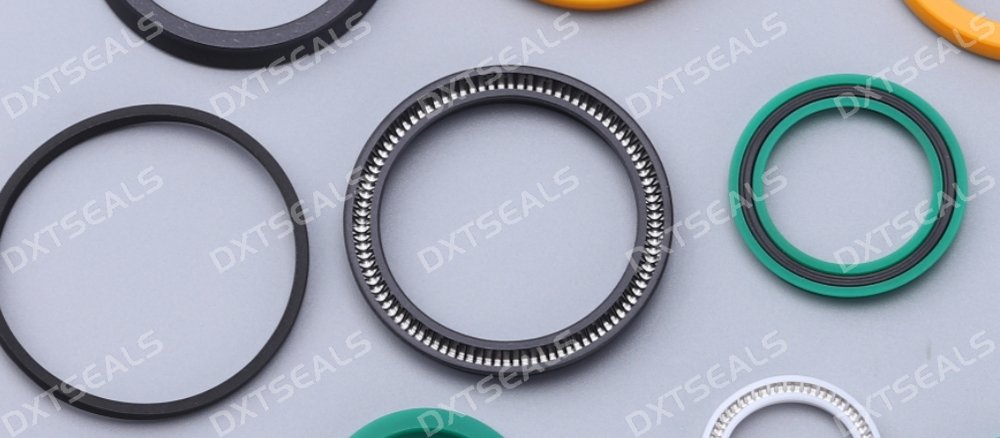
Spring-energized seals, also known as spring-loaded seals or spring-energized PTFE seals, are widely used in applications where conventional elastomer seals cannot meet performance requirements. Thanks to their unique structure and reliable sealing mechanism, these seals provide excellent performance under extreme pressure, temperature, and chemical environments.
This article provides a comprehensive analysis of the basic structure and working principle of spring-energized seals.
Basic Structure of Spring-Energized Seals
A spring-energized seal typically consists of two main components:
Sealing Jacket
The sealing jacket is usually made from PTFE or filled PTFE materials, offering low friction, chemical resistance, and wide temperature tolerance. The jacket forms the primary sealing interface with the shaft or housing.
Energizing Spring
The internal metal spring applies continuous radial or axial force to the sealing jacket. Common spring types include V-shaped springs, helical springs, and canted coil springs, each suited for different pressure and motion conditions.
Together, these components allow the seal to maintain consistent contact pressure even when operating conditions change.
Working Principle of Spring-Energized Seals
Initial Sealing Force
The energizing spring provides the initial sealing force, ensuring effective sealing even at low or zero system pressure.
Pressure-Activated Sealing
As system pressure increases, fluid pressure further pushes the sealing jacket against the sealing surface, enhancing sealing efficiency. This self-energizing effect allows the seal to perform reliably under both low and high pressures.
Compensation for Wear and Tolerance
The spring continuously compensates for wear, thermal expansion, and dimensional tolerances, maintaining stable sealing performance throughout the seal’s service life.
Key Performance Advantages
-
Wide temperature range compared to elastomer seals
-
Excellent chemical compatibility
-
Low friction and reduced stick-slip
-
Reliable sealing at low pressure and vacuum conditions
-
Long service life with minimal maintenance
These advantages make spring-energized seals ideal for demanding industrial applications.
Typical Applications
Spring-energized seals are commonly used in:
-
Hydraulic and pneumatic systems
-
Aerospace and aviation equipment
-
Semiconductor and vacuum systems
-
Oil and gas processing equipment
-
Rotating and reciprocating machinery
At DXTSEALS, we design and manufacture spring-energized seals tailored to specific application requirements, ensuring optimal sealing performance and reliability.
Conclusion
Spring-energized seals achieve reliable sealing through a combination of advanced PTFE materials and precisely engineered energizing springs. Their unique structure and working principle allow them to perform under extreme operating conditions where traditional seals fail.
Understanding their structure and sealing mechanism is essential for selecting the right seal solution for high-performance industrial applications.