
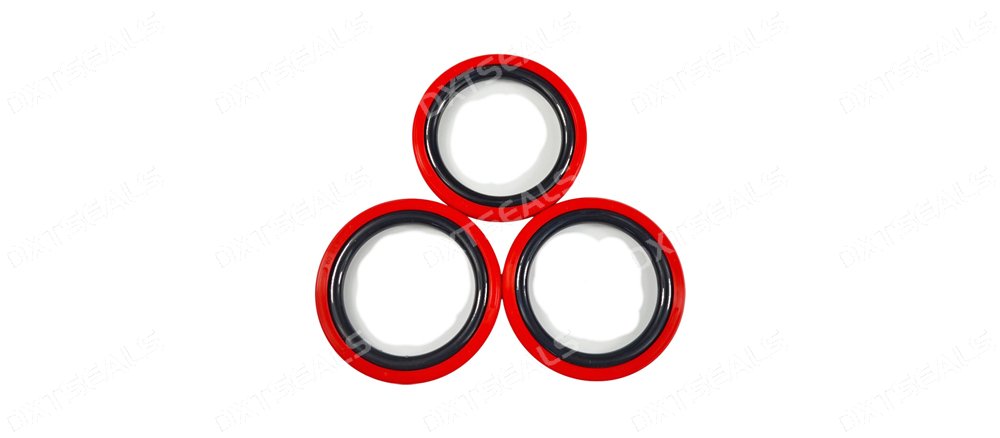
Hydraulic and pneumatic sealing systems are essential for maintaining pressure, preventing fluid or air leakage, protecting internal components, and ensuring reliable cylinder operation. From compact pneumatic cylinders to heavy-duty hydraulic equipment, the correct sealing products can have a significant effect on equipment performance and service life.
Common standard products include Glyd rings, Step Seals, wiper seals, rod seals, piston seals, O-rings, and guide rings. Each seal has a specific function within the sealing system, and the correct combination depends on pressure, temperature, speed, working medium, and cylinder design.
This guide explains the main types of standard hydraulic and pneumatic seals, their materials, functions, and typical applications.
What Are Hydraulic and Pneumatic Seals?
Hydraulic seals are designed primarily for systems using pressurized liquids, such as hydraulic oil or water-based fluids.
Pneumatic seals are designed for systems using compressed air or other gases.
Although both types of equipment use dynamic seals, their operating conditions can be very different.
Hydraulic systems often involve:
- Higher pressures
- Higher loads
- Hydraulic oils or water-based fluids
- Heavy-duty reciprocating movement
Pneumatic systems typically involve:
- Compressed air
- Higher operating speeds
- Lower friction requirements
- Frequent reciprocating movement
Therefore, the same seal profile may not be suitable for every hydraulic or pneumatic application.
Main Types of Standard Hydraulic and Pneumatic Seals
A complete cylinder sealing system may contain several different components.
Common products include:
- Glyd rings
- Step Seals
- Wiper seals
- Rod seals
- Piston seals
- O-rings
- Guide rings
- Buffer seals
- Static seals
Each component performs a different function.
Glyd Rings
Glyd rings are widely used as dynamic piston seals in hydraulic and pneumatic cylinders.
A typical Glyd ring consists of a PTFE or polymer sealing ring combined with an elastomer O-ring energizer.
The O-ring provides the necessary radial force, while the PTFE ring provides the primary sliding sealing surface.
Features of Glyd Rings
Glyd rings are commonly selected for their:
- Low friction
- Good wear resistance
- Good chemical resistance
- Smooth reciprocating movement
- Good dimensional stability
- Wide material options
They are suitable for applications where reliable piston sealing and low friction are important.
Typical Applications
Glyd rings are commonly used in:
- Hydraulic cylinders
- Pneumatic cylinders
- Industrial actuators
- Mobile hydraulic equipment
- Machine tools
- Automation equipment
Step Seals
Step Seals are commonly used as dynamic rod seals.
They typically consist of a polymer sealing ring and an elastomer energizer.
The polymer sealing ring provides the main sealing function while the elastomer maintains contact with the rod.
Features of Step Seals
Key advantages include:
- Low friction
- Good wear resistance
- Good dynamic sealing performance
- Suitable for reciprocating movement
- Compact installation
- Multiple material options
Step Seals are widely used in hydraulic and pneumatic cylinder rod applications.
Wiper Seals
Wiper seals are also known as scraper seals or dust seals.
Unlike pressure seals, their primary purpose is to prevent external contaminants from entering the cylinder.
Wiper seals remove contaminants from the rod surface as the rod retracts.
They can help prevent:
- Dust
- Dirt
- Mud
- Water
- Metal particles
- Other external contaminants
Why Are Wiper Seals Important?
Even when the primary rod seal provides excellent leakage control, contamination entering the cylinder can damage internal components.
Contaminants can cause:
- Rod seal wear
- Piston seal damage
- Cylinder bore damage
- Increased friction
- Reduced service life
A properly selected wiper seal therefore plays an important role in protecting the entire hydraulic or pneumatic system.
Typical Wiper Seal Applications
Wiper seals are widely used in:
- Hydraulic cylinders
- Pneumatic cylinders
- Construction machinery
- Agricultural machinery
- Industrial equipment
- Mobile hydraulic systems
Polyurethane wipers are particularly common in demanding hydraulic applications because of their good abrasion and tear resistance.
Rod Seals
Rod seals are designed to prevent fluid leakage along the cylinder rod.
In a hydraulic cylinder, the rod moves in and out of the cylinder while the rod seal maintains the pressure boundary.
Rod seals must balance:
- Leakage control
- Friction
- Wear
- Pressure resistance
- Dynamic movement
Common rod seal materials include:
- Polyurethane
- NBR
- FKM
- PTFE-based materials
Different profiles are available for different pressure and speed requirements.
Piston Seals
Piston seals are installed on the piston and seal against the cylinder bore.
Their primary purpose is to prevent hydraulic fluid or compressed air from passing between the piston and cylinder wall.
Piston seals can be manufactured using:
- PTFE
- Polyurethane
- NBR
- FKM
- Other engineered polymers
Glyd rings are one common type of polymer piston seal.
Guide Rings
Guide rings, also called wear rings or guide bands, are not primarily pressure seals.
Their main function is to guide the piston or rod and prevent direct metal-to-metal contact.
They can help:
- Support radial loads
- Reduce metal-to-metal contact
- Protect the cylinder bore
- Improve alignment
- Reduce wear on sealing elements
PTFE bronze guide strips are commonly used where low friction and good wear resistance are required.
Hydraulic vs Pneumatic Seal Requirements
Hydraulic and pneumatic systems have different sealing requirements.
| Feature | Hydraulic Seals | Pneumatic Seals |
|---|---|---|
| Typical Medium | Hydraulic oil / water-based fluid | Compressed air |
| Pressure | Generally higher | Generally lower |
| Speed | Moderate to high | Often high |
| Main Concern | Pressure and wear | Friction and high-cycle movement |
| Common Materials | PU, PTFE, NBR, FKM | PU, PTFE, NBR |
| Typical Equipment | Hydraulic cylinders | Pneumatic cylinders |
These are general distinctions. The actual seal selection should always be based on the equipment specifications.
Common Seal Materials
Material selection has a major influence on sealing performance.
PTFE
PTFE is widely used for hydraulic and pneumatic seals because of:
- Very low friction
- Excellent chemical resistance
- Good temperature resistance
- Good non-stick properties
- Low moisture absorption
Filled PTFE compounds can provide improved wear resistance and mechanical strength.
Common fillers include:
- Glass fiber
- Carbon
- Graphite
- Bronze
Polyurethane
Polyurethane is widely used for hydraulic rod seals, piston seals, and wiper seals.
Its main advantages include:
- Excellent abrasion resistance
- High tensile strength
- Good tear resistance
- Good elasticity
- Good dynamic performance
Polyurethane is particularly useful in heavy-duty hydraulic applications.
NBR
NBR provides good oil resistance, elasticity, and mechanical properties.
It is commonly used in:
- O-rings
- Hydraulic seals
- Pneumatic seals
- Static sealing applications
FKM
FKM provides good resistance to high temperatures, oils, fuels, and many chemicals.
It is suitable for demanding industrial environments where NBR may not provide sufficient temperature or chemical resistance.
EPDM
EPDM offers excellent resistance to:
- Water
- Steam
- Weathering
- Ozone
- Many chemicals
However, its compatibility with petroleum-based oils must be carefully considered.
How Does a Hydraulic Cylinder Sealing System Work?
A typical hydraulic cylinder may use several sealing components together.
A simplified arrangement can include:
Wiper Seal → Rod Seal → Buffer Seal → Guide Ring → Piston Seal
Each component performs a different function.
The wiper prevents external contaminants from entering.
The rod seal controls hydraulic fluid leakage along the rod.
A buffer seal may help manage pressure spikes and protect the primary rod seal.
The guide ring supports the rod and reduces metal-to-metal contact.
The piston seal prevents fluid from bypassing the piston.
This integrated approach provides better overall cylinder performance than relying on a single sealing element.
How to Select Standard Hydraulic and Pneumatic Seals
Selecting a standard seal requires consideration of several technical parameters.
1. Pressure
Check:
- Normal operating pressure
- Maximum pressure
- Pressure spikes
- Pressure cycling
High-pressure applications may require specialized profiles or anti-extrusion solutions.
2. Temperature
Consider the full operating temperature range.
Both the sealing material and any energizer must remain suitable for the required temperature.
3. Working Medium
Identify the actual medium:
- Hydraulic oil
- Water
- Air
- Steam
- Fuels
- Chemicals
Material compatibility is essential.
4. Movement Speed
For dynamic seals, determine:
- Reciprocating speed
- Frequency
- Stroke length
- Rotary speed if applicable
High-speed pneumatic applications may require low-friction sealing profiles.
5. Surface Finish
The mating surface has a major influence on seal life.
An excessively rough surface can accelerate wear, while an unsuitable surface finish can reduce sealing performance.
6. Groove Dimensions
The seal must match the installation geometry.
Important dimensions include:
- Rod diameter
- Bore diameter
- Groove diameter
- Groove width
- Groove depth
- Installation clearance
Incorrect groove dimensions can result in leakage, excessive friction, or premature failure.
Standard Sizes and Custom Seals
Many hydraulic and pneumatic seals are available in standard market sizes.
Standard products are advantageous because they provide:
- Easy replacement
- Lower cost
- Shorter procurement cycles
- Established installation dimensions
- Broad equipment compatibility
However, some cylinders require non-standard dimensions or specialized sealing materials.
Custom seals can be manufactured according to:
- Technical drawings
- Physical samples
- OEM specifications
- Special operating conditions
- Customer-defined dimensions
This allows manufacturers to provide both standard and non-standard sealing solutions.
Applications of Hydraulic and Pneumatic Seals
Standard sealing products are used across numerous industries.
Construction Machinery
Hydraulic cylinders in excavators, loaders, cranes, and other mobile machinery require durable rod seals, piston seals, wipers, and guide rings.
Industrial Automation
Pneumatic cylinders and actuators commonly use low-friction piston and rod seals for high-cycle operation.
Agricultural Machinery
Hydraulic equipment used in agricultural machinery is exposed to dust, moisture, dirt, and changing temperatures, making effective sealing and contamination protection important.
Manufacturing Equipment
Machine tools, presses, injection molding machines, and other industrial machinery use hydraulic and pneumatic sealing systems for reliable movement and pressure control.
Material Handling Equipment
Forklifts, lifting systems, and other hydraulic equipment rely on sealing components to maintain pressure and prevent fluid leakage.
Why Standard Sealing Products Are Important
Standard seals provide an efficient solution for equipment manufacturers and maintenance teams.
Instead of developing a completely new sealing profile for every application, standardized products allow manufacturers to use proven dimensions and commonly available materials.
This can reduce:
- Development costs
- Replacement time
- Inventory complexity
- Production costs
For specialized equipment, however, custom sealing solutions remain important.
Conclusion
Standard hydraulic and pneumatic seals form an essential part of modern fluid power systems. Glyd rings, Step Seals, wiper seals, rod seals, piston seals, O-rings, and guide rings each perform a specific function within hydraulic and pneumatic cylinders.
Glyd rings are commonly used for piston sealing, while Step Seals are widely used for rod sealing. Wiper seals protect the cylinder from external contamination, and guide rings help support moving components and reduce metal-to-metal contact.
PTFE, polyurethane, NBR, FKM, and EPDM provide different combinations of friction, wear resistance, chemical compatibility, temperature resistance, and elasticity.
By evaluating pressure, temperature, working medium, movement speed, surface finish, and groove dimensions, users can select the appropriate standard seal for their equipment. For non-standard applications, professional manufacturers can also provide custom hydraulic and pneumatic seals based on drawings, samples, and OEM requirements.