
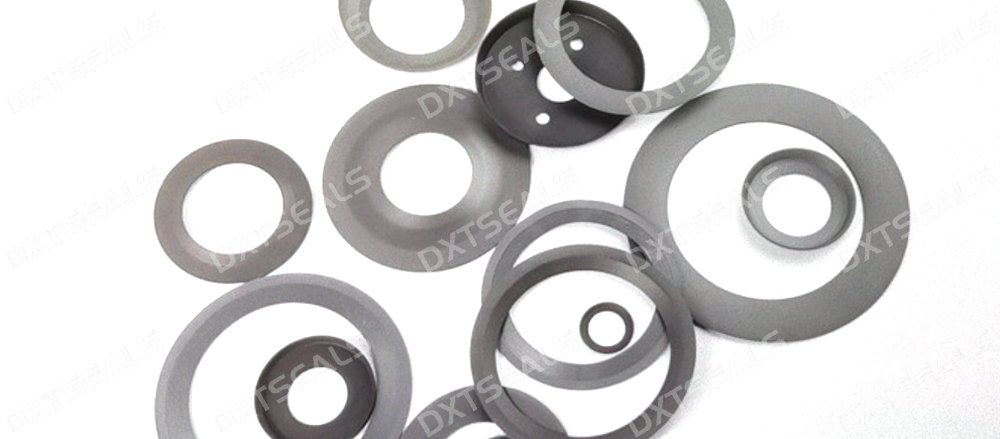
Mini pump diaphragms are critical components in small air compressors, vacuum pumps, and micro pneumatic systems. Although their structure looks simple, their material and design have a direct impact on airflow stability, sealing performance, pressure output, and overall lifespan of the equipment.
Many buyers assume that all compressor diaphragms are made of PTFE. But is this true? In reality, PTFE is only one of several materials used, and the selection depends heavily on operating conditions.
Below, DXTSEALS explains what makes mini pump diaphragms special and how to choose the right material for your application.
1. What Makes Mini Pump Diaphragms Special?
Mini pump diaphragms differ from standard sealing parts because they need to meet four key performance requirements:
1.1 Air-Tight Flexibility
The diaphragm repeatedly flexes during pump operation. It must remain flexible while providing a perfect seal to prevent leaks.
1.2 Fatigue Resistance
Mini pumps often run at high frequency (hundreds to thousands of cycles per minute).
A good diaphragm must withstand long-term cyclic deformation without cracking.
1.3 Chemical & Media Compatibility
Depending on the application—air, gas, special gases, or vapor—the diaphragm material must resist swelling, hardening, or corrosion.
1.4 Dimensional Stability
The diaphragm must maintain its shape under pressure changes to ensure consistent output and pumping efficiency.
These requirements make material selection extremely important.
2. Are All Mini Pump Diaphragms Made of PTFE?
No.
Mini pump diaphragms are not always PTFE. In fact, many air compressors and micro pumps use rubber-based diaphragms because of their excellent elasticity.
Below are the most commonly used materials:
3. Common Materials for Mini Pump Diaphragms
3.1 NBR (Nitrile Rubber) Diaphragms
Applications: General air pumps, small compressors, oil-free pumps
Advantages:
-
Good elasticity
-
Good air-tightness
-
Affordable cost
-
Good compatibility with lubricating oils
Limitations:
-
Temperature resistance only up to ~100°C
-
Not suitable for aggressive chemicals
3.2 EPDM Diaphragms
Applications: Water pumps, steam systems, ozone environments
Advantages:
-
Excellent heat and ozone resistance
-
Good aging resistance
-
Suitable for hot air or steam
Limitations:
-
Poor oil resistance
3.3 Silicone (VMQ) Diaphragms
Applications: Medical pumps, food-grade compressors
Advantages:
-
High flexibility
-
Excellent low-temperature performance
-
Good for hygienic applications
Limitations:
-
Lower mechanical strength
-
Moderate wear resistance
3.4 FKM (Viton) Diaphragms
Applications: High-temperature, oil-rich environments
Advantages:
-
Superior heat resistance up to 200°C
-
Excellent chemical resistance
-
Long service life
Limitations:
-
Higher cost
3.5 PTFE (Polytetrafluoroethylene) Diaphragms
Applications: High-end compressors, corrosive gas pumps, precision air systems
Advantages:
-
Outstanding chemical resistance
-
Extremely low friction
-
High temperature resistance (260°C)
-
Excellent wear resistance
Limitations:
-
Poor elasticity (often requires backing rubber layer)
-
Higher cost
-
Limited dynamic flexibility
4. Are PTFE Diaphragms Better?
PTFE is not universally better—only better under specific conditions.
Choose PTFE if:
-
You handle corrosive gases
-
High temperature environments
-
Demanding chemical or industrial applications
-
Long service life is required
Choose rubber if:
-
High elasticity is needed
-
Low to moderate temperatures
-
Cost-sensitive consumer devices
-
High-frequency flexing is required
In many applications, the optimal solution is PTFE + rubber composite diaphragms, which combine:
-
PTFE’s chemical resistance
-
Rubber’s elasticity and sealing performance
DXTSEALS offers both pure PTFE diaphragms and composite PTFE-rubber diaphragms.
5. How to Choose the Right Diaphragm Material for Your Compressor?
Consider the following factors:
5.1 Medium Type
Air, steam, chemical gases, or oil vapor?
5.2 Operating Temperature
-
≤100°C → NBR
-
100–150°C → EPDM / Silicone
-
150–200°C → FKM
-
200°C → PTFE
5.3 Pressure & Frequency
High-frequency mini pumps typically prefer rubber-based materials.
5.4 Lifetime Requirements
PTFE provides longer service life under harsh conditions.
5.5 Budget
Rubber diaphragms are more economical.
For custom designs, DXTSEALS supports:
-
PTFE diaphragms
-
Rubber diaphragms (NBR, EPDM, FKM, Silicone)
-
Composite diaphragms
-
Mold development and material optimization
Conclusion
Air compressor mini pump diaphragms play a key role in airflow stability and long-term reliability.
While PTFE diaphragms offer excellent temperature and chemical resistance, they are not the only material used, nor always the best choice. Rubber-based diaphragms remain preferred for high-flexibility and cost-effective applications.
To maximize compressor performance, selecting the right diaphragm material is essential.
For high-quality custom diaphragms, DXTSEALS provides professional engineering support and material selection guidance.