
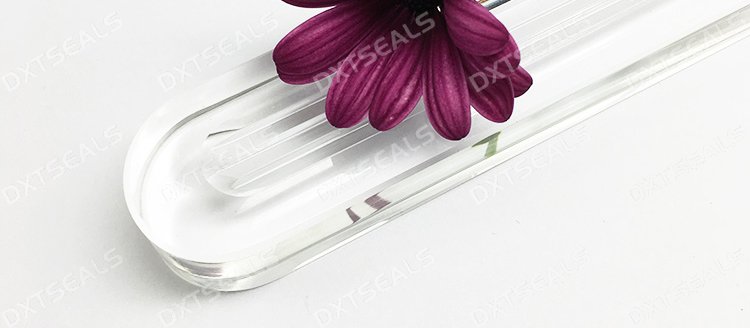
Level gauge glass is an important component in industrial equipment where operators need to visually monitor liquid levels. The glass must provide clear visibility while maintaining reliable performance under temperature, pressure, and chemical conditions.
Two commonly selected glass materials are aluminosilicate glass and borosilicate glass. Although both are engineered glass materials with better thermal and chemical performance than ordinary glass, their material characteristics and typical applications are not exactly the same.
Choosing between aluminosilicate and borosilicate glass should therefore be based on the actual operating conditions, level gauge design, temperature, pressure, chemical medium, and required mechanical performance.
What Is Aluminosilicate Glass?
Aluminosilicate glass is a glass material containing significant amounts of aluminum oxide along with silica and other components. The material is known for its high mechanical strength, good thermal stability, and resistance to demanding operating environments.
Aluminosilicate glass can be used for specialized industrial viewing applications where a combination of strength, temperature resistance, and dimensional stability is required.
In level gauge applications, the exact performance depends on the specific glass composition, manufacturing process, thickness, and final product design.
What Is Borosilicate Glass?
Borosilicate glass contains silica and boron oxide as major components. It is widely recognized for its low thermal expansion and good resistance to thermal shock.
Because of these properties, borosilicate glass is commonly used in industrial sight glasses, boiler level gauges, liquid level indicators, laboratory equipment, and other applications involving temperature changes.
Borosilicate level gauge glass is available in various standard industrial dimensions and can also be manufactured according to specific equipment requirements.
Aluminosilicate Glass vs Borosilicate Glass
The two materials share several advantages, but they have different material characteristics.
| Property | Aluminosilicate Glass | Borosilicate Glass |
|---|---|---|
| Main material system | Aluminosilicate | Borosilicate |
| Mechanical strength | Generally high | Good |
| Thermal stability | Excellent for suitable grades | Excellent |
| Thermal shock resistance | Good to excellent depending on grade | Excellent |
| Chemical resistance | Good to excellent depending on composition | Good to excellent |
| Optical clarity | Excellent | Excellent |
| High-temperature applications | Suitable for demanding applications | Widely used |
| Industrial availability | Common for specialized applications | Very widely used |
| Typical use | High-performance viewing components and specialized equipment | Level gauges, sight glasses, boilers, process equipment |
The actual performance should always be determined from the technical specifications of the particular glass grade rather than from the material name alone.
Thermal Shock Resistance
Thermal shock resistance is an important consideration when selecting level gauge glass.
A level gauge installed on a boiler or hot process system may experience rapid temperature changes during startup, shutdown, filling, draining, or process fluctuations.
Borosilicate glass is particularly well known for its low thermal expansion and good thermal shock resistance. This makes it a widely used choice for industrial level gauge applications.
Certain aluminosilicate glass grades can also provide excellent thermal and mechanical performance. They may be considered when higher mechanical strength or other specialized material characteristics are required.
The final selection should consider not only the glass material but also glass thickness, dimensions, mounting conditions, and operating temperature.
Mechanical Strength
Mechanical strength can be an important factor in industrial gauge glass applications.
Aluminosilicate glass can offer high mechanical strength and may be advantageous in applications where the glass is exposed to mechanical stress or demanding installation conditions.
Borosilicate glass provides a good balance between mechanical properties, thermal stability, chemical resistance, and manufacturing availability.
However, the strength of a finished gauge glass depends on more than the basic glass composition. Thickness, edge quality, surface condition, geometry, and manufacturing process can all affect performance.
Temperature Resistance
Both aluminosilicate and borosilicate glass can be used in high-temperature industrial applications, but the appropriate material grade must be selected according to the actual working conditions.
For example, a boiler level gauge may operate at elevated temperature and pressure, while a chemical process sight glass may be exposed to both high temperature and aggressive media.
It is therefore important to consider:
- Operating temperature
- Temperature fluctuations
- Thermal shock conditions
- Operating pressure
- Glass dimensions
- Glass thickness
- Mounting method
- Process medium
There is no single maximum temperature that applies to every aluminosilicate or borosilicate gauge glass.
Chemical Resistance
Chemical compatibility is another important consideration.
Borosilicate glass generally offers good resistance to many water-based fluids, industrial chemicals, and process media. This is one reason it is widely used in industrial sight glass and level measurement applications.
Aluminosilicate glass can also provide good chemical stability, depending on its specific composition.
For strongly acidic, alkaline, or otherwise aggressive process media, the exact glass grade should be checked before selection.
The glass should also be evaluated together with the gasket and other sealing components because the sealing material may have different chemical resistance from the glass itself.
Optical Clarity
Both glass types can provide excellent optical clarity when properly manufactured and processed.
For a level gauge, optical performance is important because the operator needs to clearly observe the liquid level.
The final visibility can be affected by:
- Glass transparency
- Surface finish
- Glass thickness
- Internal reflections
- Gauge design
- Lighting conditions
- Process fluid color and clarity
- Scale or marking design
High-quality processing and accurate dimensions are therefore just as important as material selection.
Which Glass Is Better for Boiler Level Gauges?
For many conventional boiler and industrial level gauge applications, borosilicate glass is a common and practical choice because of its thermal stability, thermal shock resistance, chemical resistance, and availability in standard industrial dimensions.
Aluminosilicate glass may be considered when the application places greater emphasis on mechanical strength or requires a specialized glass material.
The correct choice should be based on the complete operating conditions rather than simply selecting the material with the highest individual performance value.
For high-temperature and high-pressure equipment, the gauge glass should always be matched with the appropriate gauge body, gasket, mounting system, and operating specifications.
How to Choose the Right Level Gauge Glass
When replacing or specifying a level gauge glass, the following factors should be evaluated.
1. Check the Original Gauge Design
First identify the type of level gauge and the existing glass configuration.
Check the overall dimensions, thickness, shape, mounting method, and sealing arrangement.
2. Confirm Temperature and Pressure
Operating temperature and pressure are critical parameters.
A glass suitable for a low-temperature tank may not be appropriate for a high-temperature boiler or pressure vessel.
3. Select the Appropriate Material
Choose between aluminosilicate, borosilicate, or another specialized glass based on the actual application.
Do not select the material based only on general material descriptions.
4. Consider the Process Medium
Water, steam, oil, chemicals, solvents, and other process fluids can have different compatibility requirements.
Chemical resistance should be evaluated for the actual operating medium.
5. Match the Gasket
The gasket is an important part of the complete level gauge assembly.
Common gasket materials may include graphite, PTFE, mica-based materials, or other specialized sealing materials, depending on the temperature, pressure, and process medium.
6. Verify Dimensions
Even when the glass material is correct, an incorrect dimension can prevent proper installation.
Important dimensions may include:
- Length
- Width
- Thickness
- Hole diameter
- Hole position
- Edge configuration
- Radius
- Mounting dimensions
For replacement applications, measurements from the original component or an existing sample can help ensure compatibility.
German Standard Level Gauge Glass
German-standard level gauge glass is widely used in industrial equipment requiring standardized dimensions and reliable replacement components.
Borosilicate glass is commonly selected for these applications because it provides a useful combination of thermal stability, optical clarity, chemical resistance, and availability.
For equipment designed around German-standard dimensions, it is important to match the replacement glass with the original gauge design and sealing configuration.
When an exact standard model is unavailable, custom manufacturing based on drawings, samples, or detailed measurements can provide an alternative solution.
Standard and Custom Gauge Glass Manufacturing
Different industrial customers may require different glass materials and dimensions.
Standard market models can be supplied for common level gauge applications. For replacement equipment, discontinued machinery, or special industrial systems, non-standard dimensions may also be required.
Custom gauge glass manufacturing can be based on:
- Engineering drawings
- Original glass samples
- Detailed dimensions
- OEM specifications
- Equipment model information
- Required operating conditions
This approach allows the glass to be manufactured according to the actual installation requirements instead of forcing a standard product into an incompatible application.
Aluminosilicate or Borosilicate: Which Should You Choose?
There is no universal answer because the best material depends on the application.
Choose borosilicate glass when:
- Good thermal shock resistance is required
- The application involves frequent temperature changes
- Standard industrial gauge glass dimensions are needed
- Good chemical resistance is required
- The glass is used for boilers, tanks, or general process equipment
Consider aluminosilicate glass when:
- Higher mechanical strength is an important consideration
- The application requires a specialized high-performance glass
- The equipment design calls for a specific aluminosilicate material
- Mechanical and thermal requirements are more demanding
For both materials, the actual glass grade and product design should be verified against the equipment's operating conditions.
Conclusion
Aluminosilicate glass and borosilicate glass are both high-performance glass materials that can be used in demanding industrial viewing and level measurement applications.
Borosilicate glass is widely used for level gauges because of its low thermal expansion, good thermal shock resistance, chemical stability, optical clarity, and broad availability. Aluminosilicate glass can provide higher mechanical strength and may be suitable for specialized applications requiring additional performance.
When selecting level gauge glass, material is only one part of the decision. Temperature, pressure, process medium, dimensions, mounting configuration, and gasket compatibility should all be considered.
We can supply standard borosilicate level gauge glass for common industrial applications and provide aluminosilicate glass and other specialized glass solutions for demanding applications. Non-standard gauge glass can also be manufactured according to drawings, samples, dimensions, or OEM requirements, with matching gaskets and related sealing components available for complete replacement solutions.