
From Material to Structure: A Comprehensive Understanding of Spring Energized Seal Design and Application Logic
In modern industrial systems, sealing technology is critical for ensuring equipment reliability, operational efficiency, and long-term durability. As industries continue to demand higher temperatures, stronger chemical resistance, lower friction, and longer service life, traditional elastomer seals are often no longer sufficient.
Spring energized seals have become one of the most advanced sealing solutions for demanding applications. However, achieving optimal sealing performance requires more than simply selecting a standard product. The design logic behind spring energized seals involves a careful balance between materials, spring structures, seal geometry, operating conditions, and application requirements.
This article provides a comprehensive overview of spring energized seal design and application logic, helping engineers and buyers better understand how these high-performance sealing systems work.
What Is a Spring Energized Seal?
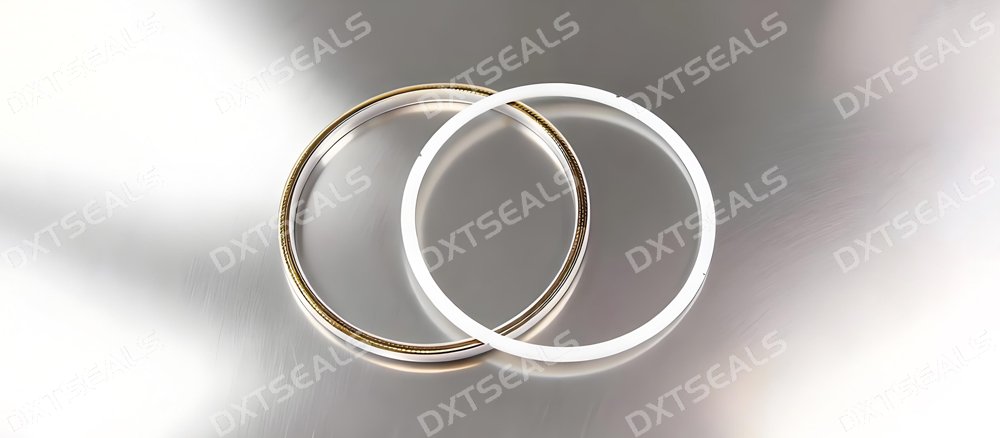
A spring energized seal is a high-performance sealing device composed of:
- A polymer sealing jacket
- A metal spring energizer
The sealing jacket is typically made from PTFE or other engineered plastics, while the internal spring continuously applies sealing force to maintain tight contact between sealing surfaces.
This design allows the seal to compensate for:
- Wear
- Thermal expansion
- Pressure fluctuations
- Mechanical tolerances
Spring energized seals are widely used in:
- Semiconductor equipment
- Aerospace systems
- Chemical processing
- Food and pharmaceutical machinery
- Hydraulic and pneumatic systems
- Oil and gas equipment
Understanding the Core Design Logic
The performance of a spring energized seal depends on the interaction between several key factors:
- Material selection
- Spring structure
- Seal geometry
- Operating conditions
- Groove design
- Motion type
Successful sealing solutions require all these elements to work together as a complete system.
Material Selection: The Foundation of Seal Performance
Material selection is one of the most important aspects of seal design.
Different operating environments require different material properties such as:
- Chemical resistance
- Wear resistance
- Temperature capability
- Mechanical strength
- Friction control
PTFE: The Most Common Sealing Material
PTFE is widely used because of its outstanding characteristics:
- Extremely low friction coefficient
- Excellent chemical resistance
- Wide operating temperature range
- Non-stick surface properties
PTFE performs well in both static and dynamic sealing applications.
However, pure PTFE may have limited wear resistance under high load conditions.
Filled PTFE Compounds
To improve performance, PTFE is often combined with reinforcing fillers.
Common fillers include:
- Carbon fiber
- Glass fiber
- Bronze
- Graphite
- Polyimide
Filled PTFE materials can provide:
- Better wear resistance
- Higher compressive strength
- Improved thermal conductivity
- Enhanced dimensional stability
The selection of fillers depends on the specific application requirements.
Advanced Engineering Plastics
For extreme applications, advanced materials such as PEEK may be used.
PEEK offers:
- Exceptional mechanical strength
- High-temperature resistance
- Excellent pressure capability
These materials are commonly applied in aerospace, semiconductor, and high-pressure industrial systems.
Spring Structure: The Core of Sealing Force Control
The internal spring determines how sealing force is applied to the contact surface.
Different spring types produce different sealing characteristics.
Cantilever Spring Seals
Cantilever springs generate moderate and flexible sealing force.
Advantages
- Low friction
- Good wear resistance
- Excellent for dynamic applications
Typical Applications
- Hydraulic cylinders
- Pneumatic systems
- Rotary shafts
Cantilever spring seals are often selected when friction reduction is a priority.
Helical Spring Seals
Helical springs provide highly uniform sealing force around the entire seal circumference.
Advantages
- Excellent leakage control
- Superior vacuum sealing
- Strong static sealing capability
Typical Applications
- Semiconductor equipment
- Vacuum systems
- Cryogenic applications
Helical spring seals are widely used in static sealing environments requiring high sealing integrity.
Canted Coil Spring Seals
Canted coil springs offer flexible load characteristics and wide deflection capability.
Advantages
- Excellent load recovery
- Suitable for high-speed operation
- Stable performance under pressure variation
Typical Applications
- Aerospace systems
- High-speed rotary equipment
- Complex motion applications
These seals balance sealing performance with friction control.
Seal Geometry and Structural Design
Seal geometry directly influences:
- Contact pressure
- Friction level
- Leakage control
- Wear behavior
Proper seal profile design is essential for optimizing performance.
Lip Design
The sealing lip must provide enough contact force to prevent leakage without generating excessive friction.
Important considerations include:
- Contact angle
- Lip thickness
- Interference level
- Pressure distribution
Groove Design
Seal groove dimensions must match the seal structure precisely.
Improper groove design may cause:
- Seal deformation
- Uneven wear
- Leakage
- Reduced service life
Critical groove parameters include:
- Groove depth
- Groove width
- Clearance gaps
- Corner radii
Static vs Dynamic Sealing Logic
Different applications require different sealing strategies.
Static Sealing Applications
Static sealing systems prioritize:
- Leakage prevention
- Compression stability
- Chemical resistance
Helical spring seals are commonly preferred for static environments.
Typical applications include:
- Flanges
- Valve bodies
- Pressure vessels
Dynamic Sealing Applications
Dynamic sealing systems must manage:
- Friction
- Wear
- Heat generation
- Motion stability
Cantilever and canted coil spring seals are typically more suitable for dynamic applications.
Examples include:
- Hydraulic cylinders
- Pumps
- Compressors
- Rotary shafts
Influence of Operating Conditions
Seal performance is also affected by operating conditions.
Temperature
High temperatures may soften materials or accelerate wear.
Pressure
Higher pressure increases contact stress and sealing load.
Speed
High-speed movement increases friction and heat generation.
Chemical Exposure
Aggressive chemicals require highly resistant materials and corrosion-resistant spring alloys.
Surface Finish
Proper shaft and hardware surface finish improves sealing stability and reduces wear.
Why Custom Seal Design Is Important
Standard sealing products may not perform optimally in complex industrial systems.
Customized spring energized seals allow engineers to optimize:
- Material combinations
- Spring force
- Seal geometry
- Friction characteristics
- Pressure resistance
- Service life
At DXTSEALS, sealing solutions are customized based on operating conditions such as temperature, pressure, media compatibility, and motion type.
Application Examples Across Industries
Spring energized seals are widely used across multiple industries.
Semiconductor Industry
- Vacuum chambers
- Wafer processing equipment
- Gas delivery systems
Chemical Industry
- Chemical pumps
- Valves
- Reactors
Food and Pharmaceutical Industry
- Filling equipment
- Hygienic processing systems
- Sterilization equipment
Aerospace Industry
- Hydraulic systems
- Fuel systems
- High-temperature sealing applications
Each industry requires a different balance of sealing force, friction control, chemical resistance, and durability.
Conclusion
Understanding the design and application logic of spring energized seals requires a complete view of how materials, spring structures, geometry, and operating conditions interact.
From low-friction PTFE materials to advanced spring configurations, every design detail influences sealing performance, reliability, and service life.
By selecting the correct combination of materials and structural design, manufacturers can achieve superior sealing performance in even the most demanding industrial environments.
DXTSEALS provides customized spring energized sealing solutions designed to meet the complex requirements of modern industrial applications worldwide.