
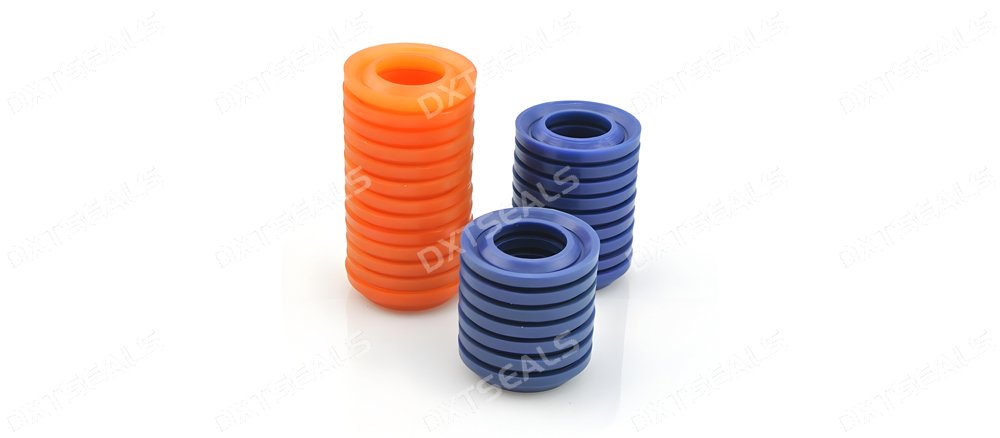
In today’s industrial manufacturing, custom plastic parts play an essential role in sectors such as automotive, machinery, electronics, and sealing solutions. From simple gaskets to precision-engineered sealing components, the customization process ensures that plastic products meet specific performance and dimensional requirements. Understanding the workflow from drawings to finished products helps buyers and engineers optimize designs, reduce costs, and achieve reliable results.
1. Initial Design and Drawings
The customization process begins with a design drawing provided by the customer or developed in collaboration with the supplier. Key details include:
-
Dimensions and tolerances to ensure accurate fit.
-
Operating conditions such as temperature, pressure, and chemical exposure.
-
Performance requirements like wear resistance, insulation, or sealing ability.
At DXTSEALS, our engineers review each drawing carefully and provide technical suggestions to ensure feasibility and efficiency.
2. Material Selection
Choosing the right plastic material is crucial for performance and longevity. Common options include:
-
PTFE (Polytetrafluoroethylene): Excellent chemical resistance and high-temperature performance.
-
PEEK (Polyether Ether Ketone): High strength, wear resistance, and dimensional stability.
-
POM (Polyoxymethylene): Good mechanical strength and machinability.
-
Nylon and UHMWPE: Cost-effective solutions with good wear resistance.
Material selection depends on the application environment and required product performance.
3. Mold Development or Machining Preparation
For mass production, injection molding or compression molding is often used, requiring mold development.
For small-batch or precision parts, CNC machining is more efficient and cost-effective.
-
Mold-making: Involves steel or aluminum tooling, with lead times depending on complexity.
-
Machining: Ideal for prototypes and low-volume, high-precision parts.
4. Manufacturing and Processing
Once materials and molds are ready, the production phase begins. Key processes include:
-
Injection Molding: Suitable for high-volume production with consistent quality.
-
Compression Molding: Used for sealing parts requiring high density and strength.
-
CNC Machining: Ensures tight tolerances and excellent surface finish for precision components.
5. Quality Control and Inspection
Quality assurance is a critical step before products are delivered. Common inspection methods include:
-
Dimensional checks using calipers, micrometers, and CMM machines.
-
Material property tests such as hardness, tensile strength, and thermal resistance.
-
Performance tests for sealing, chemical resistance, and wear.
At DXTSEALS, we follow strict ISO standards to ensure every batch of products meets international quality requirements.
6. Packaging and Delivery
Finally, plastic parts are cleaned, packaged, and shipped according to customer specifications. Proper labeling and protective packaging ensure safe transportation and easy traceability.
Conclusion
The customization of plastic products involves a systematic process from drawings to finished parts, including design evaluation, material selection, mold or machining preparation, production, and inspection. Each stage directly impacts the final performance and service life of the product.
📩 Partner with DXTSEALS for high-quality custom plastic solutions tailored to your industry needs.