
Introduction
High-performance engineering plastics, such as PEEK, POM, PPS, and PA, are widely used in aerospace, automotive, electronics, and industrial machinery due to their superior mechanical strength, thermal resistance, and chemical stability.
However, processing these materials presents unique challenges compared to commodity plastics. Proper mold design and optimization are essential to ensure dimensional accuracy, reduce defects, and maintain cost efficiency.
This article analyzes the processing difficulties of engineering plastics and provides practical mold design optimization strategies.
Key Challenges in Processing High-Performance Engineering Plastics
1. High Melting and Processing Temperatures
Engineering plastics often require high melt temperatures (up to 400°C for PEEK), which affects:
- Mold material selection
- Cooling and heating system design
- Machine capability
Failure to control temperature accurately can result in incomplete filling, degradation, or poor surface finish.
2. Low Flowability
High viscosity reduces material flow in molds, especially in thin or complex cavities. This can lead to:
- Incomplete filling
- Voids or weld lines
- Increased injection pressure
Optimized gate design and injection strategies are critical to overcome low flowability.
3. Shrinkage and Warpage
Engineering plastics exhibit significant shrinkage, which varies between amorphous and semi-crystalline materials.
- Amorphous plastics (PC, ABS): Lower, more predictable shrinkage
- Semi-crystalline plastics (PEEK, POM, PA): Higher, anisotropic shrinkage
Uncontrolled shrinkage can lead to warpage, dimensional deviations, and assembly issues.
4. High Tooling Stress
Processing high-performance plastics generates higher pressure and thermal stress on molds, requiring:
- Hardened mold steel
- Surface treatment (nitriding, coatings)
- Robust cooling and heating systems
5. Material Sensitivity
Many engineering plastics are sensitive to:
- Moisture (e.g., PA absorbs water)
- Thermal degradation
- Contamination
Pre-drying, controlled environment, and precise material handling are necessary.
Mold Design Optimization Strategies
1. Accurate Shrinkage Compensation
Use material-specific shrinkage data and simulations to adjust cavity dimensions and maintain dimensional accuracy.
2. Uniform Wall Thickness
Maintain consistent wall thickness to:
- Prevent differential cooling
- Reduce warpage
- Ensure proper material flow
3. Optimized Gate and Runner System
- Use multiple gates for large or complex parts
- Minimize weld lines
- Reduce injection pressure and flow stress
4. Temperature and Cooling Control
- Design advanced cooling channels
- Ensure uniform temperature distribution
- Use mold heating for semi-crystalline plastics to reduce surface defects
5. Mold Material and Surface Treatment
Select mold steel that can withstand high temperature and pressure. Consider surface treatments to:
- Reduce wear
- Improve release
- Maintain surface finish
6. Simulation and Prototyping
Use mold flow analysis and prototyping to:
- Predict filling patterns
- Identify potential shrinkage issues
- Optimize injection parameters
Common Defects and Prevention
| Defect | Cause | Solution |
|---|---|---|
| Warpage | Uneven shrinkage | Wall thickness optimization, proper cooling |
| Sink marks | Thick sections | Reduce wall thickness, gate placement |
| Weld lines | Low flow or multi-gate | Adjust gates, increase melt temperature |
| Voids | Trapped air or moisture | Adequate venting, drying of material |
| Surface defects | Thermal degradation | Correct processing temperature, mold heating |
Applications of High-Performance Engineering Plastics
- Aerospace components (high-temp resistance)
- Automotive precision parts
- Electrical housings
- Industrial machinery components
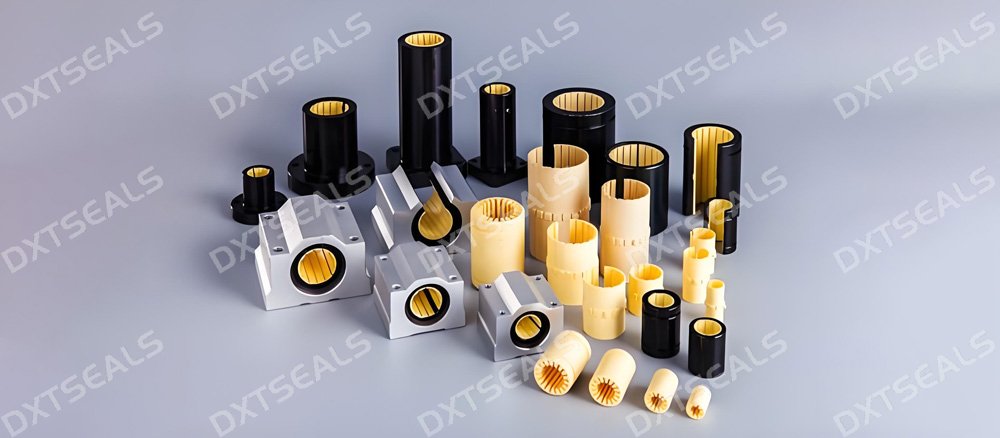
- High-performance seals and bearings
In these applications, mold design optimization is crucial to meet tight tolerances and maintain product reliability.
Conclusion
Processing high-performance engineering plastics presents unique challenges due to high temperature requirements, low flowability, shrinkage, and sensitivity to processing conditions.
Effective mold design optimization—through shrinkage compensation, uniform wall thickness, advanced gating, precise temperature control, and simulation—ensures consistent quality and dimensional accuracy.
At DXTSEALS, we combine material expertise with advanced mold design techniques to deliver high-precision engineering plastic components tailored to demanding industrial applications.