
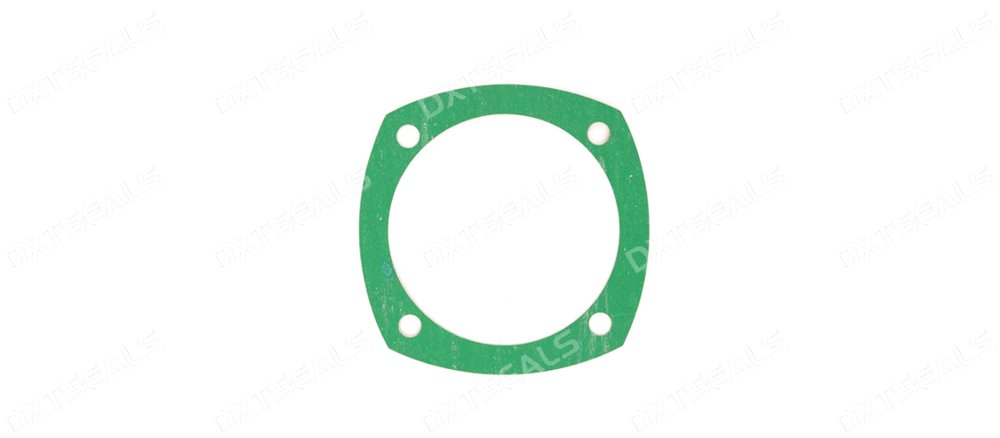
Flange gaskets are essential sealing components in piping systems, pumps, valves, heat exchangers, and industrial equipment. They prevent fluid or gas leakage by filling the irregularities between mating flange surfaces and maintaining a reliable sealing interface under operating conditions.
Among the many flange gasket materials available, EPDM flange gaskets and non-asbestos flange gaskets are widely used in industrial applications. However, they are based on fundamentally different material technologies and are suitable for different operating environments.
EPDM is a synthetic rubber known for its excellent resistance to water, steam, weathering, ozone, and many polar chemicals. Non-asbestos flange gaskets, in contrast, are generally made from compressed fiber materials combined with elastomeric binders and are designed to provide mechanical strength, compressibility, and reliable sealing performance in industrial piping systems.
Choosing between EPDM and non-asbestos flange gaskets should therefore be based on the actual medium, temperature, pressure, flange design, installation conditions, and required sealing performance.
1. What Is an EPDM Flange Gasket?
EPDM stands for Ethylene Propylene Diene Monomer, a synthetic elastomer widely used for sealing applications.
EPDM flange gaskets are manufactured from EPDM rubber compounds and may be supplied as full-face, ring-type, or other custom gasket configurations depending on the flange design.
The molecular structure of EPDM gives it excellent resistance to:
-
Water
-
Hot water
-
Steam, within suitable operating limits
-
Ozone
-
Weathering
-
UV exposure
-
Many dilute acids and alkalis
-
Various polar chemicals
EPDM is particularly suitable for applications where water and environmental resistance are more important than resistance to petroleum-based oils and fuels.
One important limitation is that EPDM generally has poor compatibility with many mineral oils, petroleum fuels, and hydrocarbon-based fluids. Therefore, an EPDM gasket should not automatically be selected simply because the required temperature range appears suitable.
2. What Is a Non-Asbestos Flange Gasket?
Non-asbestos flange gaskets are compressed sheet gaskets manufactured without asbestos fibers.
Traditional asbestos-containing gasket materials were historically used because of their combination of temperature resistance, compressibility, and mechanical strength. Modern non-asbestos gasket materials use alternative reinforcement fibers and elastomeric binders to provide similar sealing functions without asbestos.
Depending on the specific formulation, non-asbestos gasket sheets may contain combinations of:
-
Aramid fibers
-
Synthetic fibers
-
Mineral fibers
-
Elastomer binders
-
Fillers
-
Other reinforcing materials
The exact performance of a non-asbestos gasket depends strongly on the material formulation and manufacturer.
Compared with EPDM rubber, non-asbestos gasket materials are generally designed more around compressed-sheet sealing performance, mechanical strength, and flange loading.
They are commonly used for industrial piping, pumps, valves, water systems, general process equipment, and other applications where a compressed fiber gasket is appropriate.
3. EPDM vs Non-Asbestos Gaskets: Basic Material Difference
The biggest difference is the fundamental structure of the sealing material.
| Feature | EPDM Flange Gasket | Non-Asbestos Flange Gasket |
|---|---|---|
| Material type | Synthetic rubber | Compressed fiber/elastomer composite |
| Main sealing mechanism | Elastomeric deformation | Compression and surface conformity |
| Flexibility | High | Moderate |
| Compressibility | Relatively high | Controlled compression |
| Water resistance | Excellent | Generally good, depending on grade |
| Weather resistance | Excellent | Generally lower than EPDM |
| Ozone resistance | Excellent | Depends on formulation |
| Petroleum oil resistance | Poor | Depends on formulation |
| Mechanical strength | Moderate to high | Generally high |
| Flange surface conformity | Excellent | Good |
| Common form | Rubber sheet / molded gasket / cut gasket | Compressed gasket sheet / cut gasket |
| Typical application | Water, HVAC, outdoor and general fluid systems | Industrial piping and equipment |
| Material selection sensitivity | Medium to high | High; grade-specific |
The table provides a general comparison only. Actual performance must always be confirmed using the manufacturer's material data and the specific operating conditions.
4. EPDM Flange Gaskets: Main Advantages
Excellent Water Resistance
One of the strongest advantages of EPDM is its compatibility with water-based applications.
EPDM flange gaskets are frequently considered for:
-
Water pipelines
-
Cooling water systems
-
Chilled water systems
-
HVAC systems
-
Water treatment equipment
-
General plumbing systems
-
Outdoor piping
For systems where water is the primary medium, EPDM can provide reliable long-term sealing when the temperature and pressure remain within the material's suitable range.
Excellent Weather and Ozone Resistance
EPDM performs particularly well in outdoor environments.
Exposure to sunlight, ozone, rain, and atmospheric conditions can cause many rubber materials to deteriorate. EPDM is specifically valued for its resistance to ozone and weathering.
This makes EPDM useful for outdoor flange connections and equipment exposed to changing environmental conditions.
Good Resistance to Polar Chemicals
EPDM can provide good resistance to many dilute acids, alkalis, and other polar substances.
However, chemical compatibility should always be checked against the exact concentration, temperature, and exposure conditions rather than relying only on the general material category.
Good Elastic Recovery
As an elastomer, EPDM can accommodate small flange surface irregularities and maintain sealing contact through its elastic deformation.
This can be particularly useful where flange surfaces are not perfectly smooth or where thermal movement causes small changes in the sealing interface.
5. Non-Asbestos Flange Gaskets: Main Advantages
High Mechanical Strength
Non-asbestos compressed gasket materials are generally designed to withstand significant compression from bolted flange connections.
This makes them suitable for many industrial piping and equipment applications where mechanical strength is an important requirement.
Good Compressibility and Sealing Performance
Compressed fiber gasket materials are designed to fill surface irregularities between flange faces.
When the gasket is compressed correctly, it can provide an effective sealing barrier against fluid and gas leakage.
Broad Industrial Applications
Non-asbestos gasket materials are available in multiple grades, allowing manufacturers to formulate products for different combinations of temperature, pressure, and chemical exposure.
They may be used in:
-
Industrial piping
-
Pumps
-
Valves
-
Water treatment systems
-
HVAC equipment
-
Heat exchangers
-
General process equipment
-
Utility systems
-
Industrial machinery
The appropriate grade should be selected according to the actual medium and operating conditions.
Suitable for Standard and Custom Flange Gaskets
Non-asbestos gasket sheet can be converted into many different gasket geometries.
Manufacturers can produce:
-
Full Face (FF) gaskets
-
Raised Face (RF) gaskets
-
Ring gaskets
-
Custom-cut gaskets
-
Special-shaped gaskets
-
Non-standard dimensions
This flexibility makes non-asbestos gasket materials useful for replacement parts and custom industrial sealing applications.
6. EPDM vs Non-Asbestos: Temperature Considerations
Temperature is one of the most important factors when selecting a flange gasket.
EPDM can provide good performance in hot water and steam-related applications when the specific EPDM compound is designed for those conditions. However, the maximum service temperature varies according to the formulation and operating environment.
Non-asbestos gasket materials also have different temperature capabilities depending on the reinforcement fibers, elastomer binder, thickness, and formulation.
Therefore, it is not technically accurate to say that one material always has a higher temperature rating than the other.
Instead, gasket selection should consider:
-
Continuous operating temperature
-
Maximum temperature
-
Temperature cycling
-
Steam exposure
-
Heating and cooling rate
-
Chemical compatibility at operating temperature
-
Flange pressure and bolt load
A material that works well at room temperature may behave very differently at elevated temperature.
7. Chemical Compatibility: A Critical Selection Factor
Chemical compatibility is often more important than the nominal temperature rating.
EPDM
EPDM is generally well suited to water-based and polar-fluid applications but is not normally the first choice for petroleum oils, mineral oils, fuels, and many hydrocarbon fluids.
Non-Asbestos
The chemical resistance of a non-asbestos gasket is highly dependent on its formulation.
Different non-asbestos grades may use different elastomer binders and reinforcement systems. As a result, one non-asbestos gasket grade may perform well in a particular chemical service while another grade may not.
For this reason, the term "non-asbestos" describes the gasket construction but does not by itself define complete chemical compatibility.
The correct approach is to select the specific gasket grade based on:
Medium + concentration + temperature + pressure + exposure time
8. EPDM vs Non-Asbestos for Water Applications
For water-related applications, both materials may be suitable depending on the system requirements.
EPDM is often preferred when the application requires:
-
Excellent water resistance
-
Outdoor durability
-
Ozone resistance
-
High elasticity
-
Good environmental resistance
-
Good sealing conformity
Non-asbestos may be preferred when the application requires:
-
A compressed sheet gasket
-
Higher mechanical strength
-
Industrial flange sealing
-
A specific compressed gasket grade
-
Compatibility with a particular industrial medium
For drinking-water or sanitary applications, additional requirements may apply, including regulatory approvals and material certifications. The gasket should be selected based on the applicable local and industry requirements.
9. EPDM vs Non-Asbestos for Steam Applications
Steam service requires particular attention to temperature, pressure, gasket construction, and installation.
EPDM can be used in certain hot-water and steam applications when the specific compound is designed for the service conditions. However, continuous high-temperature steam exposure can exceed the practical limits of some EPDM compounds.
Non-asbestos steam gaskets are available in grades specifically developed for elevated-temperature industrial service.
For steam piping, the correct gasket should therefore be selected based on the manufacturer's pressure-temperature data rather than simply choosing "EPDM" or "non-asbestos" as a material category.
10. FF vs RF Flange Gasket Selection
The flange type is another important factor.
Full Face (FF) Flange Gaskets
A Full Face gasket covers the entire flange face, including the bolt-hole area.
FF gaskets are commonly associated with flat-face flange designs.
EPDM and non-asbestos materials can both be manufactured into FF gaskets when the material and flange system are appropriate.
Raised Face (RF) Flange Gaskets
A Raised Face flange uses a gasket located primarily within the raised sealing area.
RF gaskets are widely used in industrial piping systems.
Both EPDM and non-asbestos gasket sheets can be converted into RF gasket designs, but the gasket dimensions must match the applicable flange standard and sealing surface.
Incorrect gasket dimensions can lead to:
-
Leakage
-
Uneven compression
-
Bolt-loading problems
-
Gasket extrusion
-
Premature gasket failure
Therefore, gasket material and gasket geometry should always be considered together.
11. American and European Flange Standards
Flange gasket selection is not determined by material alone.
Common flange standards may include:
-
ASME/ANSI
-
EN
-
DIN
-
JIS
-
Other regional or equipment-specific standards
American and European flange systems can differ in dimensions, pressure classes, bolt patterns, flange facing, and gasket dimensions.
For example, an EPDM gasket designed for one flange standard should not automatically be assumed to fit another standard simply because the nominal pipe size is the same.
The manufacturer should confirm:
-
Nominal size
-
Pressure class
-
Flange standard
-
FF or RF configuration
-
Outside diameter
-
Inside diameter
-
Bolt-hole dimensions
-
Gasket thickness
12. When Should You Choose EPDM?
EPDM is generally a strong candidate when the application involves:
-
Water
-
Hot water within the compound's rated range
-
Cooling water
-
Chilled water
-
HVAC systems
-
Outdoor equipment
-
Weather exposure
-
Ozone exposure
-
Many dilute acids and alkalis
-
Polar fluids
EPDM is especially attractive when flexibility and environmental resistance are important.
However, it should normally be avoided or carefully evaluated for petroleum-based oils, mineral oils, fuels, and many hydrocarbon services.
13. When Should You Choose Non-Asbestos?
Non-asbestos flange gaskets are often considered when the application requires:
-
Compressed sheet gasket construction
-
Good mechanical strength
-
Industrial piping sealing
-
Pump and valve sealing
-
General process equipment
-
Specific chemical compatibility
-
Elevated-temperature service within the selected grade's limits
-
Standard or custom-cut gasket dimensions
The major advantage is the availability of different non-asbestos grades for different operating environments.
However, "non-asbestos" should not be treated as a single universal material. The exact gasket grade matters.
14. Common Selection Mistakes
Choosing Only by Temperature
A gasket may survive a given temperature but still fail because it is chemically incompatible with the medium.
Temperature and chemical compatibility must be evaluated together.
Choosing Only by Pressure
Pressure rating is also affected by flange condition, bolt load, gasket thickness, flange rigidity, temperature, and medium.
A gasket with a suitable nominal pressure range can still leak if the flange connection is improperly assembled.
Ignoring the Flange Facing
A gasket designed for a raised-face flange may not be suitable for a full-face flange configuration.
The flange facing and gasket geometry must be matched.
Treating All Non-Asbestos Gaskets as the Same
Different non-asbestos formulations can have significantly different resistance to chemicals, temperature, and compression.
Always identify the specific material grade.
Selecting EPDM for Oil Service
This is one of the most common material-selection errors.
EPDM's excellent water resistance does not mean that it is suitable for petroleum oil or hydrocarbon service.
15. EPDM vs Non-Asbestos Flange Gaskets: Selection Guide
The following simplified guide can help with preliminary material selection:
| Application Requirement | Recommended Starting Point |
|---|---|
| Water piping | EPDM or suitable non-asbestos grade |
| Outdoor water equipment | EPDM |
| HVAC chilled water | EPDM |
| Ozone/weather exposure | EPDM |
| Hot water | EPDM or suitable non-asbestos grade |
| Steam | Grade-specific evaluation required |
| Petroleum oil | Generally not EPDM; evaluate suitable gasket material |
| Hydrocarbon service | Select according to chemical compatibility |
| General industrial piping | Non-asbestos or application-specific material |
| High mechanical compression requirement | Non-asbestos may be preferred |
| Custom FF gasket | Both materials may be available |
| Custom RF gasket | Both materials may be available |
This table is intended as a preliminary selection guide. Final selection should be based on the specific material grade and operating conditions.
16. Custom EPDM and Non-Asbestos Flange Gasket Manufacturing
Industrial equipment often uses flange dimensions that do not exactly match common catalog sizes.
Custom gasket manufacturing can accommodate:
-
Non-standard dimensions
-
Special bolt-hole patterns
-
Large-diameter gaskets
-
Small-diameter gaskets
-
FF configurations
-
RF configurations
-
Special thicknesses
-
Custom profiles
-
Replacement gaskets for existing equipment
For EPDM gaskets, the rubber compound should be selected according to the actual medium and temperature.
For non-asbestos gaskets, the specific compressed sheet grade should be selected according to the required chemical, temperature, pressure, and compression characteristics.
Accurate measurement of the existing flange or technical drawing is essential for replacement gasket manufacturing.
17. How to Choose Between EPDM and Non-Asbestos Flange Gaskets
A practical selection process can be divided into several steps.
Step 1: Identify the Medium
Determine whether the gasket will contact:
-
Water
-
Steam
-
Oil
-
Fuel
-
Chemical solutions
-
Gas
-
Air
-
Refrigerant
-
Other process fluids
Step 2: Determine Operating Temperature
Record both the normal operating temperature and the maximum temperature.
Temperature cycling should also be considered.
Step 3: Determine Pressure
Check the operating pressure and possible pressure fluctuations.
Step 4: Identify the Flange Standard
Determine whether the flange follows ASME, EN, DIN, JIS, or another standard.
Step 5: Confirm FF or RF Configuration
The gasket geometry must match the flange face.
Step 6: Select the Material Grade
Choose the specific EPDM compound or non-asbestos gasket grade based on the complete operating environment.
Step 7: Confirm Dimensions and Thickness
Verify the gasket's inside diameter, outside diameter, bolt-hole pattern, and thickness.
Step 8: Review Installation Conditions
Even a high-quality gasket can fail if the flange surfaces are damaged, bolts are unevenly tightened, or the gasket is incorrectly positioned.
18. Conclusion
EPDM and non-asbestos flange gaskets are both useful sealing solutions, but they serve different material and application requirements.
EPDM flange gaskets are particularly attractive for water, hot water, HVAC, outdoor, ozone, and weather-resistant applications where elastomeric flexibility and environmental durability are important.
Non-asbestos flange gaskets are widely used in industrial piping and equipment where compressed-sheet construction, mechanical strength, and application-specific performance are required.
The correct choice should never be based on material name alone. Medium compatibility, operating temperature, pressure, flange standard, FF or RF configuration, gasket thickness, bolt loading, and installation conditions all affect sealing performance.
For industrial applications, the best approach is to select the specific gasket material and grade according to the actual service conditions and then manufacture the gasket to the correct flange dimensions. This is particularly important for replacement parts and non-standard flange connections where standard catalog dimensions may not be sufficient.