
Introduction
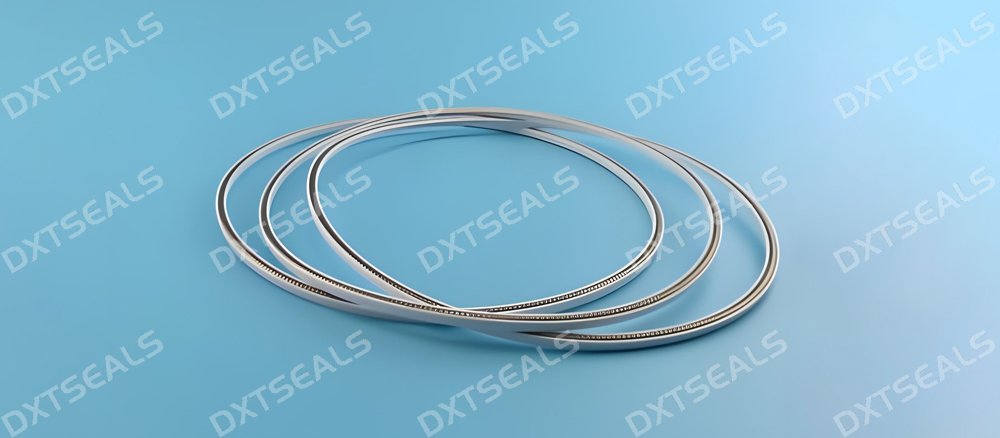
Custom spring energized seals are widely used in demanding industries such as:
- Hydraulic and pneumatic systems
- Semiconductor equipment
- Aerospace applications
- Chemical processing
- Oil & gas industries
Unlike standard seals, spring energized seals must be carefully matched to the actual operating conditions and groove structure.
One of the most common engineering problems is incomplete technical information during the customization process. Missing groove parameters can lead to:
- Incorrect seal sizing
- Leakage problems
- Excessive friction
- Installation difficulties
- Premature seal failure
To ensure accurate seal design and reliable performance, engineers must provide a complete set of groove and operating data.
This article provides a comprehensive technical checklist of the groove parameters required for custom spring energized seal design. At DXTSEALS, we help customers optimize seal structures based on precise application and groove information.
1. Why Groove Parameters Are Critical for Spring Energized Seals
Spring energized seals rely heavily on controlled deformation and spring preload to maintain sealing performance.
The groove design directly affects:
- Seal compression ratio
- Contact pressure
- Friction level
- Wear performance
- Anti-extrusion capability
- Seal lifespan
Even small dimensional errors may significantly impact sealing reliability.
Therefore, accurate groove data is essential for proper seal engineering.
2. Basic Groove Dimensions That Must Be Provided
Groove Diameter (ID or OD)
This determines the installation orientation and seal size.
Depending on the application type:
- Rod seals require shaft diameter information
- Piston seals require bore diameter information
This parameter is fundamental for determining seal interference and fit.
Groove Width
Groove width determines:
- Seal installation space
- Spring structure compatibility
- Seal stability during operation
Insufficient groove width may limit the use of larger spring structures such as helical springs.
Groove Depth
Groove depth directly affects:
- Seal compression amount
- Initial sealing force
- Friction performance
Improper groove depth may cause either:
- Excessive wear from over-compression
- Leakage from insufficient compression
At DXTSEALS, groove depth is carefully matched with spring preload and PTFE material properties.
3. Clearance and Extrusion Gap Information
Radial Clearance
Radial clearance is especially important in high-pressure applications.
Excessive clearance may cause:
- PTFE extrusion
- Lip damage
- Reduced seal lifespan
The seal structure and material must be selected according to actual clearance conditions.
Axial Clearance
Axial movement or tolerance variation can affect:
- Seal stability
- Dynamic sealing performance
- Wear distribution
Proper allowance must be considered during seal design.
4. Groove Tolerance Requirements
Accurate tolerances are essential for reliable sealing performance. Engineers should provide:
- Machining tolerances
- Assembly tolerances
- Shaft or bore tolerance classes
Tolerances directly affect:
- Compression consistency
- Seal interference fit
- Friction behavior
Large tolerance variations may require customized seal compensation designs.
5. Surface Finish Requirements
Surface roughness significantly affects sealing performance and wear characteristics.
Shaft or Rod Surface Finish
Poor surface finish may cause:
- Increased leakage
- Accelerated seal wear
- Surface scratching
Groove Surface Finish
Improper groove finishing may damage PTFE sealing lips during installation or operation.
Typical considerations include:
- Ra value
- Machining direction
- Surface defects
At DXTSEALS, surface finish recommendations are optimized according to dynamic speed and pressure conditions.
6. Chamfer and Corner Radius Information
Installation Chamfer Dimensions
Chamfers help prevent seal damage during installation.
Important parameters include:
- Chamfer angle
- Chamfer length
- Edge condition
Corner Radius
Excessive corner radius may reduce sealing effectiveness, while sharp corners may damage the seal.
Proper radius control is essential for reliable assembly and operation.
7. Operating Pressure Information
Pressure data is one of the most important design inputs. Engineers should provide:
- Working pressure
- Peak pressure
- Pressure fluctuations
- Vacuum conditions if applicable
Pressure directly influences:
- Spring structure selection
- PTFE material selection
- Anti-extrusion design requirements
8. Operating Temperature Range
Temperature affects both PTFE material behavior and spring elasticity.
Required information includes:
- Minimum operating temperature
- Continuous operating temperature
- Peak temperature exposure
High temperatures may require:
- Graphite-filled PTFE
- High-temperature alloy springs
Low-temperature environments may require specialized low-friction materials.
9. Media Compatibility Information
The sealing media must be clearly specified, such as:
- Hydraulic oil
- Gas
- Steam
- Acids or alkalis
- Solvents
- Food or pharmaceutical media
Chemical compatibility affects:
- PTFE filler selection
- Spring alloy selection
- Seal lifespan
At DXTSEALS, media compatibility analysis is a key part of seal customization.
10. Motion Type and Dynamic Conditions
Seal performance differs significantly depending on movement type.
Engineers should specify whether the application involves:
- Static sealing
- Reciprocating motion
- Rotary motion
- Oscillating movement
Additional data should include:
- Speed
- Stroke length
- Frequency of movement
Dynamic applications usually require lower friction and better wear resistance.
11. Installation Space Limitations
Some equipment has limited installation space, which affects:
- Seal cross-section size
- Spring structure selection
- Installation method
Compact grooves may require specially designed low-profile seal structures.
12. Desired Service Life and Reliability Requirements
Different industries have different reliability expectations.
Engineers should indicate:
- Expected service life
- Maintenance intervals
- Leakage tolerance standards
- Industry certifications if required
Critical systems may require more conservative seal designs and higher-grade materials.
13. Commonly Overlooked Parameters
Thermal Expansion Effects
Different materials expand differently under temperature changes.
Ignoring thermal expansion may cause:
- Excessive friction
- Seal deformation
- Leakage
Pressure Direction
Single-acting and double-acting sealing applications require different lip geometries and spring structures.
Backup Ring Requirements
High-pressure systems may require additional anti-extrusion support components.
14. Complete Technical Checklist for Custom Spring Energized Seals
Before requesting customization, engineers should prepare the following information:
| Required Parameter | Importance |
|---|---|
| Groove diameter | Seal sizing |
| Groove width | Spring compatibility |
| Groove depth | Compression control |
| Radial clearance | Extrusion prevention |
| Tolerances | Fit consistency |
| Surface finish | Wear and leakage control |
| Chamfer dimensions | Installation safety |
| Operating pressure | Structure selection |
| Temperature range | Material selection |
| Media compatibility | Chemical resistance |
| Motion type | Friction and wear optimization |
| Speed and stroke | Dynamic sealing design |
| Service life target | Reliability optimization |
Conclusion
Successful customization of spring energized seals depends heavily on accurate groove and operating condition data.
Providing complete technical parameters allows engineers to optimize:
- PTFE material selection
- Spring structure design
- Compression ratio
- Friction performance
- Seal lifespan
Key parameters include:
- Groove dimensions
- Clearance and tolerances
- Surface finish
- Pressure and temperature
- Media compatibility
- Motion characteristics
At DXTSEALS, we provide professional engineering support and customized spring energized sealing solutions based on detailed technical analysis and application requirements.
If you need assistance customizing spring energized seals or evaluating groove parameters, contact DXTSEALS today for expert technical support and tailored sealing solutions.