
Introduction
In industries such as food processing, pharmaceuticals, and medical devices, sealing components must meet strict hygiene, safety, and regulatory requirements. Any material incompatibility or contamination risk can lead to serious compliance issues or product recalls.
Food-grade and medical-grade spring-energized seals are specifically designed to meet these demanding standards while delivering reliable sealing performance under dynamic conditions.
Importance of Compliance in Hygienic Applications
Unlike general industrial sealing, hygienic applications require seals that:
-
Do not contaminate products
-
Resist bacterial growth
-
Maintain material stability under sterilization
-
Comply with international regulatory standards
Spring-energized seals are well-suited for these environments due to their PTFE-based materials and robust structural design.
Material Requirements for Food-Grade Spring-Energized Seals
PTFE and Modified PTFE Materials
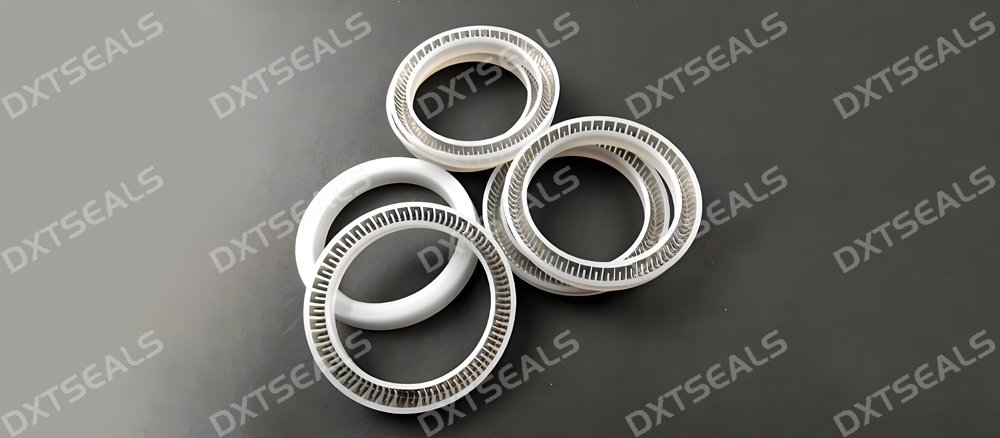
Food-grade spring-energized seals typically use virgin PTFE or specially modified PTFE with high purity.
Key material characteristics:
-
Non-toxic and odorless
-
Excellent chemical resistance
-
Smooth surface finish for easy cleaning
These materials prevent media absorption and minimize contamination risks.
Metal Spring Materials
The energizing spring must also meet food safety requirements.
Common choices:
-
Stainless steel (e.g., 316L) with corrosion resistance
-
Materials suitable for wash-down and cleaning chemicals
At DXTSEALS, all food-grade spring materials are carefully selected for hygienic compatibility.
Material Requirements for Medical-Grade Spring-Energized Seals
Medical applications demand even higher standards due to direct or indirect contact with patients or pharmaceutical products.
Material requirements include:
-
Biocompatibility
-
Resistance to repeated sterilization (steam, chemical, or radiation)
-
Long-term dimensional stability
Medical-grade seals often use high-purity PTFE compounds with tightly controlled manufacturing processes.
Key Certification Standards
FDA Compliance
Food-grade and medical-grade seals commonly comply with FDA 21 CFR regulations, ensuring materials are safe for food and drug contact.
USP Class VI
USP Class VI certification verifies biocompatibility and is essential for medical and pharmaceutical applications.
EU Regulations
For global applications, compliance with EU food contact regulations is often required.
DXTSEALS designs spring-energized seals to meet relevant international standards, supporting global compliance needs.
Typical Applications
-
Food and beverage processing equipment
-
Pharmaceutical manufacturing systems
-
Medical devices and diagnostic equipment
-
Clean-in-place (CIP) and sterilize-in-place (SIP) systems
In these applications, seal reliability directly impacts product safety and regulatory compliance.
Benefits of Spring-Energized Seals in Hygienic Industries
Compared to elastomer seals, food-grade and medical-grade spring-energized seals offer:
-
Lower risk of contamination
-
Excellent resistance to aggressive cleaning agents
-
Stable sealing performance over a wide temperature range
These advantages make them a preferred sealing solution in hygienic system designs.
Conclusion
Food-grade and medical-grade spring-energized seals must meet strict material and certification requirements to ensure safety, hygiene, and regulatory compliance. By selecting high-purity PTFE materials, corrosion-resistant springs, and certified manufacturing processes, these seals deliver reliable performance in critical applications.
A standards-driven approach to seal selection helps manufacturers achieve long-term compliance and operational reliability.